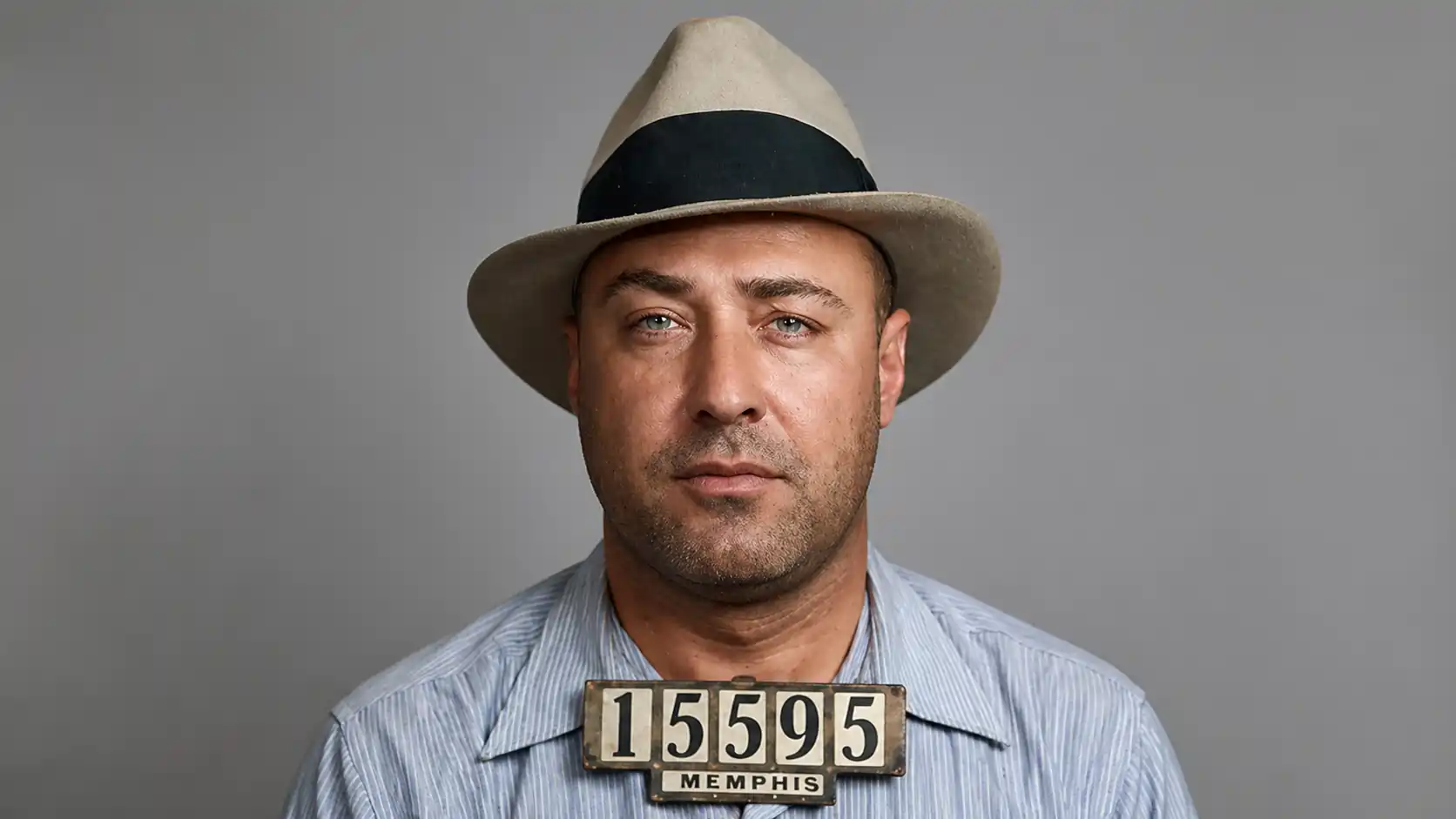
George Machine Gun Kelly at Alcatraz: True Story, Crimes & Prison Life
George "Machine Gun" Kelly arrived at Alcatraz as America's most feared gangster. He left as its most quietly cooperative prisoner.
That gap between reputation and reality is the central story of George "Machine Gun" Kelly at Alcatraz, and it is a more instructive story than most people expect when they first encounter his name. The legend of Machine Gun Kelly was built on newspaper headlines, FBI press releases, and the tireless promotional work of a woman who understood criminal mythology better than almost anyone of her era.
The reality, visible only once Kelly was stripped of everything that had constructed that legend, was something considerably more ordinary.
This is the full story of prisoner AZ-117, from a middle-class Memphis childhood through the crime that made him famous, the institution that finally contained him, and the seventeen years he spent on The Rock proving that the most feared criminals are not always the most difficult prisoners.
Was George "Machine Gun" Kelly at Alcatraz?
Yes. George "Machine Gun" Kelly was incarcerated at Alcatraz Federal Penitentiary from 1934, registered as prisoner AZ-117. He arrived as one of the institution's earliest high-profile transfers, convicted of the 1933 kidnapping of Oklahoma City oil tycoon Charles Urschel and sentenced to life imprisonment.
Kelly served seventeen years at Alcatraz before transferring to Leavenworth Federal Penitentiary in 1951. He died there on July 18, 1954. During his entire time at Alcatraz, he made no escape attempts, caused no major disciplinary incidents, and was consistently described by prison staff as one of the facility's more cooperative inmates.
Early Life: Who Was George Kelly Barnes Before the Legend?
A Middle-Class Boy Who Chose the Wrong Path
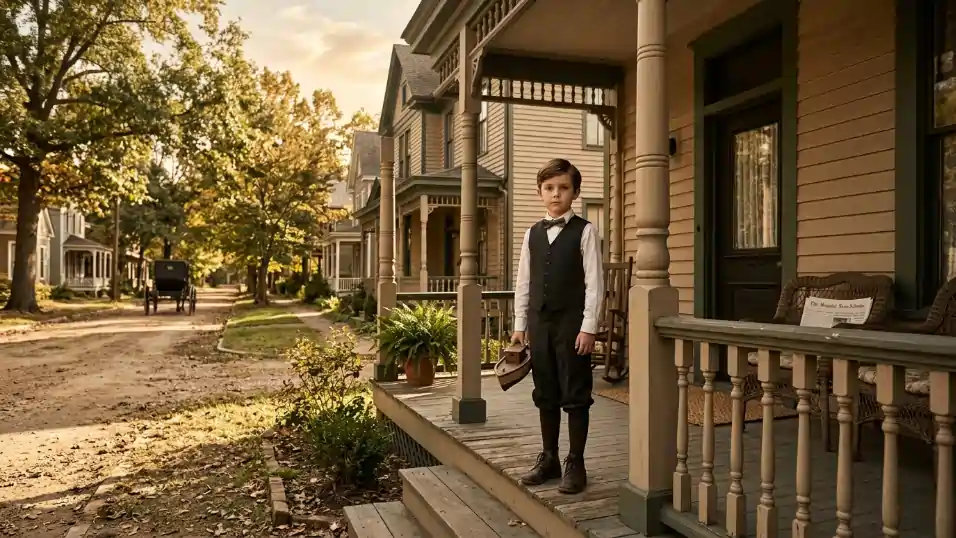
George Kelly Barnes was born on July 18, 1895, in Memphis, Tennessee, into circumstances that gave no obvious indication of where his life would lead. His family was stable and respectable by the standards of the era. His father worked in the insurance business, the household was comfortable, and Kelly received a level of education that most American children of his generation never accessed, including a brief period at college before he dropped out and began drifting toward more profitable and less legitimate opportunities.
Nothing in his early biography marks him as a future public enemy. He was not raised in poverty, did not come from a criminal family, and had no particular history of violence in his youth. The path from a Memphis middle-class household to a cell on Alcatraz Island was not one that circumstances forced on him. It was one he chose, gradually and without any single dramatic turning point, through a series of decisions that each made the next one easier.
The Criminal Career That Built His Name
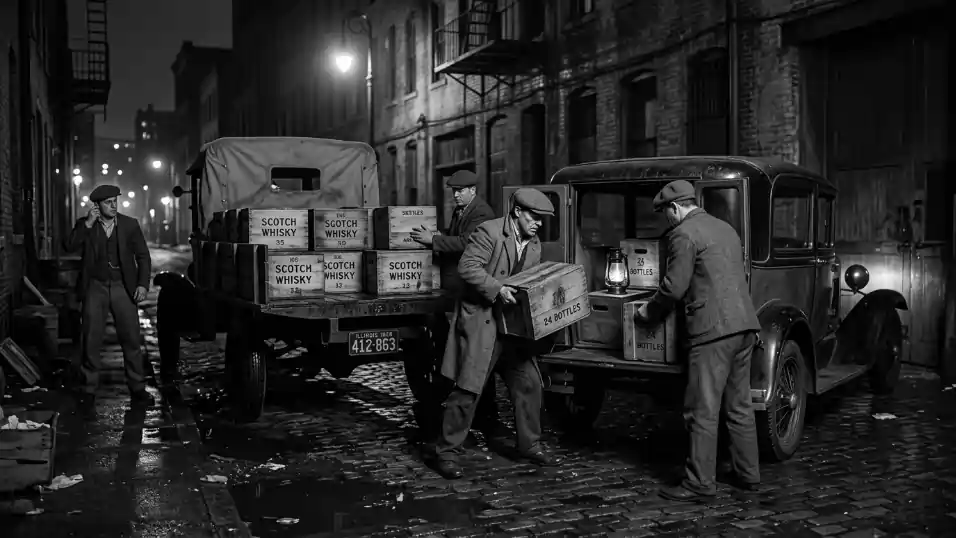
Kelly's criminal career began in earnest during Prohibition, when the suppression of legal alcohol created the economic conditions that turned bootlegging into one of the most accessible and profitable enterprises available to men willing to operate outside the law. He moved through the 1920s accumulating a record of arrests for bootlegging and petty theft, nothing that distinguished him from hundreds of other small-time criminals working the same territory across the Midwest.
Through the late 1920s and into the early 1930s, Kelly graduated to bank robbery, joining the kind of loosely organized crews that proliferated during the Depression years when banks were targets of both economic desperation and public resentment. His criminal record grew steadily more serious, but his actual profile within the criminal world remained unremarkable. He was capable and organized, but he was not feared. He was not a name that carried weight. That would change entirely when he met Kathryn Thorne.
The Nickname: Where Did "Machine Gun" Kelly Come From?
Kathryn Thorne: The Woman Who Made the Legend
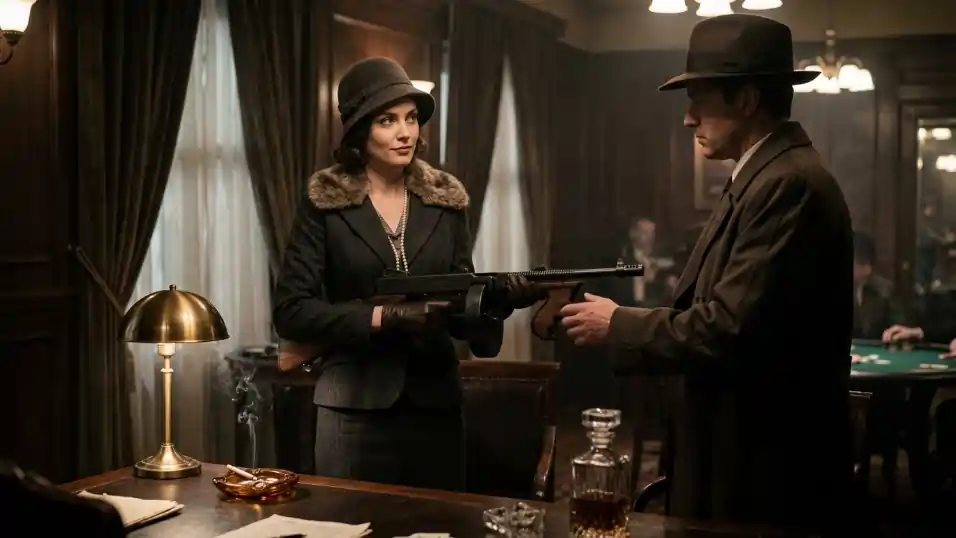
Kathryn Thorne was, by any measure, one of the most ambitious and strategically intelligent figures in the American criminal world of the 1930s, and she directed virtually all of that intelligence toward constructing a legend around the man she married. She understood something that few criminals of her era had grasped: that reputation, carefully managed, was a form of power as real and as useful as any weapon.
She began by purchasing Thompson submachine guns and presenting them to Kelly as gifts, then telling everyone in their criminal circle that her husband was the most dangerous machine gunner alive. She promoted him relentlessly to criminal associates, small-time journalists who covered the underworld, and anyone else whose attention she could capture. She took Kelly to rural areas and had him practice shooting so she could collect the spent cartridge cases and distribute them to criminal contacts as souvenirs, physical proof of the dangerous man she was selling to anyone who would listen.
The nickname Machine Gun Kelly was Kathryn's creation from beginning to end. She built it through consistent, deliberate promotion over a period of years, and by the time the Urschel kidnapping brought her husband to national attention, the groundwork she had laid meant that the press had a ready-made character to attach to the story. Machine Gun Kelly arrived in American consciousness fully formed because Kathryn had spent years building him before anyone outside their world had heard the name.
The Truth Behind the Machine Gun Myth
The historical record contains no confirmed instance of George Kelly using a machine gun in the commission of an actual crime. The weapon that defined his public identity was one he practiced with in fields at his wife's direction and carried as an accessory to the image she was constructing. The crimes he committed, serious as they were, did not require or involve the kind of dramatic firepower the nickname implied.
Kelly was aware of the gap between the myth and the man. Several accounts from people who knew him suggest he understood that Kathryn had built something larger than he actually was, and that the national attention the Urschel kidnapping generated was in part a product of the legend she had constructed rather than purely a response to the crime itself. Machine Gun Kelly the outlaw was Kathryn's most successful creation. George Kelly Barnes was a capable criminal who benefited from her work and eventually paid a considerable price for it.
The Urschel Kidnapping: The Crime That Ended His Freedom
Planning and Execution
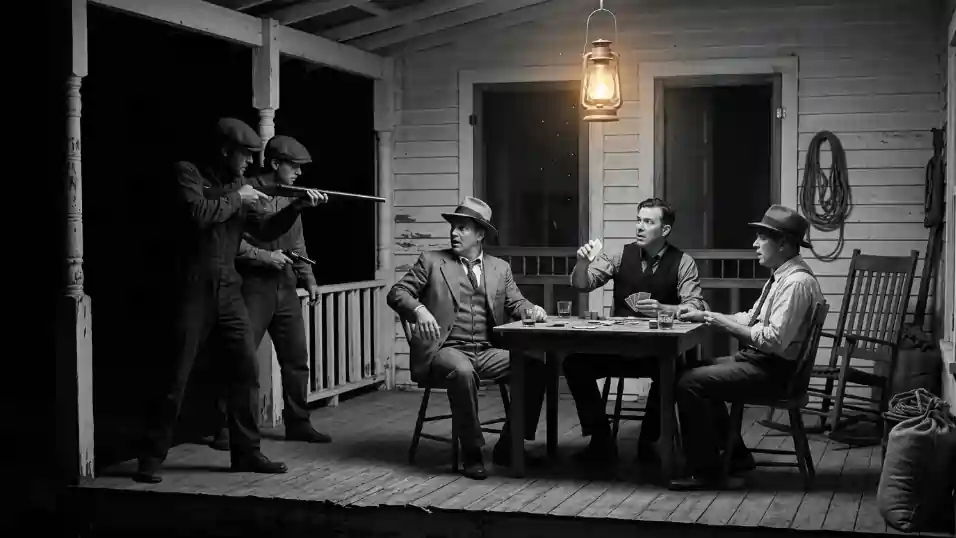
On the evening of July 22, 1933, Kelly and an associate named Albert Bates approached the home of Charles Urschel in Oklahoma City, where Urschel was playing cards with friends on the porch. The two men entered with weapons and took Urschel at gunpoint, leaving his wife and their guests behind. It was a direct, planned operation that reflected Kelly's organizational capabilities without any of the dramatic machine-gun violence his nickname suggested.
Urschel spent nine days in captivity at a farm in Texas while Kelly and his associates negotiated with his family. A ransom of two hundred thousand dollars was collected and paid. Urschel was released on a roadside in Norman, Oklahoma, unharmed physically but having spent every waking moment of his captivity memorizing details about his surroundings with a methodical discipline that would prove decisive. He noted the times of aircraft passing overhead, the taste and mineral content of the water, the sounds of the farm, and any other sensory detail he could record mentally against the probability that he would eventually have the chance to use it.
The FBI Hunt and Capture
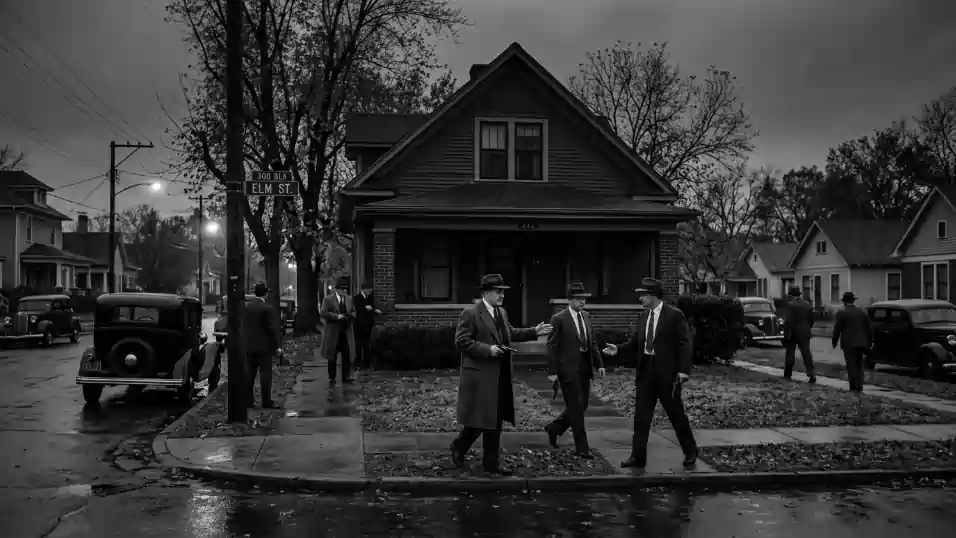
Edgar Hoover designated the Urschel kidnapping a national priority, and the investigation that followed demonstrated how effectively Urschel had used his captivity. His detailed observations allowed FBI agents to identify the farm in Texas where he had been held, and that identification unraveled the network of people connected to the crime with a speed that left Kelly and Kathryn with less time than they had anticipated.
Kelly and Kathryn were arrested in Memphis, Tennessee, on September 26, 1933. The circumstances of the arrest produced one of the most famous anecdotes in FBI history: Kelly allegedly surrendered with the words "Don't shoot, G-Men," a phrase that, if it was actually spoken, gave FBI agents their enduring popular nickname. The story has been disputed by historians and may be partly or entirely apocryphal, but it attached itself to Kelly's legend with the same tenacity as the machine gun nickname. Both were larger and more durable than the underlying facts strictly warranted.
Both Kelly and Kathryn were convicted of kidnapping and sentenced to life imprisonment. Kathryn received the same sentence as her husband, a reflection of her central role in the criminal operation they had run together. They were separated at sentencing and would not spend time in the same institution.
Arrival at Alcatraz: Prisoner AZ-117
Why the Government Sent Kelly to Alcatraz
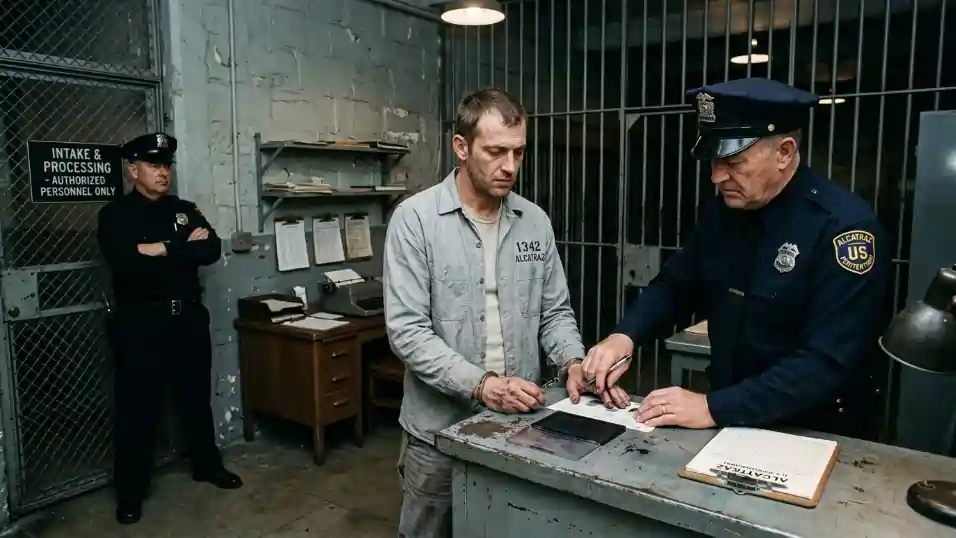
Alcatraz Federal Penitentiary opened in 1934 with a specific operational purpose: to house the prisoners that the federal system could not safely or effectively manage elsewhere. The criteria for transfer were not simply about the severity of a crime but about the kind of risk a prisoner posed within an institutional setting, the capacity for influence, the escape risk classification, the potential to corrupt staff or organize other inmates, and the national profile that made ordinary confinement a public relations problem as much as a security one.
Kelly met several of these criteria simultaneously. His national name recognition created influence risks that standard facilities were not designed to manage. The criminal networks he and Kathryn had cultivated over years of active operation needed to be severed completely rather than merely monitored. And the government's interest in demonstrating that the federal justice system could contain its most famous criminals made Alcatraz the appropriate destination for a man whose name appeared in newspapers across the country.
Warden James Johnston's strict no-privilege policy was the mechanism that made the transfer meaningful. At Alcatraz, Kelly's famous name purchased him nothing. No special treatment, no access to outside networks, no room for the kind of reputation-based deference that had structured his entire criminal existence. He arrived in 1934 as prisoner AZ-117, in the same year as Al Capone, among the first wave of high-profile transfers that established what The Rock was and what it intended to do with the men sent there.
What Daily Life at Alcatraz Actually Looked Like
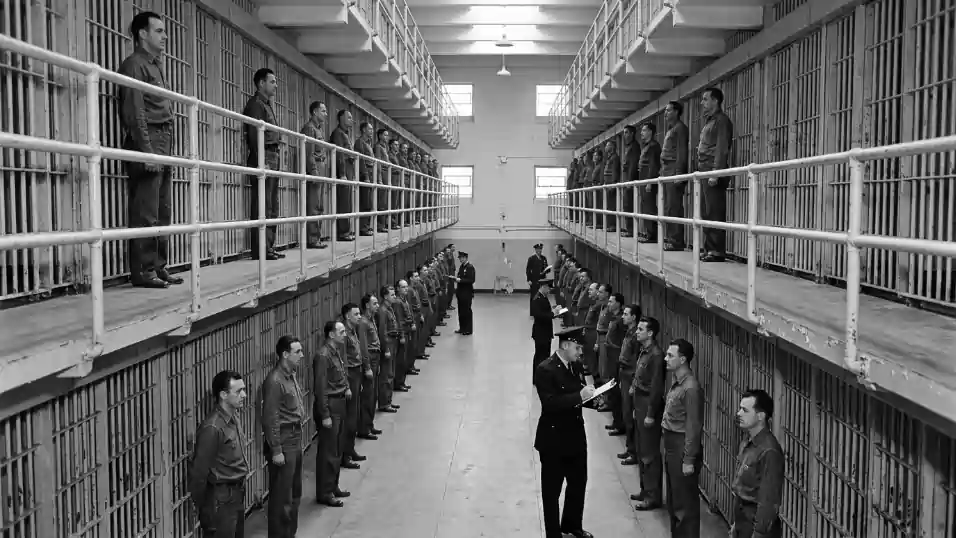
Life at Alcatraz in the 1930s and 1940s was built around a daily routine of near-total predictability. Morning counts began before six. Inmates rose, dressed, and prepared their cells to a specific standard before being counted, a process that happened multiple times each day with zero tolerance for discrepancy. Movement through the institution was controlled at every point, from the cell blocks to the dining hall to the work areas to the exercise yard.
Work assignments gave the days structure. The prison operated several industrial operations including a laundry facility, a tailor shop, and manufacturing operations that held federal contracts. Inmates were expected to work their assigned jobs without complaint, and the privilege of certain assignments could be earned or lost based on disciplinary record.
The exercise yard offered limited outdoor time under close supervision, with the San Francisco skyline visible across the water every single day. That view, the city so close it seemed reachable and yet separated by a channel cold and fast enough to kill an unprepared swimmer, was the defining psychological feature of confinement at Alcatraz. For a man who had operated freely across the American Midwest for years, the daily visibility of an unreachable world carried its own particular weight.
The Transformation: How Alcatraz Changed Machine Gun Kelly
A Model Prisoner in a Maximum Security Prison
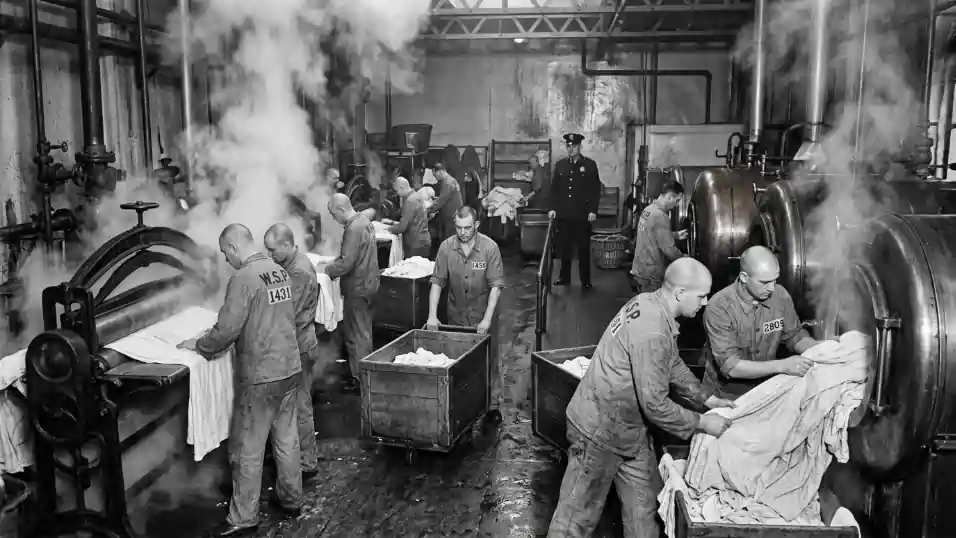
The expectation when Kelly arrived at Alcatraz, among staff and within the broader public consciousness, was that Machine Gun Kelly would be a management challenge. The most dangerous gunman in America, a man who had kidnapped a prominent citizen and evaded the FBI across multiple states, was presumably the kind of prisoner who would resist, who would push against the institution's structure and test its limits.
That expectation was wrong. Kelly adapted to the Alcatraz regime almost immediately and maintained that adaptation consistently for the duration of his seventeen years on the island. Prison staff described him as cooperative, polite, and entirely manageable. He completed his work assignments without resistance, avoided conflicts with other inmates, caused no major disciplinary incidents, and built a record that staff referenced as an example of what a cooperative long-term inmate looked like.
The man who had been sold to the American public as its most dangerous criminal turned out to be one of The Rock's quieter residents. That outcome was not the result of broken spirit or visible defeat. It reflected the simple reality that Machine Gun Kelly's power had always been external, built from networks, reputation, and Kathryn's promotional genius, and Alcatraz had removed all of it at the gates.
Letters, Routine, and Seventeen Years on The Rock
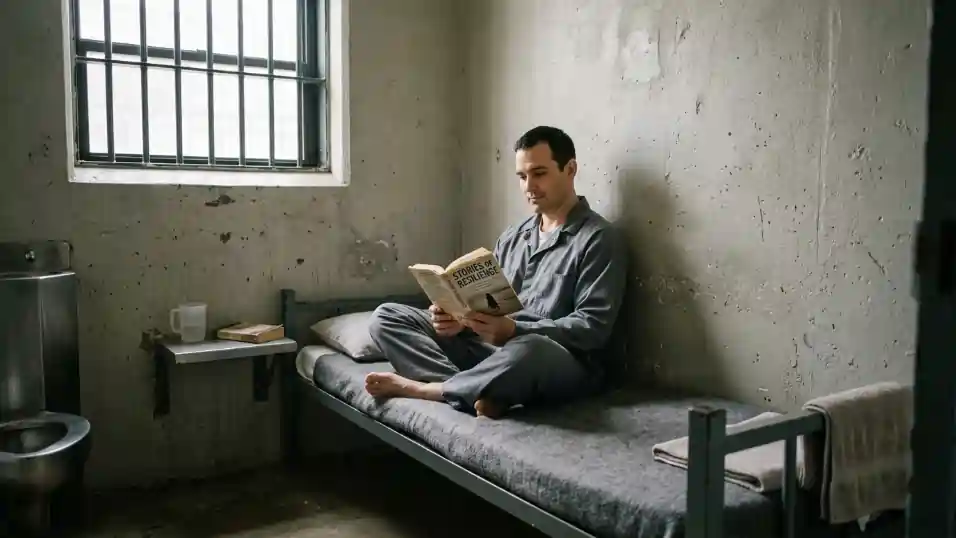
Kelly spent the long years at Alcatraz in the way that long-term inmates at the institution generally did: through work, routine, reading, and correspondence. He wrote letters regularly, and some of that correspondence went to Charles Urschel, the man he had kidnapped more than a decade earlier.
The nature and content of those letters speaks to the psychological territory of very long confinement and what it does to a person's relationship with their own history.
The daily routine of Alcatraz, so grinding in its predictability, served a different function for different men. For some it was a form of psychological attrition. For Kelly, who complied with it consistently rather than fighting it, it appears to have functioned as a framework within which the years could be organized and endured. He served seventeen years on the island before his transfer to Leavenworth in 1951, and the record he left behind was one of quiet compliance rather than dramatic resistance.
Prisoner AZ-117 and Machine Gun Kelly were, in the end, two different people occupying the same body. The Rock had no use for the second one, and the first one turned out to be entirely capable of following rules.
George "Machine Gun" Kelly at Alcatraz: Key Facts and Timeline
Born: July 18, 1895, Memphis, Tennessee Criminal career begins: 1920s, bootlegging and petty theft during Prohibition Bank robbery period: Late 1920s through early 1930s Urschel kidnapping: July 22, 1933 Arrested: September 26, 1933, Memphis, Tennessee Convicted and sentenced: Life imprisonment for kidnapping Arrived at Alcatraz: 1934, prisoner number AZ-117 Years at Alcatraz: 1934 to 1951, seventeen years Behavior at Alcatraz: Cooperative, no escape attempts, no major incidents Transferred to Leavenworth: 1951 Died: July 18, 1954, Leavenworth Federal Penitentiary, heart attack, age fifty-nine
What Kelly's Story Reveals About Alcatraz
The Reputation vs The Reality
The pattern that Kelly's Alcatraz story illustrates was not unique to him. Among the famous prisoners who passed through the institution, cooperative behavior from men with fearsome reputations was more common than dramatic resistance. Al Capone caused relatively few disciplinary problems. Machine Gun Kelly caused almost none. The prison's most celebrated names were frequently its most manageable residents.
This outcome was not coincidental. It reflected the institutional logic that Alcatraz was designed around. The dangerous criminals of the 1930s derived their power not from personal violence alone but from the networks, resources, and reputations that amplified whatever personal capacity they possessed.
Alcatraz severed those amplifiers at the point of entry. Without his network, his name recognition in a context where it carried no weight, and Kathryn's promotional machinery, Kelly had no particular leverage over anyone or anything inside the institution. He was simply a prisoner, subject to the same rules as every other man on the island.
Why Alcatraz Was Built for Men Like Kelly
The federal government's decision to open Alcatraz was driven by a recognition that certain criminals needed a different kind of containment, one that addressed not just physical escape risk but the capacity for ongoing influence and the symbolic problem of famous criminals being visibly comfortable in standard facilities. Kelly represented both concerns simultaneously.
His story confirms that the institution achieved what it was designed to achieve in his case. Machine Gun Kelly the outlaw existed only within the conditions that had created him. Remove those conditions, place him inside a total institution where reputation purchased nothing and behavior was everything, and what remained was a man entirely capable of serving his sentence without incident. Alcatraz did not need to break George Kelly dramatically. It simply needed to take away everything that had made him Machine Gun Kelly, and time did the rest.
Visiting Alcatraz: Walk Through Kelly's World Today
What Visitors Can See and Experience
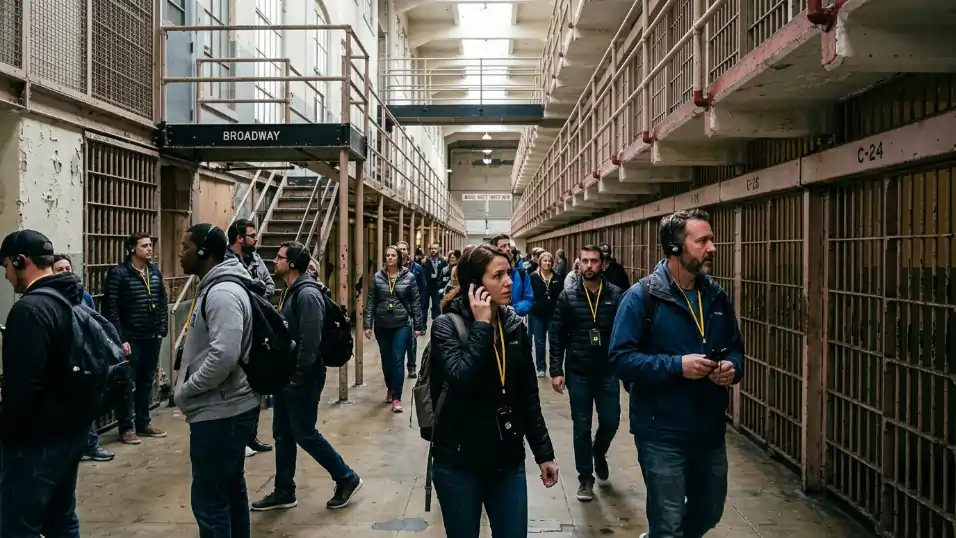
The cellhouse where George "Machine Gun" Kelly lived as prisoner AZ-117 stands on Alcatraz Island exactly as it did during his seventeen years there. The corridors, the dining hall, the exercise yard, the cell blocks where he spent his days following rules he had spent his entire criminal career ignoring, all of it remains accessible to visitors and carries the physical reality of the history that happened within it.
The audio tour that anchors the cellhouse experience draws directly on accounts from former inmates and correctional staff, connecting the stories of famous prisoners including Kelly to the specific spaces you walk through. Standing in the dining hall where AZ-117 ate his meals, or looking down the main corridor where he moved each day under guard supervision, creates a connection between the historical story and the present-day physical environment that no written account can fully replicate.
Kelly's story is one that resonates with visitors precisely because of its unexpectedness. The most famous machine gunner in America becoming one of the prison's most cooperative inmates is the kind of historical detail that lands differently when you are standing inside the institution where it happened.
Choosing the Right Tour
For first-time visitors and those coming specifically to explore the history of famous inmates like Kelly, the Alcatraz Day Tour is the natural starting point. Full access to the cellhouse, the audio tour, the exercise yard, and the outer island areas gives the complete picture of the environment Kelly inhabited for seventeen years.
The Alcatraz Night Tour offers the same cellhouse access in conditions that feel considerably more immediate after dark. Smaller group sizes and reduced lighting inside the cell blocks create an atmosphere that connects more directly with the psychological weight of long-term confinement, the kind of experience that Kelly's seventeen years of quiet compliance gradually produced.
For visitors who want access beyond the standard tour route, the Behind the Scenes Tour opens areas of the island that most visitors never reach, including sections of the building and the outer island that add depth to the understanding of how the institution functioned as a complete environment. Tickets for all tour types sell out well in advance, particularly during peak seasons, and booking early is the single most important practical step in planning the visit.
Final Thoughts: The Outlaw The Rock Quietly Dismantled
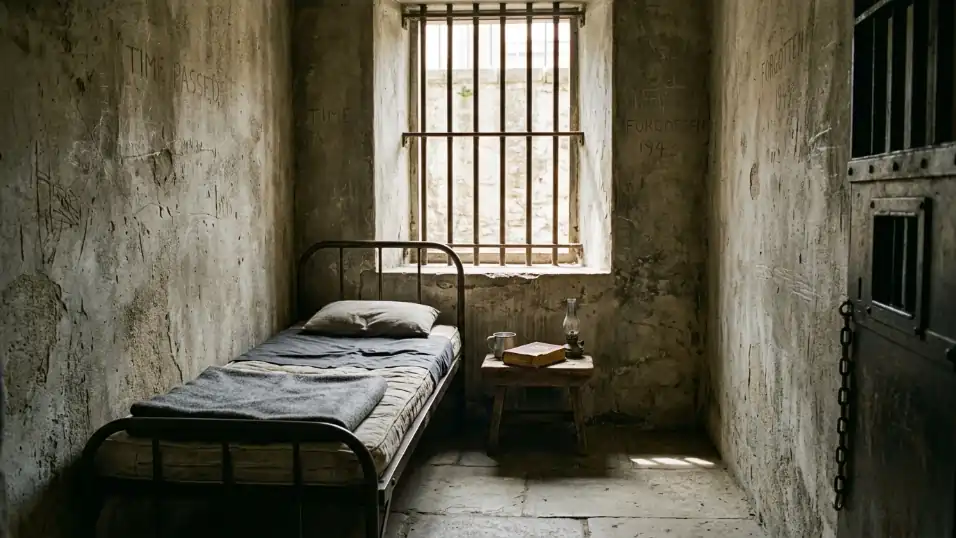
George "Machine Gun" Kelly entered Alcatraz carrying one of the most recognizable criminal names in American history. He served seventeen years there causing almost no trouble, made no attempt to escape, and left for Leavenworth in 1951 as a quiet, aging prisoner whose famous nickname had not been spoken in public with any particular urgency for years.
The machine gun was always more myth than biography. The legend was Kathryn's work, amplified by press coverage and a cultural appetite for dangerous characters during the Prohibition era.
What Alcatraz revealed, by removing every element of the scaffolding that had built and sustained that legend, was the man underneath it: capable, organized, and entirely willing to follow rules when rules were the only available option.
His story does not end with a dramatic escape attempt or a violent confrontation with the institution. It ends with seventeen years of quiet service and a transfer to another prison where he died on his fifty-ninth birthday.
That quietness is the point. Alcatraz did not need to defeat Machine Gun Kelly in any dramatic sense. It simply needed to take away everything that had made him Machine Gun Kelly, and the institution accomplished that completely from the moment prisoner AZ-117 walked through its gates.
Frequently Asked Questions
Was George "Machine Gun" Kelly really at Alcatraz?▾
How did Kelly get the nickname "Machine Gun"?▾
What crime sent Kelly to Alcatraz?▾
What was Kelly's prisoner number at Alcatraz?▾
Did Kelly ever try to escape from Alcatraz?▾
What was Kelly like as a prisoner?▾
Did Kelly actually use a machine gun in his crimes?▾
Sierra
Published on Alcatraz Tickets