
Things to Do in Alcatraz Island: Top Attractions You Can't Miss
More Than Just a Prison
Most people visit Alcatraz for the prison. The cells, the stories, the escape attempts, the names etched into American criminal history. That experience is real and it delivers. But if the cellhouse is all you see, you are leaving a significant part of the island unexplored.
Alcatraz is a National Recreation Area with historic gardens, coastal trails, panoramic bay views, active wildlife colonies, and some of the most dramatic scenery in San Francisco. The prison is the centerpiece, but the island around it has its own identity, and the visitors who discover that come away with something far more complete than those who stick to the main route.
There is more to Alcatraz than you think. Here is everything worth doing when you get there.
1. Explore the Cellhouse
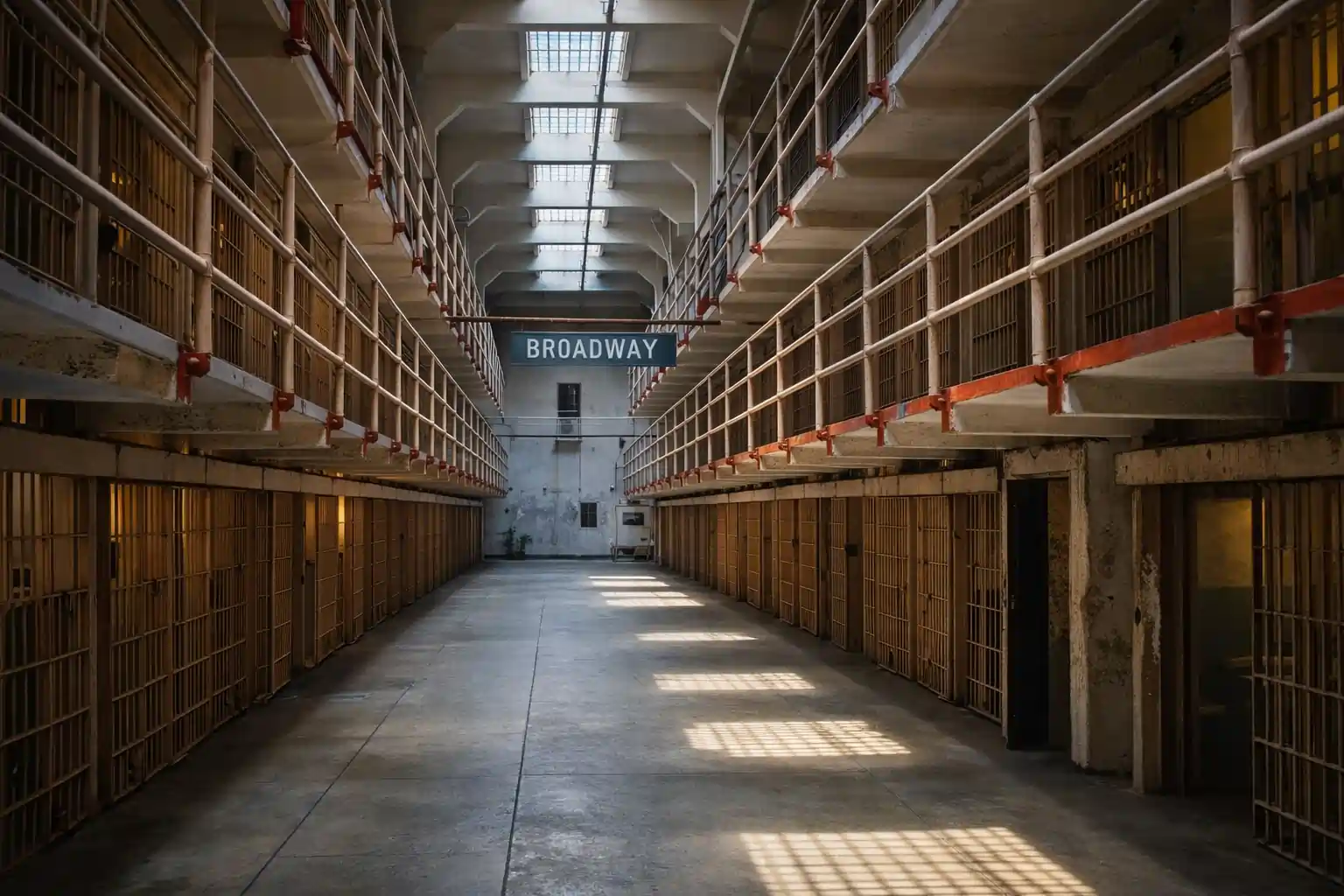
The cellhouse is the heart of any Alcatraz visit and the experience that draws nearly every visitor to the island. Walking through the actual prison blocks, seeing the cells exactly as they were, and standing in the doorway of a space where some of America's most dangerous criminals lived out their sentences is an encounter with history that photographs and documentaries simply cannot prepare you for.
The cell blocks are preserved in remarkable detail. Broadway, the main corridor running between B and C blocks, still carries the institutional weight of a working prison. The individual cells, each measuring five feet by nine feet, make the reality of confinement immediately physical in a way that is genuinely affecting. The hole, the solitary confinement unit in D Block, is a separate experience entirely, darker, quieter, and more psychologically intense than the main cell blocks.
The cellhouse also contains exhibits covering the Alcatraz Island's military history, the Native American occupation of 1969 to 1971, and the stories of individual inmates and staff. Exploring it thoroughly takes more time than most visitors budget for, which is why rushing through is one of the most common regrets people have after their visit. This is the highlight of every Alcatraz Day Tour, and it deserves the time it asks for.
2. Take the Award-Winning Audio Tour

The cellhouse audio tour is included with most Alcatraz tickets and is widely regarded as one of the finest museum audio experiences in the world. Produced with recordings from real former guards and inmates, it narrates your walk through the prison with firsthand accounts that bring the space to life in a way no written exhibit can.
The voices are unhurried, specific, and completely authentic. A former correctional officer describes the psychological pressure of managing dangerous men in a confined environment. A former inmate speaks about the daily routine, the silence, and the small rituals that made time bearable. Standing in the actual space where these experiences happened while listening to the people who lived them creates something that stays with visitors long after the ferry ride back to the mainland.
The tour runs approximately 45 minutes at a comfortable pace. Do not skip sections and do not rush it. The detail builds progressively as you move through the cellhouse, and the full experience is significantly better than a partial one.
3. Walk the Agave Trail
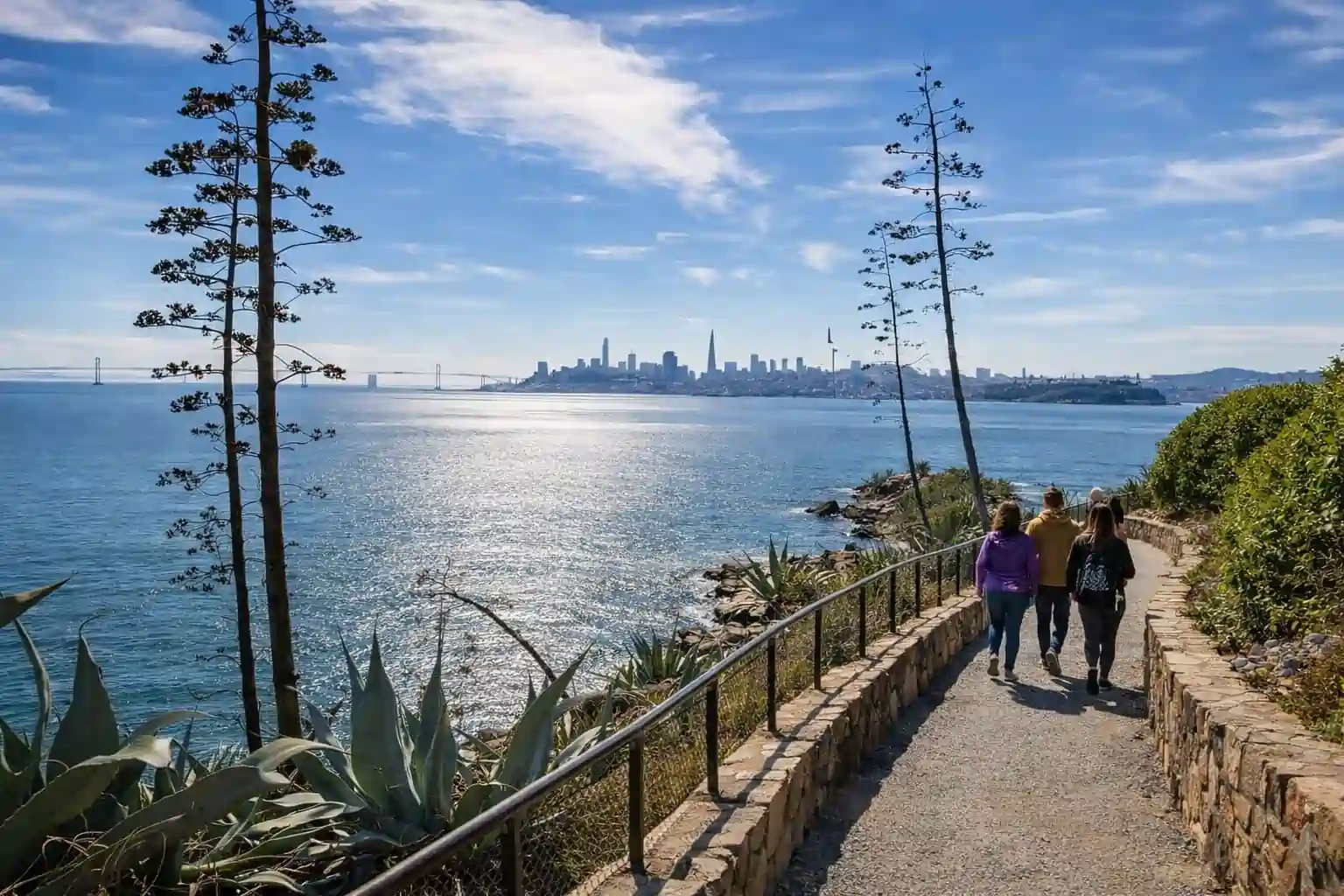
The Agave Trail is one of the most underrated experiences on Alcatraz Island, and the majority of visitors walk straight past the path that leads to it without ever knowing it exists.
The trail runs along the southern edge of the island, following a stone-lined path that curves around the base of the hillside and connects back up to the Parade Ground at the top. It is short, approximately 0.6 miles, and classified as easy walking. What it offers in that short distance is a perspective on Alcatraz that the cellhouse cannot provide. Open water, coastal rock formations, native plantings, active birdlife, and unobstructed views of the San Francisco skyline from the island's southern edge.
The trail takes its name from the agave plants that line much of the route, originally planted by prison families in the 1930s and 1940s partly as a natural deterrent against escape attempts along the shoreline. Some of these plants send up flower spikes reaching 40 feet high, creating a dramatic visual contrast against the bay and the city beyond.
One important practical note: the Agave Trail is seasonal. It is open from late September through February to protect nesting birds during their breeding season. If your visit falls within that window, the trail is absolutely worth including in your itinerary.
4. Discover the Historic Gardens
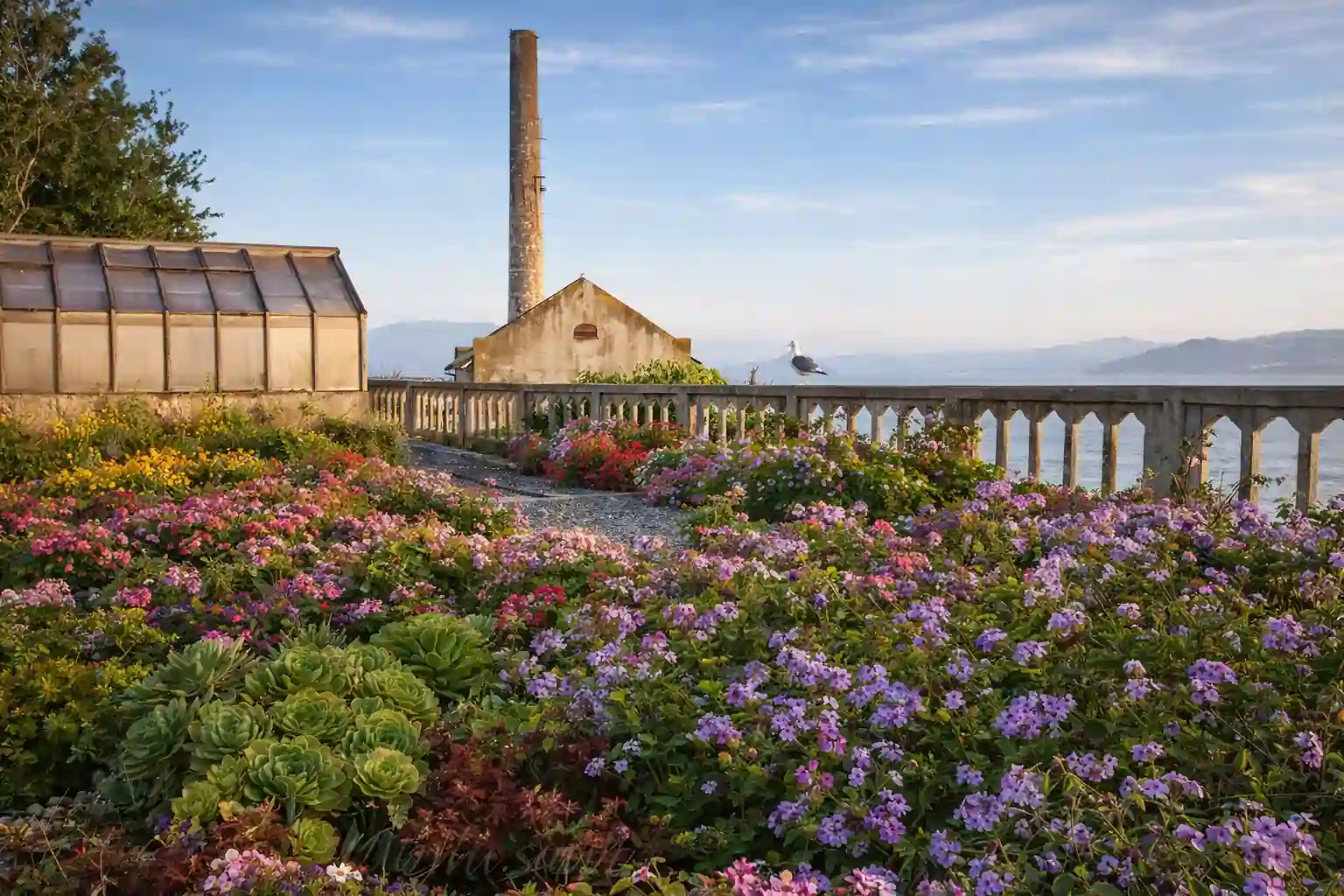
The gardens of Alcatraz are one of the island's best-kept secrets, and for visitors who stumble across them without prior knowledge, they are consistently one of the most surprising and memorable parts of the experience.
During the prison years, correctional officers and their families cultivated gardens across the island. Flowers, ornamental plantings, and small green spaces provided a counterpoint to the austere institutional environment of the prison above. When the facility closed in 1963 and the residential community departed, the gardens were left largely untended and grew wild over the following decades.
Restoration efforts in recent years have brought many of these plantings back, and the result is a living layer of history that sits quietly alongside the more prominent story of the prison. Walking through the restored garden areas, knowing they were tended by families who called this island home, adds a human dimension to Alcatraz that most visitors do not expect to find.
The gardens also attract significant birdlife and provide some of the most photogenic spots on the island outside of the main viewpoints. They reward slow exploration and are best discovered by stepping off the main path and following your curiosity.
5. Enjoy Panoramic Views of San Francisco Bay
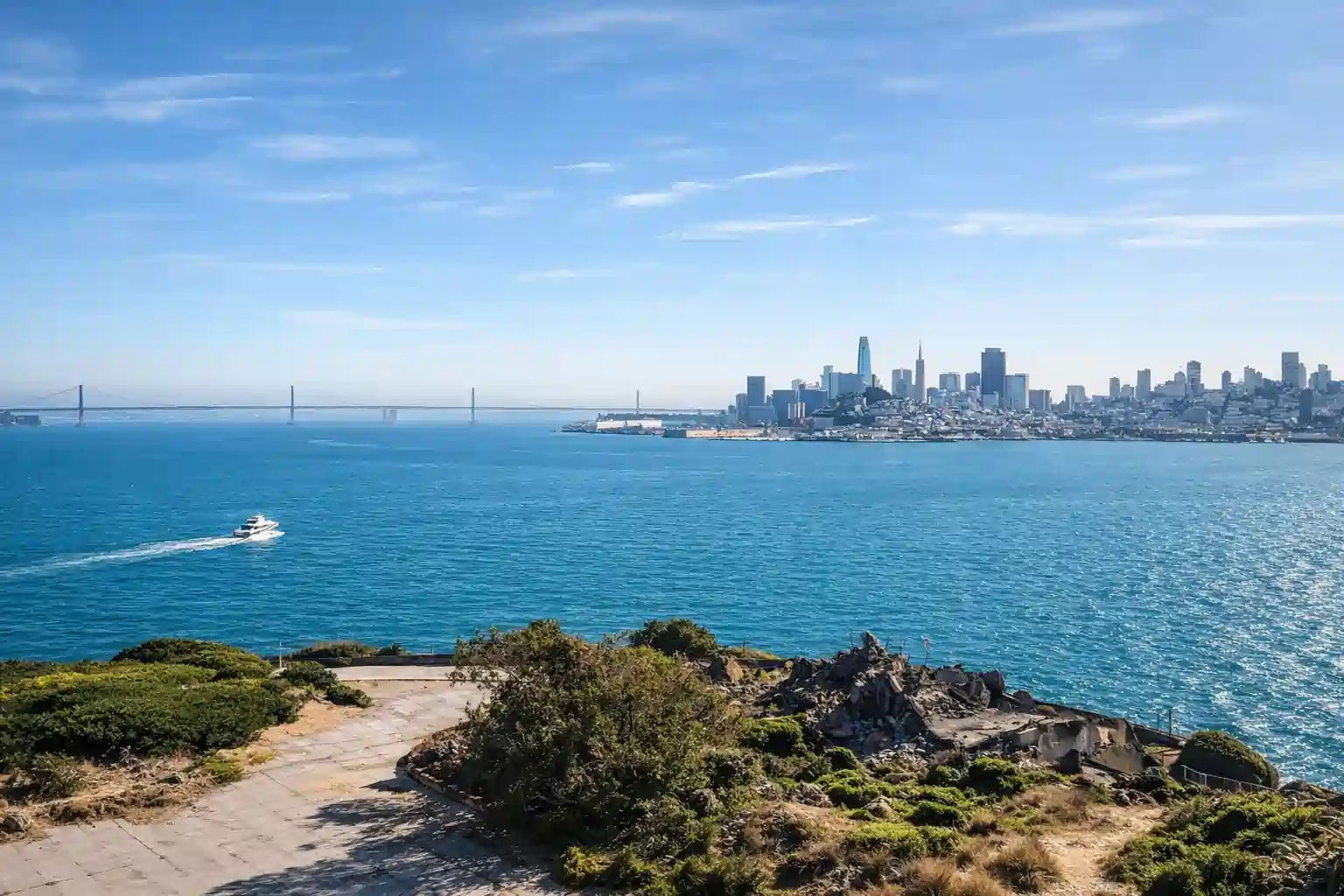
The views from Alcatraz Island are extraordinary, and they are available from multiple points across the island at no additional effort or cost beyond simply being there.
From the upper levels near the cellhouse, you have a full 360-degree panorama of San Francisco Bay. The city skyline sits directly to the east, close enough to feel immediate. The Golden Gate Bridge stretches across the western entrance to the bay, framed by the green hills of Marin County behind it. The Bay Bridge connects the city to Oakland to the south. On clear days, which late summer and early autumn tend to deliver reliably, this view is as close to perfect as urban bay landscapes get.
The elevated position of the island means that even from inside the cellhouse, windows frame the bay in compositions that feel almost cinematic. Outside on the upper walkways and open areas, the full panorama opens up all at once. For photographers, Alcatraz offers a concentration of compelling compositions within a compact area that few locations in San Francisco can match
6. Learn About the Famous Escape Attempts

Of all the stories woven through the Alcatraz experience, the escape attempts are the ones that hold visitors longest and generate the most conversation after the ferry ride back.
There were 14 known escape attempts during the prison's 29-year operation, involving 36 men. Most were caught quickly. Some died in the attempt. And three men, in the summer of 1962, simply vanished.
Frank Morris and brothers John and Clarence Anglin spent months executing one of the most elaborately planned breakouts in American prison history. Using improvised tools, they dug through deteriorating concrete behind their cell walls, created papier-mache dummy heads to deceive overnight guards, and launched a makeshift raft constructed from more than 50 stolen raincoats into the cold, fast-moving currents of San Francisco Bay. They were never found.
The FBI officially closed the case in 1979. The US Marshals Service kept it open for decades longer. The debate over whether they survived has never fully settled. Walking through the actual cells where the escape was planned, seeing the holes in the walls, and standing in the utility corridor the men crawled through turns a story you may have read about into a physical place you are standing inside. That shift from knowledge to experience is what makes this part of the Alcatraz visit so compelling.
7. Spot Wildlife and Seabirds
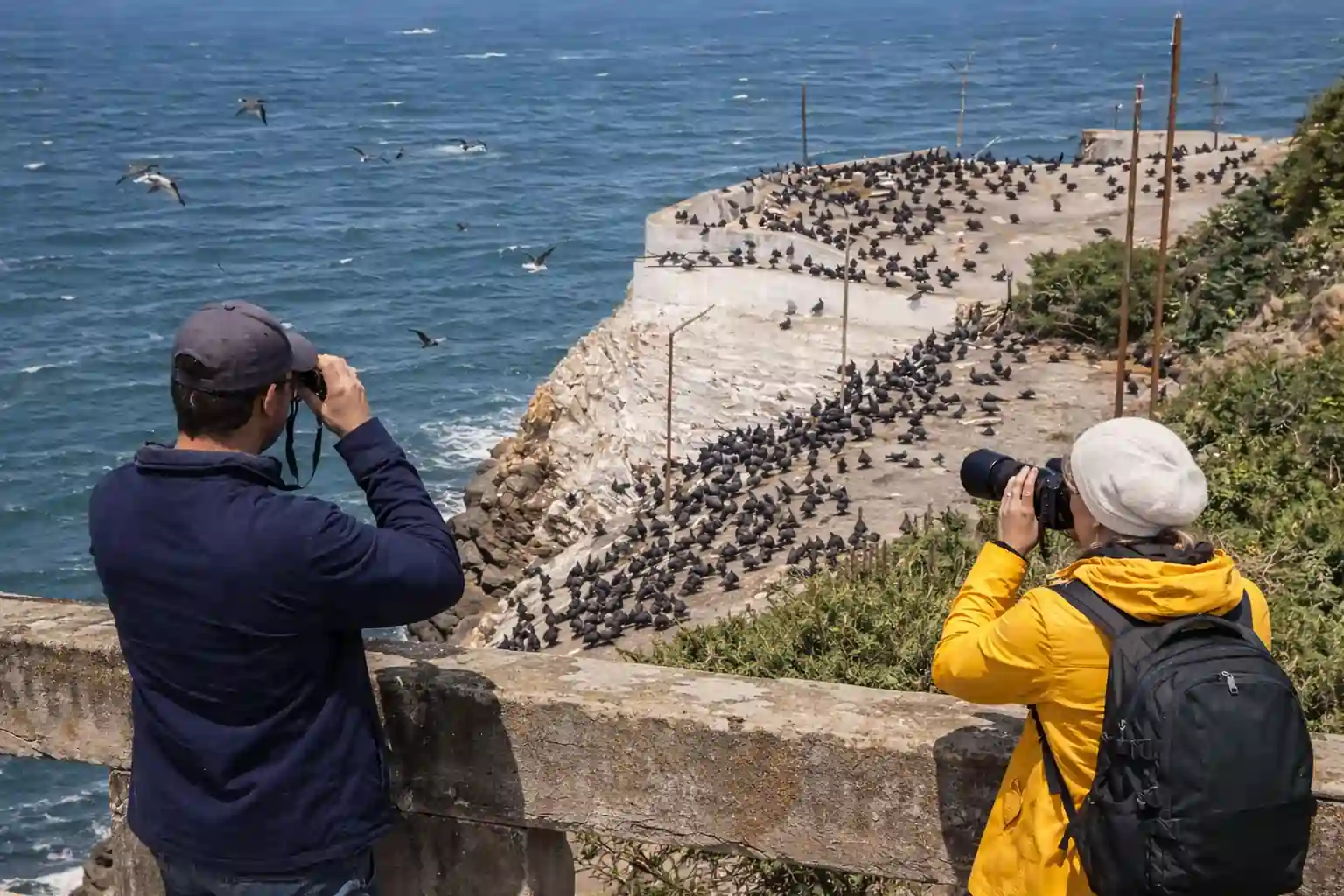
Most visitors arrive at Alcatraz expecting history and leave surprised by the wildlife. The island is one of the most significant seabird nesting sites in the entire San Francisco Bay region, and the bird activity across the outer areas is remarkable during the right season.
Western Gulls nest on Alcatraz in larger numbers than anywhere else in the bay. Black-crowned Night Herons, Snowy Egrets, Piping Cormorants, and Great Blue Herons all roost and breed across the island's rubble piles, open ledges, and garden areas. During nesting season, the birds are present in visible, audible numbers, and encounters at close range are common simply by walking the outer paths.
This is not a managed wildlife exhibit. The birds nest and feed entirely on their own terms, and the trail and garden areas pass through active habitat rather than around it. That quality makes wildlife encounters feel genuine in a way that curated nature experiences rarely do. For visitors who enjoy birdwatching or nature photography, the outer areas of Alcatraz deliver something genuinely unexpected within one of America's most visited historic sites.
Peregrine Falcons have also been recorded nesting on the island in recent years, adding to a list of species that continues to grow as habitat restoration efforts expand across the island.
8. Explore the Island at Your Own Pace
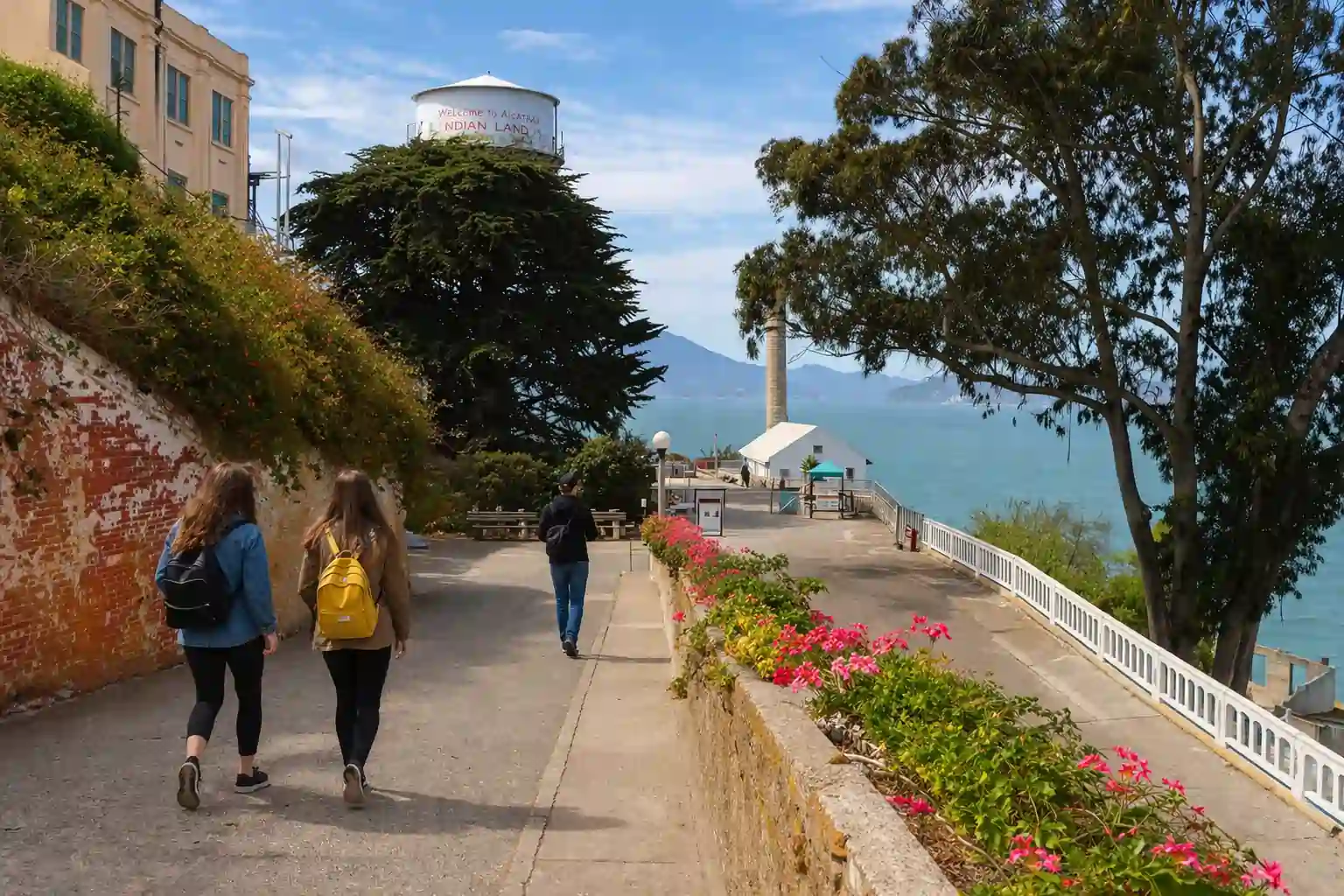
One of the most underappreciated qualities of an Alcatraz visit is the freedom it gives you once you step off the ferry. Unlike many major attractions that move visitors through a fixed route on a fixed schedule, Alcatraz is largely self-guided, and that structure rewards curiosity.
The cellhouse audio tour provides a natural framework for the prison interior, but outside of that the island is yours to navigate however you choose. You can linger in the areas that interest you most, return to exhibits you want to revisit, spend extra time in the prison yard, walk the outer paths twice, or simply find a spot with a view and sit with it for a while. The return ferry runs on a flexible schedule throughout the day, so there is no external pressure to move faster than you want to.
Visitors looking for deeper exploration beyond the standard public route often choose the Behind the Scenes Tour. This option opens up sections of the cellhouse and island infrastructure that fall outside the normal visitor path, adding layers of historical and architectural detail that reward anyone with a genuine interest in the full story of the island. It is the right choice for visitors who want to go beyond the surface and understand Alcatraz at a deeper level.
9. Experience Alcatraz at Night

The night experience on Alcatraz is not simply the same visit in different lighting. It is a meaningfully different encounter with the island, and for many visitors it becomes their definitive Alcatraz memory.
The Alcatraz Night Tour operates with smaller groups than the daytime visits, which means quieter corridors, more personal space, and an atmosphere that the busier daytime experience cannot replicate. The cellhouse after dark carries a different kind of weight. The audio tour lands harder in the silence. The empty cell blocks hold a stillness that feels more present without the ambient noise of a crowd moving through.
Outside, the transformation is equally striking. The bay is dark, the wind moves through the open areas with nothing to soften it, and the lights of San Francisco glow across the water in a way that makes the island's isolation feel immediate and real. Standing on the upper level of the island at night, with the city spread out in front of you and the history of the place settled around you, creates an experience that is difficult to describe but easy to remember.
For solo travelers, couples, and anyone who values atmosphere and immersion over convenience, the night tour is worth prioritizing. Book it the same way you would book the day visit, early, with a specific date secured well in advance.
10. Visit the Dock and Historic Buildings
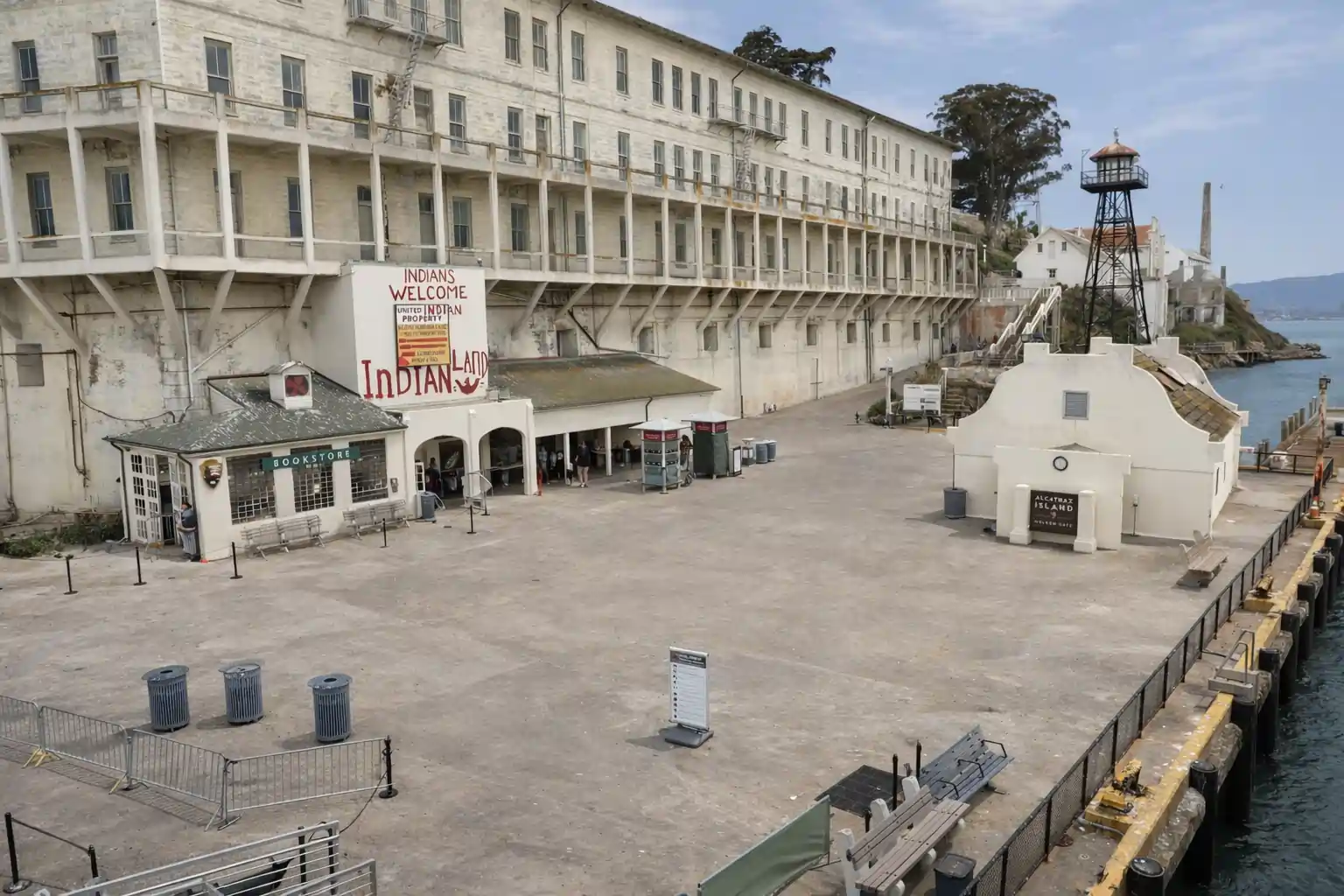
The dock area at Alcatraz is where your island experience begins, and it deserves more attention than most visitors give it before they head uphill toward the cellhouse.
The dock and its surrounding structures represent the operational infrastructure of the island during the prison years. The Model Industries Building, the powerhouse, the water tower, and the ruins of the former residential apartment buildings all stand along the lower levels of the island and tell a story that the cellhouse alone cannot. These were the buildings that kept the island running, that housed the families of correctional staff, and that formed the backbone of a functioning residential and industrial community on a rock in the middle of San Francisco Bay.
The apartment buildings are largely gone now, demolished following the Native American occupation of 1969 to 1971, but their footprints and partial ruins remain visible across the lower island. Walking through this area with that history in mind turns what might look like simple ruins into something more layered and meaningful.
The dock area also offers some of the best unobstructed views of the island's exterior, including the cliff faces and the lower shoreline that most visitors never see from the upper levels. It is worth taking a few minutes on arrival and departure to look around properly rather than heading straight for the main path.
Make the Most of Your Alcatraz Visit
Alcatraz rewards the visitors who arrive with curiosity and leave the main path behind. The cellhouse is the centerpiece, and it delivers everything its reputation promises. But the island around it, the trail, the gardens, the viewpoints, the wildlife, the dock, the ruins, the night atmosphere, adds up to an experience that is significantly richer than a prison tour alone.
The practical foundation is simple. Book early, give yourself three to four hours on the island, dress for the bay weather, and resist the urge to rush. Whether you visit during the day for full access and flexibility, choose the night tour for atmosphere and a quieter experience, or go deeper with a behind-the-scenes visit, the quality of what you get out of Alcatraz is directly connected to the intention you bring to it.
San Francisco has no shortage of things to do. Alcatraz stands apart from all of them. Plan well, explore fully, and give the island the time it deserves.
Frequently Asked Questions
What are the top things to do on Alcatraz Island?▾
How much time do I need to see everything on Alcatraz?▾
Is the audio tour worth doing? ▾
Can I walk the Agave Trail on any visit? ▾
What wildlife can I see on Alcatraz? ▾
Is the night tour worth it?▾
What is the behind-the-scenes tour?▾
Are the gardens on Alcatraz open to visitors?▾
Can I explore Alcatraz without a guided tour?▾
What should I bring to Alcatraz? ▾
Adrian Davis
Published on Alcatraz Tickets