The Myth of Alcatraz: How Media Turned a Prison into a Legend
The Alcatraz You Think You Know
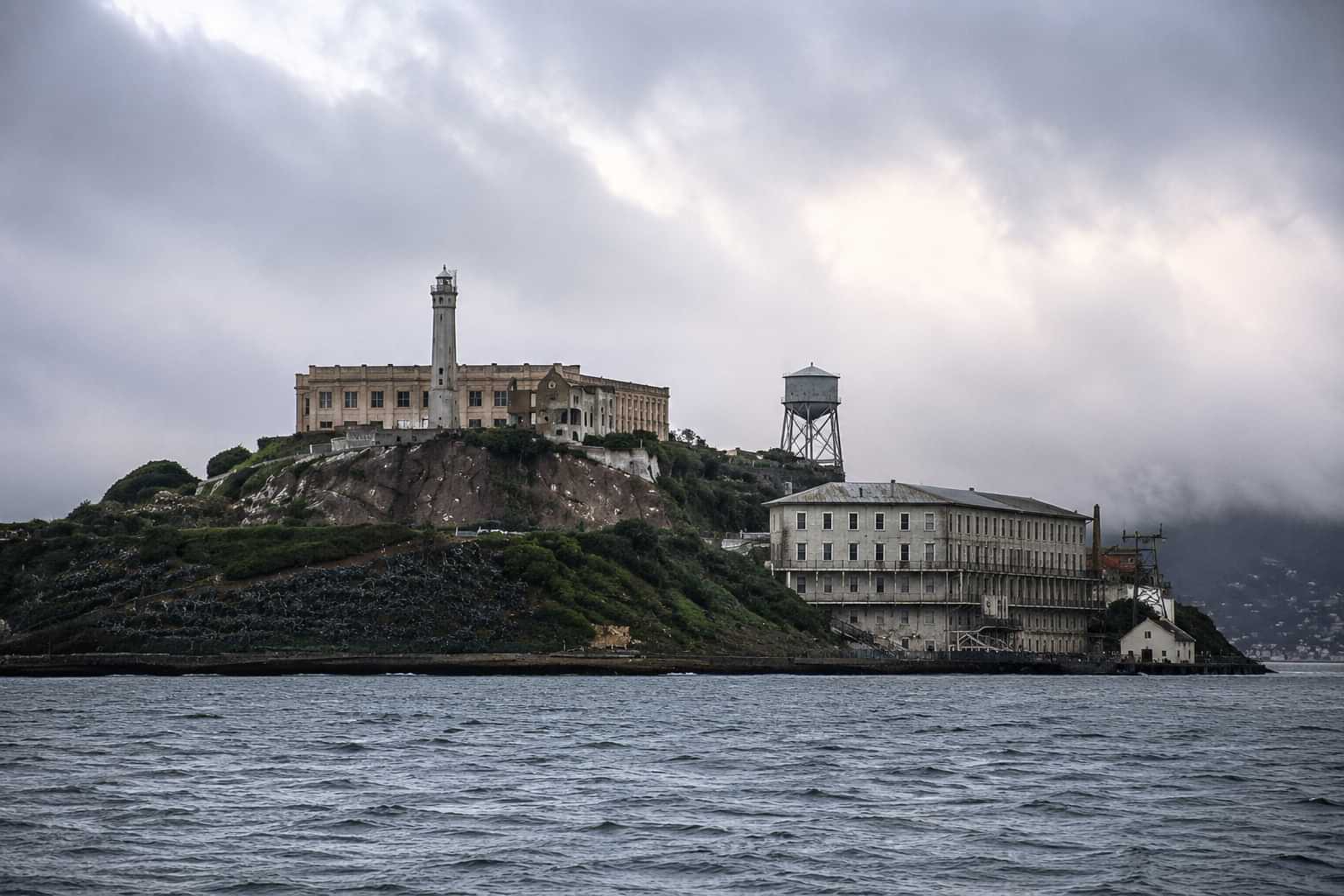
Most people who book an Alcatraz Day Tour arrive at Pier 33 carrying a version of the island already formed in their mind. Dark corridors. Impenetrable walls. A place so severe that men lost their minds and so inescapable that no one who tried to leave ever survived.
That image is vivid, widely shared, and built almost entirely from fiction.
The Alcatraz myths shaping public expectation today were not drawn from prison records or inmate testimony. They were constructed in film studios, sharpened by crime writers, and repeated so consistently that they displaced the actual history. The real Alcatraz is more specific, more human, and considerably more interesting than the legend that replaced it.
What Alcatraz Really Was
The Island Before the Prison
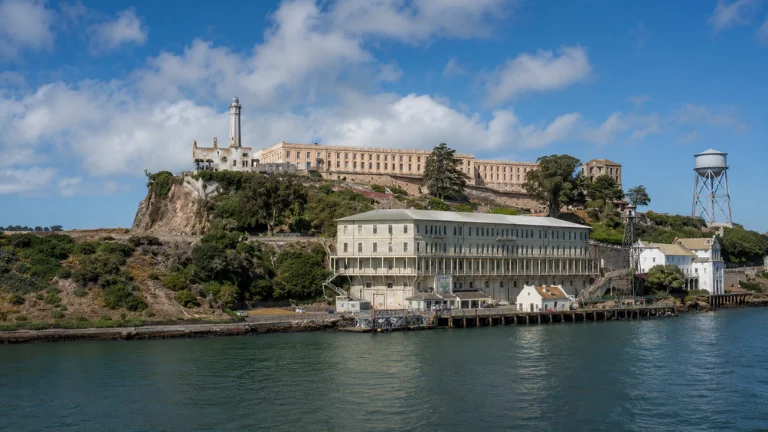
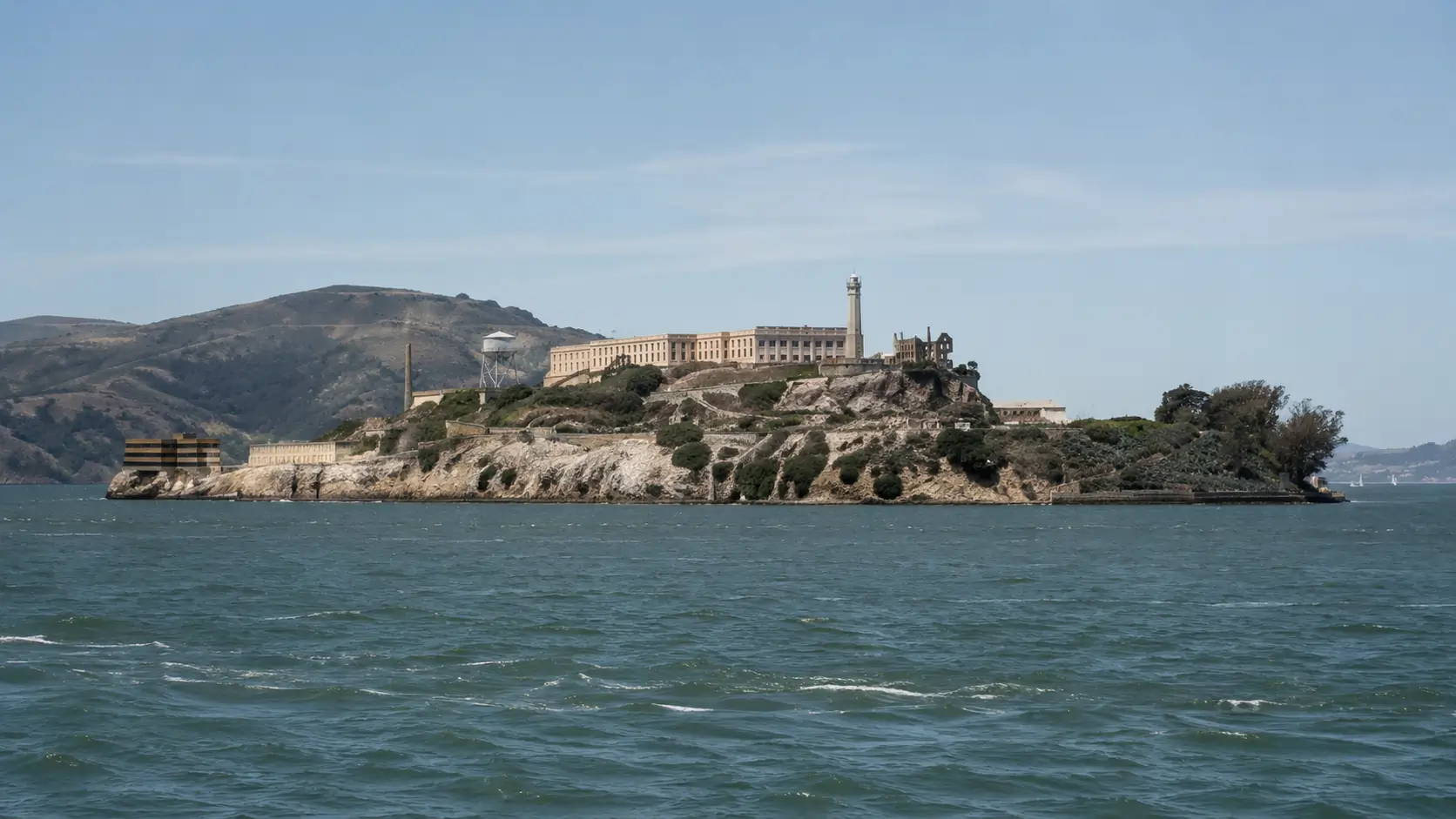
Alcatraz Federal Penitentiary opened on August 11, 1934, on a 22-acre island sitting 1.5 miles offshore in San Francisco Bay. It was not built from scratch. The island had functioned as a military fortification since the 1850s and as a military disciplinary barracks since the Civil War. The federal government acquired it from the Army in October 1933 and spent nine months converting the existing military prison into a federal penitentiary before the first civilian inmates arrived.
The name predates the prison by nearly 160 years. Spanish explorer Juan Manuel de Ayala charted the bay in 1775 and recorded the island as "La Isla de los Alcatraces," meaning the Island of the Pelicans, referencing the large seabird colonies that covered its rocky shores. The word Alcatraz derives from the Arabic "al-qaṭrās," meaning a large seabird.
Why the Federal Prison Was Built
The federal prison was created to solve a specific and documented problem. High-profile organized crime figures had demonstrated they could continue running criminal operations from inside conventional prisons. Al Capone had directed his Chicago organization from Atlanta Federal Penitentiary for two years before his 1934 transfer. The Bureau of Prisons needed a facility that functioned as a genuine endpoint, where communication, influence, and social hierarchy could be systematically dismantled.
Despite its fearsome reputation, Alcatraz never held more than 302 inmates at its peak and averaged closer to 260 during most of its 29-year operation. The deliberate cap on population was a management strategy. Smaller numbers meant closer supervision and a higher guard-to-inmate ratio than any comparable federal facility. The 1 to 3 ratio at Alcatraz was roughly three times more intensive than the national federal average at the time.
Internment was also never intended as permanent. Inmates who demonstrated consistent compliance could earn transfer to lower-security facilities. Roughly a third of all men who served time at Alcatraz were eventually transferred out under those terms.
What Visitors Actually Find
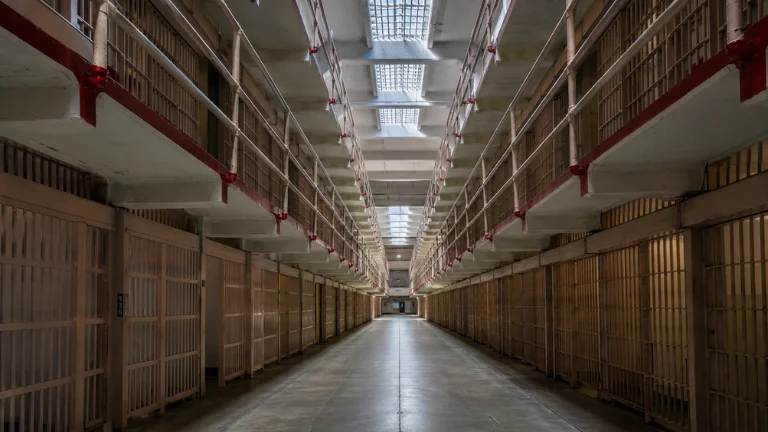
Visitors who take an Alcatraz Day Tour for the first time consistently report the same surprise. The cellhouse is compact, not vast. The corridors are institutional and functional, not theatrical. The exercise yard faces the open sky and the San Francisco skyline. The island's restored gardens, maintained by volunteer horticulturists working with the National Park Service, line the paths between buildings with plants that inmates once cultivated themselves.
The architecture was designed for control. In natural daylight, it reads as severe and deliberate. The gothic darkness that film lighting creates does not exist on the island itself.
How Hollywood Built the Alcatraz Myth
Escape from Alcatraz (1979) and the Morris Problem
The 1979 Paramount film directed by Don Siegel and starring Clint Eastwood as Frank Morris is the single most influential portrayal of Alcatraz in cinema history. It dramatized the June 1962 escape and created a specific narrative: Morris as lone genius, the Anglin brothers as loyal but secondary figures, and prison staff as uniformly brutal.
The film was based on J. Campbell Bruce's 1963 book, written within a year of the escape and relying on information that has since been significantly revised. The Anglin family was never contacted during production. Researcher Ken Widner spent years investigating the escape and concluded in a 2024 book that John Anglin, not Morris, was the primary architect of the plan. Widner's research included facial recognition analysis of a photograph believed to show the brothers alive in Brazil in the mid-1970s, directly contradicting the film's framing.
The Eastwood portrayal also established the visual grammar of Alcatraz that persists today. Dim cell lighting. Guards filmed from low angles. A near-total absence of the mundane routines that actually dominated daily prison life.
The Rock (1996) and the Fortress Fantasy
Michael Bay's 1996 action film bears almost no factual relationship to Alcatraz Island. Its premise involves hidden military tunnels, government chemical weapons, and a hostage scenario resolved through spectacular violence. It has been seen by hundreds of millions of people worldwide.
What The Rock contributed to the mythology was the idea of Alcatraz as a place of concealed infrastructure and government secrecy, a fortress whose true nature was hidden from the public. That idea has no basis in the prison's history but has proven remarkably durable.
Visitors occasionally arrive expecting concealed passages and military hardware. The Behind the Scenes Tour, which does access normally closed areas including utility corridors, the hospital, and lower levels, occasionally has to clarify the difference between genuine restricted access and the fictional version the film created.
The Inescapable Prison: Fact, Myth, and the 1962 Question
Between 1934 and 1963, Alcatraz recorded 14 documented escape attempts involving 36 inmates:
23 inmates were recaptured
6 were shot and killed during attempts
2 drowned with bodies recovered
5 remain officially listed as missing and presumed dead
The institutional claim of impermeability was never that escape was physically impossible. It was that no confirmed successful escape had occurred. The distinction matters, and the June 1962 attempt is where the official narrative becomes most strained.
The Planning Behind the 1962 Escape
Frank Morris, John Anglin, and Clarence Anglin spent six months preparing their escape with a level of methodical planning that went entirely undetected until the morning after they vanished.
Using sharpened dining spoons and a homemade drill built from a stolen vacuum cleaner motor, the three men excavated the deteriorating concrete walls behind their ventilation grilles in adjoining B-Block cells. The concrete had weakened significantly from salt air and moisture, a maintenance problem the facility had documented but not yet addressed. Morris masked the excavation sound by scheduling accordion practice during digging hours each evening.
Each man constructed a papier-mâché dummy head using soap, paint, cotton padding, and real human hair collected from the prison barbershop floor over several weeks.
The Night of June 11, 1962
The three men moved through utility corridors above the cellblock ceiling, reached the roof via a ventilation shaft, descended a 50-foot drainage pipe to the ground, and cut through two layers of perimeter fencing to reach the shoreline.
They had assembled an inflatable raft from more than 50 stolen raincoats sealed with makeshift contact cement, along with paddles and crude life preservers built from the same material. They entered the water at approximately 10 PM. What happened after that has never been established.
What the Evidence Actually Shows
The FBI investigated for 17 years before closing the case in December 1979, concluding the men most likely drowned. The U.S. Marshals Service inherited the file and kept it active until September 2026, when the statute of limitations on the original charges finally expired.
Evidence continued surfacing for decades. In 2013, a letter arrived at the San Francisco police department claiming to be from John Anglin, stating all three men had survived and lived abroad. FBI forensic analysis returned inconclusive results on handwriting, fingerprints, and DNA.
In November 2025, a team recreated the escape using period-accurate materials and tidal data from the night of June 11, 1962, successfully navigating a raft from the island to a point near the Golden Gate Bridge. The route was confirmed as physically viable under the conditions that existed that night.
The Behind the Scenes Tour accesses sections of the B-Block utility corridor and escape route permanently closed on the Day Tour, including areas where the original excavation damage to the cell walls is still visible. The physical scale of what Morris and the Anglins accomplished becomes considerably more tangible in those spaces than any film can convey.
The "inescapable" label was always institutional messaging rather than engineering fact. The 1962 attempt proved its limits clearly enough that Alcatraz closed on March 21, 1963, less than nine months later.
Fear, Isolation, and the Psychological Myth
The Silence Rule and Its Real Purpose
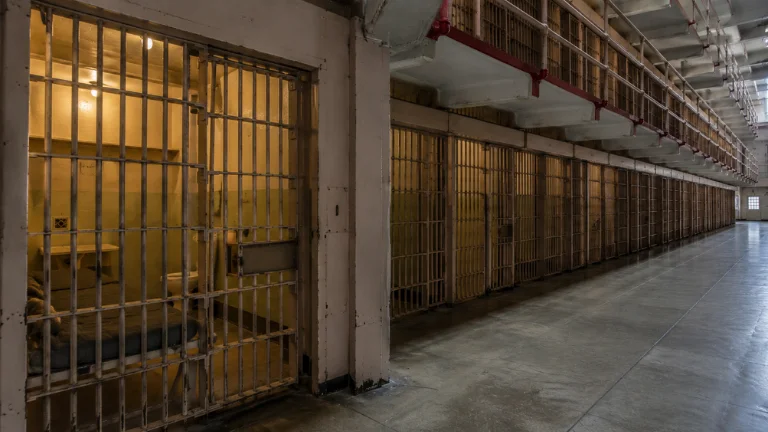
The early years under Warden James A. Johnston included a strict enforced silence policy. From 1934, inmates were prohibited from speaking in corridors, meal lines, and during movement through the facility. The intent was clinical. Organized crime depended on communication. By eliminating speech, Johnston was attacking the social architecture that made his most dangerous inmates dangerous. A crime boss who cannot speak to associates ceases to function as a crime boss.
The psychological consequences were severe and documented. Inmates who endured extended periods under the silence rule showed measurable deterioration. Some eventually broke collectively, refusing compliance in numbers too large for the administration to punish, which forced a partial relaxation of the policy by the late 1930s.
What the Mythology Leaves Out
What the films consistently omit is the structural counterweight to the harshest conditions. Inmates who followed the rules had access to a well-stocked library, musical instruments, an exercise yard with views of San Francisco Bay, and eventually a radio program. The food at Alcatraz was by multiple accounts better than most comparable federal prisons of the era, a deliberate policy Johnston used to reduce tension. Al Capone played banjo in an inmate band called the Rock Islanders, which rehearsed in the prison model room on weekends.
D-Block is where the harshest conditions existed. The six cells designated as the Hole had no light, no furniture beyond a drain in the floor, and no human contact beyond a guard delivering meals. Inmates sent there served between one and nineteen days under those conditions. The psychological damage those specific cells caused was real and lasting for many who experienced them.
What Visitors Experience
The Day Tour audio program captures this contrast effectively. Former inmates and guards describe both dimensions, the mundane daily routines of work assignments, mealtimes, and library visits alongside the specific severity of punishment in D-Block.
Visitors who arrive expecting the entire prison to feel like solitary confinement typically find the main cellhouse more ordinary than anticipated. The horror surfaces in specific rooms and specific histories, not in the general atmosphere of the building.
Famous Inmates and the Stories Media Chose to Tell
How Al Capone Became the Symbol of Alcatraz
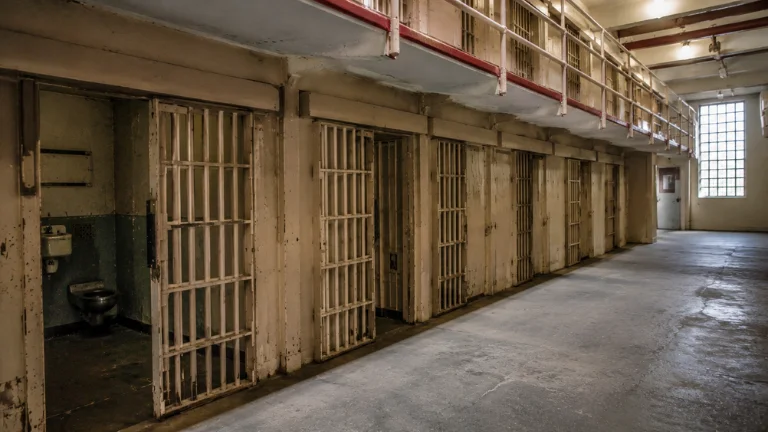
Al Capone became the face of Alcatraz not because of what he did there, but because the press made him one before he arrived.
By the time he reached Alcatraz Federal Penitentiary on August 22, 1934, newspapers had already turned him into America’s ultimate gangster, covering his lifestyle, trials, and persona in detail. His transfer was framed as a dramatic showdown: the state vs. its most dangerous criminal, “The Rock vs. the Boss.” It was compelling, but largely fictional.
The reality was far less dramatic. Alcatraz’s strict systems, censored mail, monitored visits, enforced silence, and financial isolation, destroyed Capone’s influence within months.
By 1937, he was severely weakened by untreated neurosyphili, confused, isolated, and bullied by other inmates. In his final years, he played banjo in a small prison band, mostly ignored.
The press never gave this decline the same attention as his arrival. The myth was created the moment he stepped onto the island, everything after didn’t fit the story, so it was largely ignored.
How Robert Stroud Became a Myth
Robert Stroud’s story is one of the most misleading myths tied to Alcatraz.
He was a convicted double murderer, killing a bartender in 1909 and a prison guard in 1916 before over 1,000 witnesses. Due to repeated violence, he spent 42 of 54 years in solitary confinement.
In 1955, Thomas Gaddis portrayed him as a misunderstood genius whose bird research showed rehabilitation. The book emphasized sympathy over full accuracy.
The 1962 film Birdman of Alcatraz, starring Burt Lancaster, strengthened this image, showing Stroud as calm and compassionate. It gained major acclaim and fixed this version in public memory.
But the key fact is wrong: Stroud studied birds at Leavenworth Federal Penitentiary, not Alcatraz Federal Penitentiary. After being moved to Alcatraz in 1942 for making alcohol, he was never allowed birds there.
Inmates and officials described a very different man, violent and unsettling. A psychiatrist noted he spoke of his crimes with pleasure, and the warden called the film unrealistic.
The film wasn’t a documentary, but its emotional impact made it feel like one. That’s how a violent prisoner became a cultural myth.
The Haunted Alcatraz Story and Who Built It
The Kernel of Truth Behind the Ghost Stories
The haunted Alcatraz narrative did not originate with the tourism industry. That distinction matters when examining how the myth was constructed.
Accounts of unexplained experiences at Alcatraz predate the National Park Service's management of the island by decades. Warden Johnston documented an incident during the 1940s in which multiple staff members independently reported screaming coming from inside a sealed utility corridor in the cellhouse basement. Guards who investigated found nothing. The account was recorded in administrative documents, not in a travel brochure.
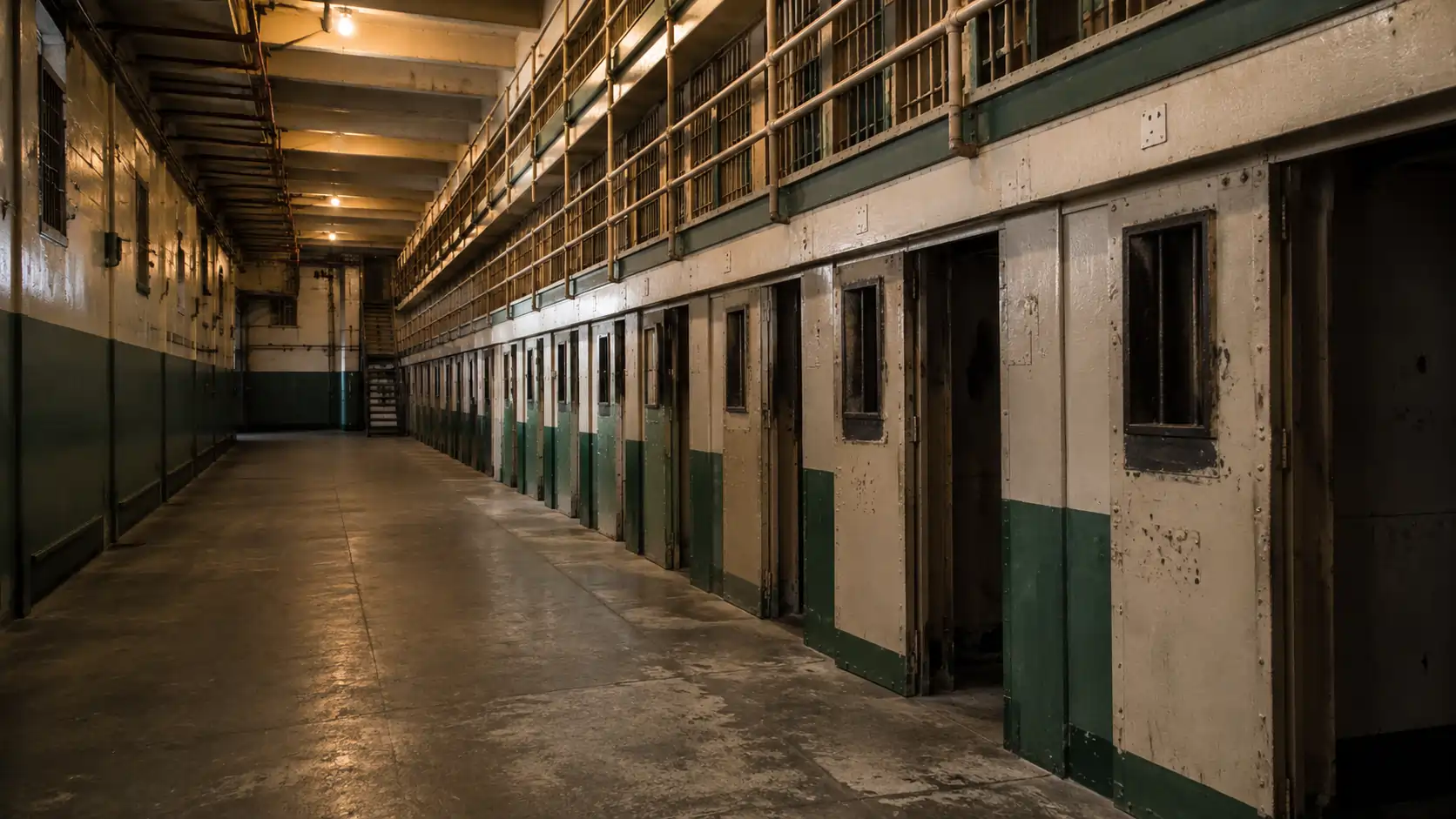
Cell 14D in D-Block has the longest and most consistent history of reported experiences. Inmates punished in that cell described intense, sourceless cold concentrated in one corner. Guards assigned to the block reported the same sensation. After the prison closed, National Park Service rangers continued to report the same experience in that specific cell. Some rangers have stated on record that they prefer not to enter D-Block alone after dark. These are not marketing claims. They are documented staff accounts from a federal agency.
How Media Turned Accounts Into a Brand
What media did with those accounts was transform them from documented anomalies into a coherent and marketable haunted narrative.
Television ghost hunting programs visited Alcatraz from the early 2000s onward, producing episodes that treated every unexplained sound and temperature variation as confirmation of supernatural activity. The shows followed a consistent format. Build atmosphere through dim lighting and ominous music. Present staff accounts as evidence. End on ambiguity designed to feel like confirmation.
Those programs reached audiences in the tens of millions and established Alcatraz firmly within the American haunted landmark canon. The island did not need to manufacture ghost stories. The media infrastructure of paranormal entertainment did that work for it, taking genuine accounts with legitimate historical roots and packaging them into a consumable narrative of supernatural horror.
The result is visible in visitor behavior today. The Alcatraz Night Tour has grown steadily in popularity not solely because of its historical programming but because the atmospheric conditions of the island after dark align with what paranormal television has conditioned audiences to expect. Visitors arrive looking for the experience those programs described. The island, in low light and with the bay wind and the empty cellhouse, delivers something that feels close enough to satisfy.
What the Ghost Mythology Actually Reflects
The more accurate explanation for why Alcatraz feels the way it feels, particularly in D-Block and the lower levels of the cellhouse, has nothing to do with the supernatural.
The island concentrated an extraordinary density of human suffering across a small physical space over 29 years. The cells where men spent years in isolation, the punishment chambers where inmates served sentences in total darkness, and the corridors where enforced silence prevented normal human contact are spaces with documented histories of severe psychological damage. People moving through those spaces are responding to something real. It is the weight of documented human experience embedded in a physical environment.
The Behind the Scenes Tour accesses the areas where that history is most concentrated, including the lower levels of D-Block and the utility infrastructure that the Day Tour does not reach. The ghost mythology tends to recede in those spaces when the physical evidence of the actual institution becomes the primary focus. The history is disturbing enough on its own terms without requiring a supernatural layer.
How Tourism Reinforces the Myth Today
The Tension the National Park Service Has to Manage
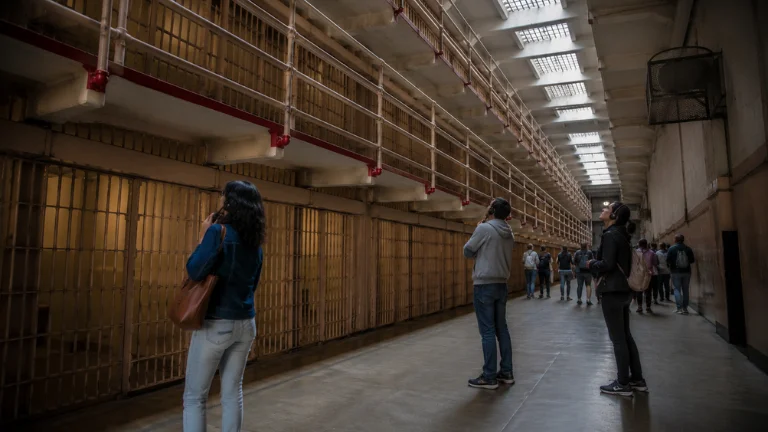
The National Park Service took over management of Alcatraz in 1972 and has navigated a genuine institutional tension ever since. The mythological version of the island, constructed by Hollywood, crime writers, and paranormal television, is a significant part of what draws more than 1.4 million visitors annually. Dismantling that myth entirely would undermine the very interest that funds the island's preservation and interpretation.
The response has been to hold both versions simultaneously rather than replace one with the other.
The cellhouse audio tour, produced in partnership with former guards and inmates, is the most substantive expression of that approach. It includes voices that actively complicate the mythology. Guards describe the boredom and monotony of the work. Former inmates describe daily routines, library habits, and meal times alongside the genuine harshness. The audio tour does not pretend the prison was not severe. It insists that severity was more specific, more institutional, and more human than cinema has represented it.
How the Tour Structure Shapes the Myth
The three tour options available today engage with the Alcatraz mythology in ways that are structurally different and worth understanding before choosing between them.
The Alcatraz Day Tour is where the gap between the myth and the physical reality is most visible. In full daylight, the cellhouse is compact and institutional rather than dramatically dark. The exercise yard opens to the sky and the San Francisco skyline. The documented history, delivered through the audio program, consistently overrides the cinematic version. Visitors who arrive expecting the gothic fortress of the films typically find something more ordinary and more instructive.
The Alcatraz Night Tour operates in closer alignment with the media version of the island. The lower light, the quieter cellhouse after the daytime crowds have left, and the ranger-led evening programs create an atmosphere that matches the cinematic grammar of Alcatraz more closely than daytime does. The ranger presentations use that atmospheric alignment deliberately, addressing the famous inmate stories and the ghost mythology within their documented historical context. The Night Tour holds the myth and the reality in productive tension simultaneously.
The Behind the Scenes Tour is where the media version of Alcatraz is most thoroughly replaced by the actual one. Access to the utility corridors where the 1962 escape was planned, the prison hospital, the lower levels of D-Block, and the industries building gives visitors direct contact with the institutional infrastructure that made the prison function. The engineering and logistics of the actual place are more interesting, and in many ways more disturbing, than the legend built around it.
Myth vs Reality: What Each Tour Reveals
On the Alcatraz Day Tour:
The cellhouse reads as compact and institutional in natural light, not as the gothic fortress films created
The audio tour voices of former guards and inmates consistently complicate the dramatic version
The exercise yard, open to the sky and the city skyline, dismantles the total isolation narrative
The gap between what cinema built and what the building actually is becomes the most interesting part of the visit
On the Alcatraz Night Tour:
The island in low light comes closest to the cinematic version, making the myth and the history easier to hold side by side
Ranger evening programs use the atmospheric alignment to address the ghost mythology and famous inmate narratives with documented context
The view from the exercise yard toward the lit San Francisco skyline conveys the specific psychological torment of proximity without access that former inmates described
The Night Tour is where the media construction of Alcatraz is most productively interrogated
On the Behind the Scenes Tour:
The utility corridors and 1962 escape route, including original excavation damage to B-Block cell walls, make the documented history physically tangible
The prison hospital, lower D-Block levels, and industries building replace the mythological version with the institutional one
Access to areas the standard tour does not reach consistently displaces the cinematic narrative with physical evidence
The myth recedes furthest here, replaced by the specific and documented reality of how the prison actually operated
Final Thoughts
Alcatraz was deliberately designed to generate fear, and it worked. What media did was take that institutional fear and rebuild it into cultural legend, removing the mundane reality and replacing it with something more dramatic and more durable.
The Capone who arrived confused and deteriorating does not fit the legend. The Birdman who never had birds does not fit the legend. The escape whose outcome remains unresolved does not fit the legend. But those details are not footnotes to the Alcatraz story. They are the Alcatraz story.
The Alcatraz Day Tour shows you the gap between the myth and the physical reality most clearly. The Alcatraz Night Tour holds both versions in tension simultaneously. The Behind the Scenes Tour replaces the legend with the documented evidence of how the institution actually operated.
What the island consistently offers, across all three experiences, is the chance to stand inside a place where the myth and the history occupy exactly the same space. Understanding how the legend was built makes the history far more interesting. That is what makes Alcatraz worth the visit.
Frequently Asked Questions
Is Alcatraz really as dangerous as movies show?▾
Was Alcatraz truly impossible to escape from?▾
Why is Alcatraz called “The Rock”?▾
How accurate is Escape from Alcatraz?▾
Did Al Capone have power inside Alcatraz?▾
What was daily life actually like in Alcatraz prison?▾
Is Alcatraz really haunted or just a myth?▾
Why do movies make Alcatraz look darker and more intense?▾
What surprises visitors most about Alcatraz?▾
Why is Alcatraz still so famous today?▾
Amelia Carter
Published on Alcatraz Tickets