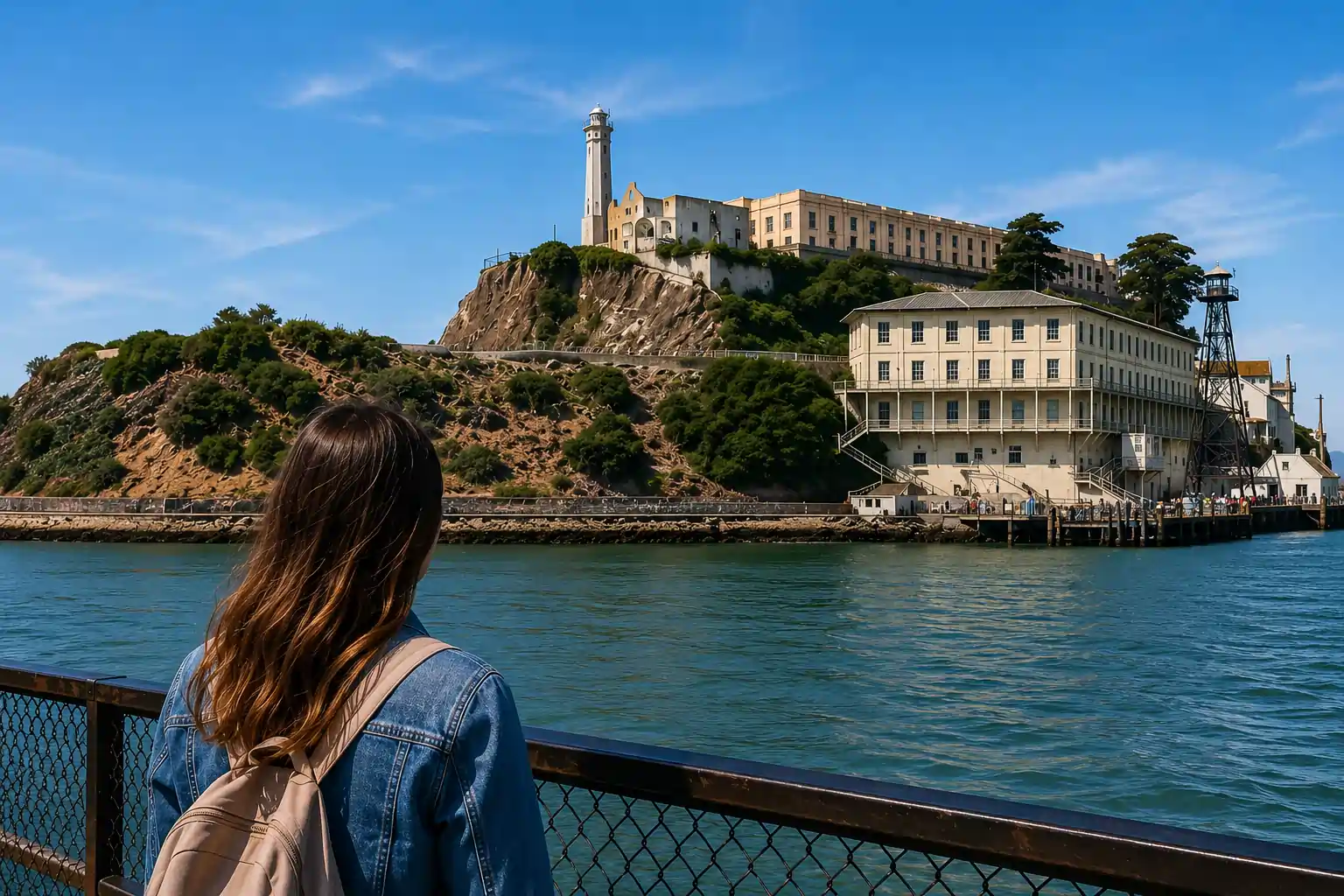
Real Visitor Experiences at Alcatraz: Expectations vs Reality
What People Expect Before Visiting Alcatraz
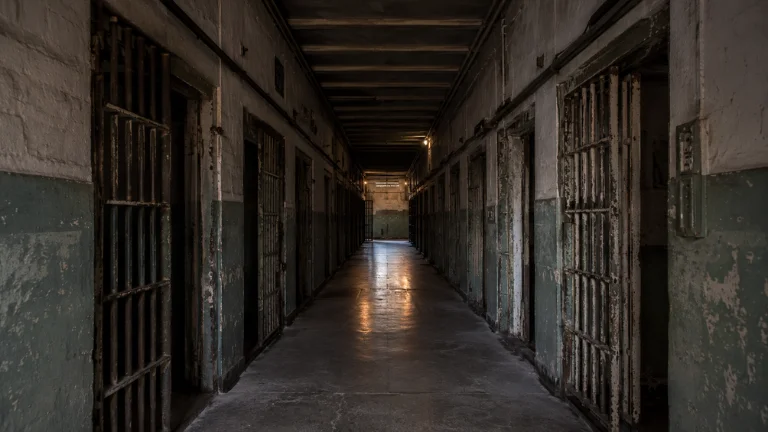
Most people arrive at Pier 33 with a version of Alcatraz already formed in their minds. Decades of films, documentaries, and true crime content have established a specific visual template: endless dark corridors, suffocating cells, a place so oppressive that the atmosphere alone is almost unbearable.
The expectation is essentially cinematic. Visitors often anticipate something between a haunted house and a museum of horrors, a place where the weight of what happened there is physically present in every room and around every corner.
That expectation shapes everything from what people choose to wear to how long they think they need on the island. And in most cases it is only partially accurate, which is what makes the actual visit so consistently surprising.
Assumptions About Time and Size
A significant number of first-time visitors assume Alcatraz will take about an hour. They picture a single building, a walk through some cells, and a ferry back. The island is small, 22 acres, and the idea of spending more than an hour there feels excessive to many people before they have actually been.
This assumption consistently produces one of two outcomes. Either visitors rush through the experience trying to match their expected timeline and miss significant portions of the island, or they arrive unprepared for a longer visit and run low on water and energy before they have seen everything worth seeing.
The reality is that a complete Alcatraz Island tour, done properly, takes between 2.5 and 3 hours including the ferry crossings. Some visitors spend longer. Very few leave wishing they had spent less time.
Expectations About Crowds and Experience
Many visitors worry about crowds. Alcatraz draws over 1.4 million people annually, and the assumption is that the island will feel like a theme park, with queues at every exhibit and no room to absorb the atmosphere without being jostled by tour groups.
Others come with the opposite concern. They have heard the island is emotionally heavy and worry the experience will feel grim, particularly for children or less historically minded members of their group.
Both concerns are understandable. Neither is entirely accurate. What actually happens on the island is more nuanced than either assumption predicts.
Reality of an Alcatraz Island Tour
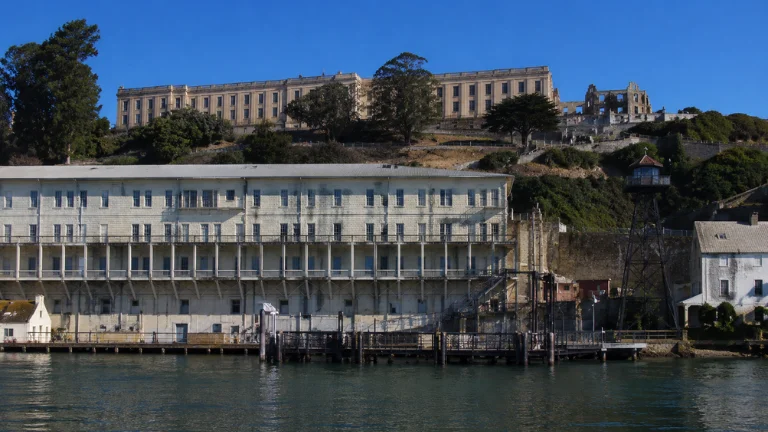
How the Experience Actually Feels
The ferry ride across the bay is the first thing that resets visitor expectations. Fifteen minutes on the water with San Francisco behind you and the island growing larger ahead of you is a genuinely transitional experience. By the time the ferry docks, most visitors have already shifted into a different mental register than they arrived with.
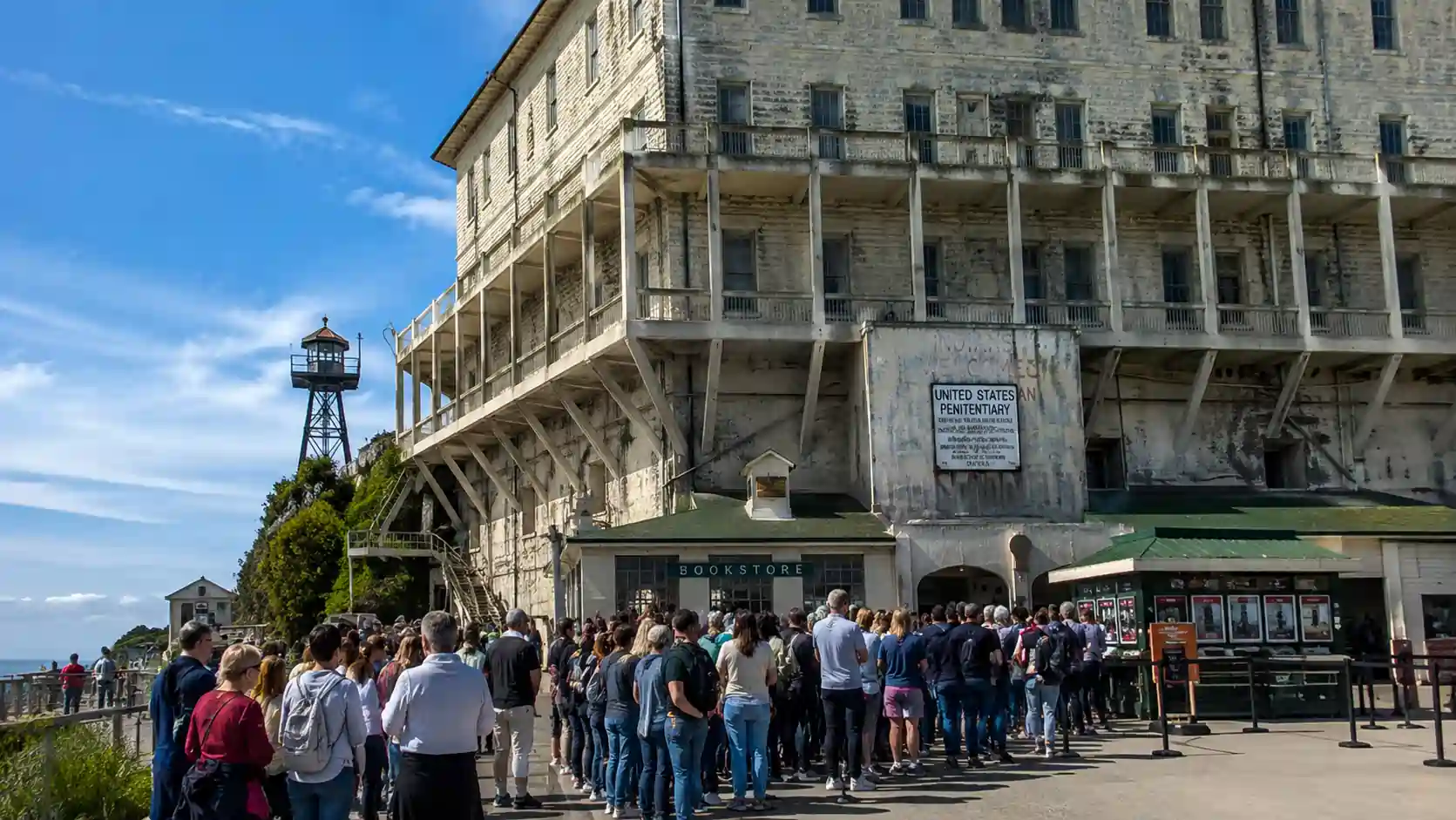
The island itself is quieter than expected at the dock level. The orientation area, bookstore, and restroom facilities are compact. The walk up to the cellhouse, a steep quarter-mile climb equivalent to roughly 13 floors, is the first physical surprise. Nobody mentions the hill in most visitor guides, and the climb is steep enough that some visitors need to stop on the way up. Wear shoes with grip. The SEAT tram is available at the dock for visitors with mobility concerns.
Inside the cellhouse, the dominant feeling for most visitors is not fear or oppression. It is scale. The building is smaller than expected. Broadway, the main corridor between B and C blocks, is approximately the width of a narrow hallway. The cells are genuinely compact at 9 feet by 5 feet, but the building does not feel vast or labyrinthine. It feels institutional and precise.
The emotional weight arrives gradually through the audio tour rather than through the physical space alone.
What Surprises Most Visitors
The audio tour is consistently cited as the element visitors least expected to affect them and most frequently describe as the best part of the experience. Narrated by former guards and inmates who actually worked and served time at Alcatraz, it delivers something that no exhibit panel or information board can replicate: the specific human texture of daily life inside the prison.
Former inmate Jim Albright describes his cell assignment and the first night on the island with a matter-of-fact clarity that is more unsettling than any dramatized account. A former correctional officer describes the routine of conducting counts thirteen times every twenty-four hours and the particular tedium of watching men in narrow corridors day after day for years. These are not performances. They are documented recollections from people who were present.
The audio tour is available in eleven languages and runs approximately 45 to 60 minutes at a comfortable pace. Most visitors take longer because the material holds attention in a way they did not expect.
The other consistent surprise is the island's exterior. The gardens, the seabird colonies on the western cliffs, and the views of the Golden Gate Bridge and the Marin Headlands from the western trail are not what most visitors have mentally prepared for. People arrive expecting a concrete island surrounded by cold water. They find a place with genuine natural beauty that coexists with its institutional history in a way that is oddly moving.
Time Required vs What People Expect
Most people who estimate an hour on the island leave having spent two and a half hours and feeling they could have used more time.
The realistic time breakdown runs as follows. The orientation video near the dock takes 15 minutes and is worth watching before entering the cellhouse. The cellhouse audio tour takes 45 to 60 minutes. D-Block, the dining hall, and the additional cellhouse areas add another 20 to 30 minutes. The exercise yard and western trail account for a further 20 to 30 minutes. Allow 15 minutes each way for the ferry crossing.
The visitors who feel most satisfied with their Alcatraz experience are consistently those who allowed three full hours for the island and arrived having eaten beforehand. There is no food available beyond the dock area. Visitors who arrive hungry find that the experience compresses itself around the discomfort.
Expectation vs Reality: The Prison Experience
What Visitors Imagine the Cells Are Like
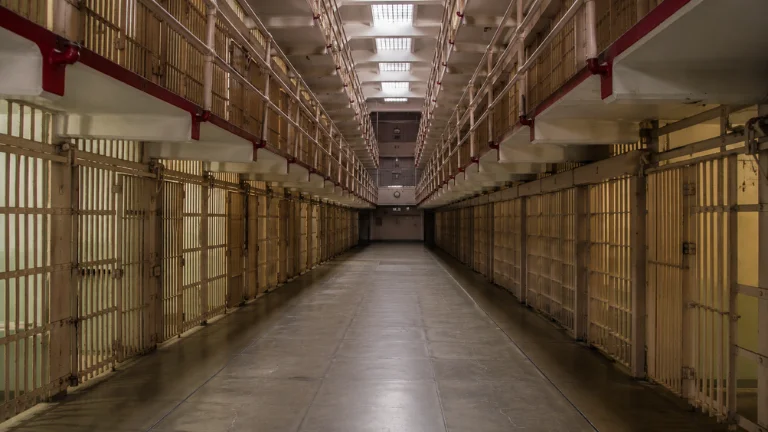
The cinematic version of an Alcatraz cell is a dark, cavernous space barely large enough to lie down in. Films consistently shoot cells with low-angle lighting that makes them feel like tombs. Most visitors arrive expecting to feel a visceral physical reaction the moment they look inside one.
The reality is more specific and in some ways more disturbing for being ordinary. The cells are small but not dramatically different in size from a large wardrobe or a small bathroom. The beds are narrow iron frames. A small desk and a washbasin and toilet occupy the remaining space. The bars are heavier and closer together than most visitors expect, the hardened tool-resistant steel installed during the 1934 renovation noticeably different in weight from the older flat iron bars in the unmodified A-Block section adjacent to the main housing area.
What produces the genuine impact is not the dimensions of the cell but the arithmetic of time. Standing in a space that measured 9 by 5 feet and imagining years inside it, with thirteen daily counts, enforced silence in the early era, one monitored visit per month through a glass partition, and the San Francisco skyline permanently visible from the exercise yard, produces a response that no description fully prepares you for.
What the Audio Tour Reveals
The audio tour changes the way visitors move through the cellhouse. Without it, most people would walk Broadway, look into a few cells, and head for the exit. With it, they stand at specific points, listen to specific voices describing specific events, and find themselves looking at the physical space differently.
D-Block, the segregation and punishment unit at the far end of the cellhouse, is where the audio tour's impact is most concentrated. The six solitary confinement cells known as the Hole at the end of D-Block had no light, no furniture, and no human contact beyond a guard delivering meals. The documented accounts of inmates who served time in those cells, combined with the physical reality of standing at the entrance to the unit, consistently produce the most emotionally significant moments of the visit.
The dining hall is another space the audio tour transforms. What looks like a functional institutional cafeteria becomes, through the recorded testimony, a room charged with a specific kind of daily tension. Tear gas canisters installed in the ceiling, remotely operable from the gun gallery above, are visible overhead. Armed guards in elevated positions separated from the floor by steel mesh are described in terms that make their presence in the room feel suddenly present rather than historical.
Stories That Leave the Biggest Impact
The stories that visitors carry away from Alcatraz most consistently are not the famous ones. Al Capone and the 1962 escape are the pre-visit expectations. What lingers after the visit tends to be smaller and more specific.
The accordion practice that Frank Morris used to mask the sound of excavating through his cell wall over six months. The papier-mâché dummy heads, made from soap, paint, cotton, and real hair collected from the prison barbershop floor, that fooled the overnight counts on the night of June 11, 1962. The detail that Clarence Anglin's cell was close enough to John's that they could work in coordination without detection. These specifics, delivered through the audio tour in the actual spaces where they occurred, create a different kind of engagement than any documentary or film can produce.
For visitors who want to go deeper into the individual histories behind what they see on the island, the documented stories of the inmates who served time at Alcatraz add a layer of context that the audio tour touches on but cannot fully develop within its format.
Expectation vs Reality: Views and Surroundings
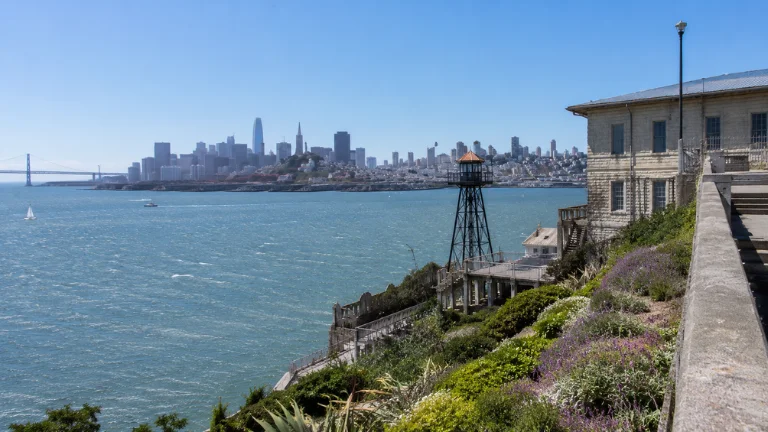
What People Think the Island Looks Like
The visual expectation for most visitors is a grey concrete rock surrounded by dark water, with the prison building occupying the entire surface. The island in most photographs and film depictions appears to be nothing but the cellhouse and its immediate surroundings.
The actual island is considerably more varied. The 22-acre surface includes the main cellhouse building, the warden's house ruins, the officer's club, utility structures, and a significant amount of open outdoor space including paths, terraces, and the famous gardens that occupy the slopes between buildings.
The Reality of Views from Alcatraz
The views from Alcatraz are a genuine surprise for most visitors and one of the most consistently mentioned highlights in visitor accounts.
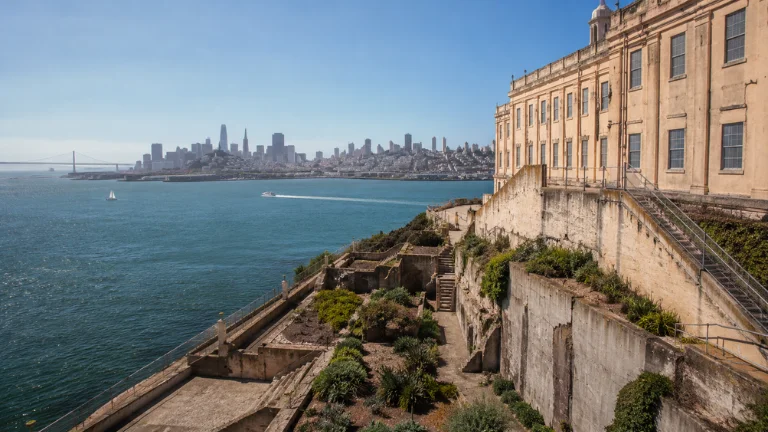
From the exercise yard, the San Francisco skyline sits directly across the water with the Bay Bridge visible to the right. The city is close enough to feel accessible and distant enough to feel unreachable simultaneously, a combination that made the yard one of the most psychologically significant spaces in the prison's history. Former inmates described being able to hear the city on quiet evenings, jazz bands on New Year's Eve, foghorns, and the ambient noise of a metropolis that continued functioning while they were frozen in place.
From the western trail on the exterior of the island, the Golden Gate Bridge frames the horizon. The Marin Headlands rise beyond it. Angel Island sits to the northeast. The full panorama from the western cliffs is among the most dramatic bay viewpoints accessible to visitors in San Francisco, and the majority of people arrive on the island without knowing it exists.
The views from Alcatraz looking back toward the city consistently exceed what visitors anticipated and remain among the most photographed moments of the experience.
Unexpected Natural Elements and Wildlife
The wildlife on Alcatraz surprises almost every first-time visitor. The island supports substantial seabird colonies, particularly Western Gulls that nest on the western and northern cliffs between March and August. During nesting season, sections of the outer path are cordoned off to protect active nest sites. The birds are loud, numerous, and completely indifferent to visitors.
Black-crowned Night Herons roost in the island's vegetation year-round. Brandt's Cormorants occupy the lower cliff areas. During winter months, Peregrine Falcons occasionally use the cellhouse roof as a hunting perch. The island's position in the bay and its relatively undisturbed shoreline make it a genuinely productive wildlife watching location that has nothing to do with its penal history.
The gardens are the other natural element that consistently reframes visitor expectations. Maintained by a team of National Park Service volunteers using plant species documented from the prison era, the gardens include roses, succulents, and flowering plants that grow along the paths between buildings. The combination of institutional concrete, wildlife, and cultivated gardens in the same compact space is one of Alcatraz's most distinctive and least anticipated qualities.
Expectation vs Reality: Crowds and Atmosphere
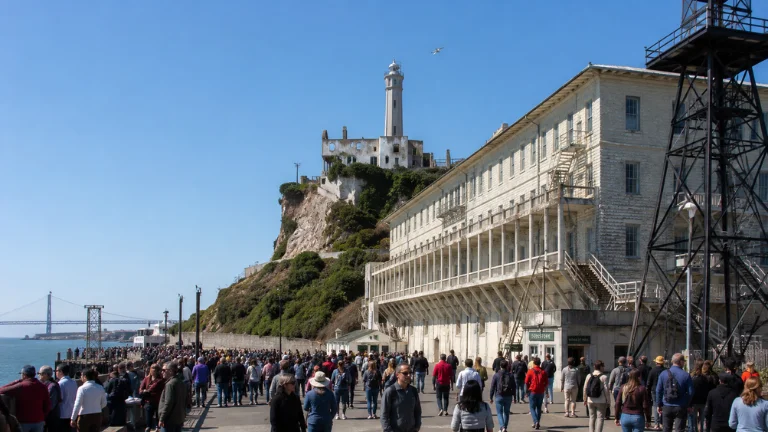
Concerns About Overcrowding
Visitors who book the Alcatraz Day Tour during summer are often worried about arriving to find the island packed with tour groups, the audio tour unintelligible over ambient noise, and no space to absorb anything properly.
This concern is understandable. Alcatraz draws over 1.4 million visitors per year and summer is peak season. The concern is also partially legitimate and partially overstated, depending on when you arrive and where you spend your time.
Actual On-Island Experience
The ferry system manages visitor flow more effectively than most people expect. Because the island can only be reached by scheduled ferry from Pier 33, the number of visitors on the island at any given moment is controlled by the departure schedule rather than by open access. The island never experiences the kind of unmanaged surge that open-access attractions do.
The early morning departures, particularly the 8:40 AM and 9:20 AM ferries, consistently produce the most comfortable cellhouse experience. The audio tour feels more personal when the corridors are less populated. The cells are easier to look into when you are not waiting behind a queue of people at each stop.
The 11:00 AM to 1:00 PM window is when the island is most crowded, as the morning departures overlap with the midday arrivals. Visitors who arrive during this window still have a complete experience but may find the cellhouse more populated than they would prefer.
Quiet vs Busy Areas
Even on the busiest summer days, the island has quiet spaces. The exercise yard sees significantly less traffic than the cellhouse corridors. The western trail is almost always less populated than the main route. The upper garden terraces between the cellhouse and the warden's house site are frequently empty even when Broadway is crowded.
D-Block, counterintuitively, tends to be quieter than the main cell blocks despite being one of the most significant spaces on the island. Visitors who move directly from the ferry to the cellhouse audio tour and follow the standard route tend to cluster in the same sections. Moving slightly off the main path, spending time in the exercise yard and on the outer trail, consistently delivers a more personal and less congested experience regardless of overall visitor numbers.
Day Tour vs Night Tour: What Feels Different
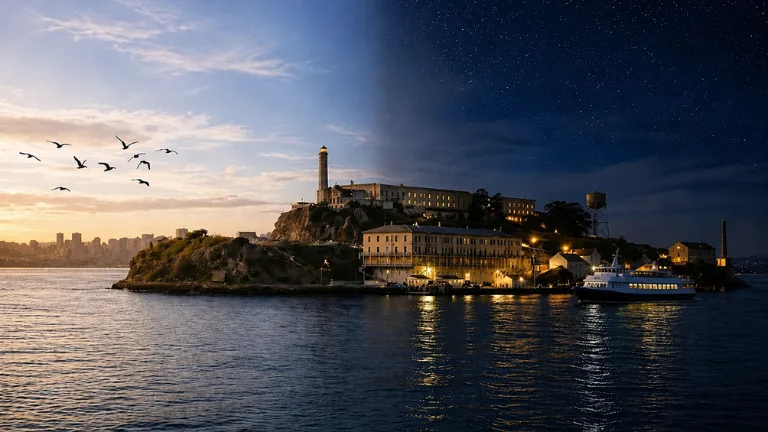
Experience During an Alcatraz Day Tour
The Alcatraz Day Tour in natural light is the most historically transparent version of the island. The cellhouse reads clearly as a functional institutional building. The scale, the sight lines, the engineering of the surveillance architecture from the gun gallery positions to the centralized locking systems, are all legible in the way that natural light makes structural intentions visible.
The audio tour in daylight is the most informative version of the experience. The physical spaces it references are immediately visible as you stand in them. The gap between what cinema has built in most visitors' expectations and what the building actually is becomes the most instructive element of the visit. Many visitors describe this gap, the ordinariness of the place versus the magnitude of what happened there, as the most lasting impression they take away.
The Day Tour costs $59.95 per adult, runs daily, and offers 15 departure times during the Spring and Summer 2026 season. It is the right choice for first-time visitors and for anyone whose primary interest is the documented history of the island.
Experience During an Alcatraz Night Tour
The Alcatraz Night Tour operates in a different register entirely. After the last Day Tour visitors have returned to the mainland, the island enters a quieter, more concentrated state that aligns much more closely with the cinematic version most people arrived expecting to find on the Day Tour.
The cellhouse in lower light makes the surveillance architecture feel more immediate. The gun gallery positions, the sight lines down Broadway, and the isolation of D-Block all register differently when the ambient light drops. The evening ranger-led programs, which run after the self-guided audio tour, address the ghost mythology, the famous escape attempts, and the documented inmate histories in a format that the daytime visit does not include.
The exercise yard at night, looking toward the lit San Francisco skyline across the dark water, is one of the most consistently cited experiences across all Night Tour visitor accounts. The contrast between the dark island and the illuminated city across a mile and a quarter of black water makes the psychological dynamic of the prison, freedom visible and permanently unreachable, more visceral than any daylight visit can replicate.
The Night Tour costs $75.95 per adult, operates Tuesday through Saturday, and has very limited availability. Book it with the same urgency as the Day Tour during summer, or greater.
Which One Feels More Immersive
The answer depends on what you mean by immersive.
The Day Tour is more immersive in the historical sense. The physical evidence of the institution is clearest in natural light. The audio tour voices are most effectively tied to the visible spaces they describe. The documented reality of the place is most accessible during daylight hours.
The Night Tour is more immersive in the atmospheric sense. The lower light, the quieter island, the evening programming, and the nighttime bay views create an experience that feels closer to the emotional weight most visitors arrived expecting to find. It does not replace the historical clarity of the Day Tour. It creates a different version of the experience that operates on a more sensory level.
First-time visitors benefit most from the Day Tour. Return visitors looking for a different entry point, or anyone for whom atmosphere is as important as historical content, will find the Night Tour the more memorable of the two.
Is the Behind the Scenes Tour Worth It?
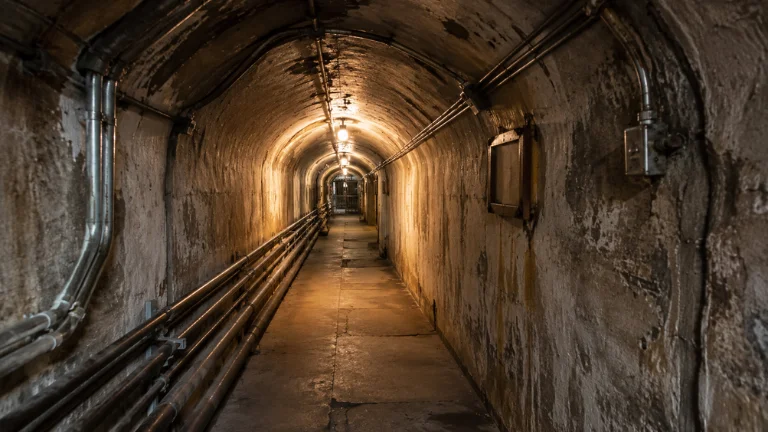
What Visitors Expect from Restricted Areas
Most visitors who consider the Behind the Scenes Tour expect it to be a slightly extended version of the standard cellhouse experience, perhaps with access to a few extra rooms and some additional ranger commentary.
That expectation significantly underestimates what the tour actually delivers. The areas it accesses are not extensions of the public route. They are physically separate parts of the island that have been closed to general visitors since the prison shut on March 21, 1963.
What You Actually Get Access To
The Behind the Scenes Tour is led by a National Park Service ranger and takes a maximum group of 30 people into areas that include the utility corridors running behind the B and C block cells, the prison hospital, the lower levels of D-Block, the New Industries Building where inmates worked, A-Block which retains its original military-era configuration, and sections of the 1962 escape route including the area where the original excavation damage to the rear cell walls is still visible.
The utility corridor behind B-Block is where the experience most significantly separates itself from anything the standard tour offers. Standing in the narrow passage behind the cells, looking at the concrete damage that Frank Morris and the Anglin brothers worked through over six months, makes the engineering of the 1962 escape tangible in a way that no film, exhibit, or audio description can replicate. The scale of the preparation becomes immediately clear. So does the specific vulnerability in the prison's design that made it possible.
The prison hospital is a space that sees no traffic on the Day or Night tours. Its preserved state, the equipment, the ward layout, and the documented history of the medical conditions treated there including the late-stage neurosyphilis that eroded Al Capone's cognitive function during his time on the island, add a dimension to the institutional history that the cellhouse route does not cover.
After the guided portion ends, participants transition directly into the Night Tour program, completing the cellhouse audio tour and the evening ranger presentations. The Behind the Scenes Tour is effectively two tours in one.
Who Should Consider This Upgrade
The Behind the Scenes Tour is the right choice for visitors with a genuine and specific interest in the island's history, architecture, and the documented realities of how the institution functioned. It is best suited to return visitors who have already completed the Day Tour and want deeper access, adults and older teenagers with the physical capability for steep stairs and narrow passages, and anyone for whom Alcatraz is the primary reason for their San Francisco visit rather than one stop among several.
At $127.95 per adult it is a clear financial commitment. It is also capped at 30 people, operates Tuesday through Saturday only, and sells out within days of the 90-day booking window opening during peak summer season. If this tour is on your list, treat the booking with the same urgency you would give a sold-out concert. The availability is genuinely limited and does not recover once the window fills.
Common Mistakes Based on Wrong Expectations
Underestimating Time Needed
The single most common practical mistake at Alcatraz is underestimating how long the visit takes and failing to plan around it. Visitors who book a 1:05 PM ferry expecting to be back at Pier 33 by 2:30 PM and onto the cable cars by 3:00 PM consistently find themselves either rushing through the island or missing their intended afternoon plans.
A complete Alcatraz visit runs 2.5 to 3 hours from Pier 33 departure to Pier 33 return. That is the planning unit. Any itinerary that does not account for that full block will compress somewhere, and the part that usually compresses is the island itself.
Not Booking in Advance
During peak summer months from June through August, Alcatraz Day Tour tickets sell out 60 to 75 days before the departure date. Night Tour tickets fill faster due to their limited schedule. The Behind the Scenes Tour can sell out within days of the booking window opening.
Visitors who arrive in San Francisco expecting to book Alcatraz tickets at the pier, or even a few days before their visit during summer, frequently find the calendar fully booked. There is no walk-up ticket option. There is no standby queue. If the ferry is full, it is full.
Expecting a Quick Visit
Alcatraz is not a quick visit. It is not designed to be and does not function well as one. The audio tour alone runs 45 to 60 minutes. The ferry crossing adds 30 minutes round trip. D-Block, the exercise yard, and the western trail each justify additional time.
Visitors who treat Alcatraz as a 45-minute stop consistently report feeling they missed the experience rather than had it. The island rewards time and attention. The details that make the visit genuinely memorable, the specific voices on the audio tour, the physical evidence of the escape route, the view from the western trail, and the particular quality of the exercise yard, all require a pace that a rushed visit cannot accommodate.
What Makes Alcatraz Worth Visiting
Unique Experience Compared to Other Attractions
Most major tourist attractions offer a version of something you have already experienced elsewhere. Alcatraz does not. There is no comparable experience of standing inside a federal penitentiary that operated within living memory, on an island in the middle of an active bay, with the city visible across the water from the exercise yard where the inmates stood.
The combination of documented human history, specific physical evidence, and the audio testimony of people who were actually present creates an engagement that is qualitatively different from most museum or landmark visits. You are not reading about a place. You are standing inside it while the people who lived in it describe what that was like.
The history of Alcatraz is complex enough to reward multiple visits, which is why many people who complete the Day Tour subsequently book the Night Tour or the Behind the Scenes Tour for a different entry point into the same material.
Why It Stands Out in San Francisco
San Francisco has world-class art museums, dramatic coastal scenery, historic architecture, and some of the best food in the United States. Any of those things can be found in comparable form in other cities. Alcatraz cannot.
The island is the one experience in San Francisco that exists nowhere else. The physical place, the documented history, the audio tour, and the specific quality of standing in the exercise yard looking back at a city that was always visible and never reachable combine into something that visitors carry with them in a way that a cable car ride or a bridge walk, as worthwhile as those are, simply does not produce.
The consistent visitor response to the question of whether Alcatraz is worth visiting is yes, but not for the reasons most people expect before they go. The darkness they anticipated is more institutional than cinematic. The history is more specific and more human than the legend suggests. The views are better than anyone warned them about. And the audio tour voices of former guards and inmates make the place feel simultaneously more ordinary and more significant than any film has managed to convey.
That gap between expectation and reality is precisely what makes the visit worth having.
Final Thoughts
Alcatraz is worth visiting, but not for the cinematic version most people expect. The experience is quieter, more structured, and far more grounded in real details than dramatic storytelling. What stays with visitors isn’t the scale or darkness, but the specifics,the audio voices, the escape stories, the small cells, and the constant view of the city just out of reach.
Most people underestimate the time, the depth, and the outdoor experience. In reality, it’s a 2.5–3 hour visit that combines history, human stories, and surprisingly strong views of the bay. It’s not a quick stop, and it doesn’t work as one.
What makes Alcatraz stand out is simple: it’s not a recreated attraction, it’s the real place, with real history, experienced where it actually happened.
Plan for at least 3 hours, book your tickets early, and experience Alcatraz fully, because the real impact comes from not rushing it.
Frequently Asked Questions
Is Alcatraz worth visiting or is it overrated?▾
What surprised visitors the most about Alcatraz?▾
Is Alcatraz as scary or dark as people say?▾
How long do people actually spend at Alcatraz?▾
Do people find Alcatraz crowded?▾
What is the most impactful part of the Alcatraz tour?▾
Are the prison cells at Alcatraz as small as they look?▾
What do visitors underestimate about Alcatraz?▾
Is the Alcatraz night tour better than the day tour?▾
What mistakes do visitors make when visiting Alcatraz?▾
Amelia Carter
Published on Alcatraz Tickets