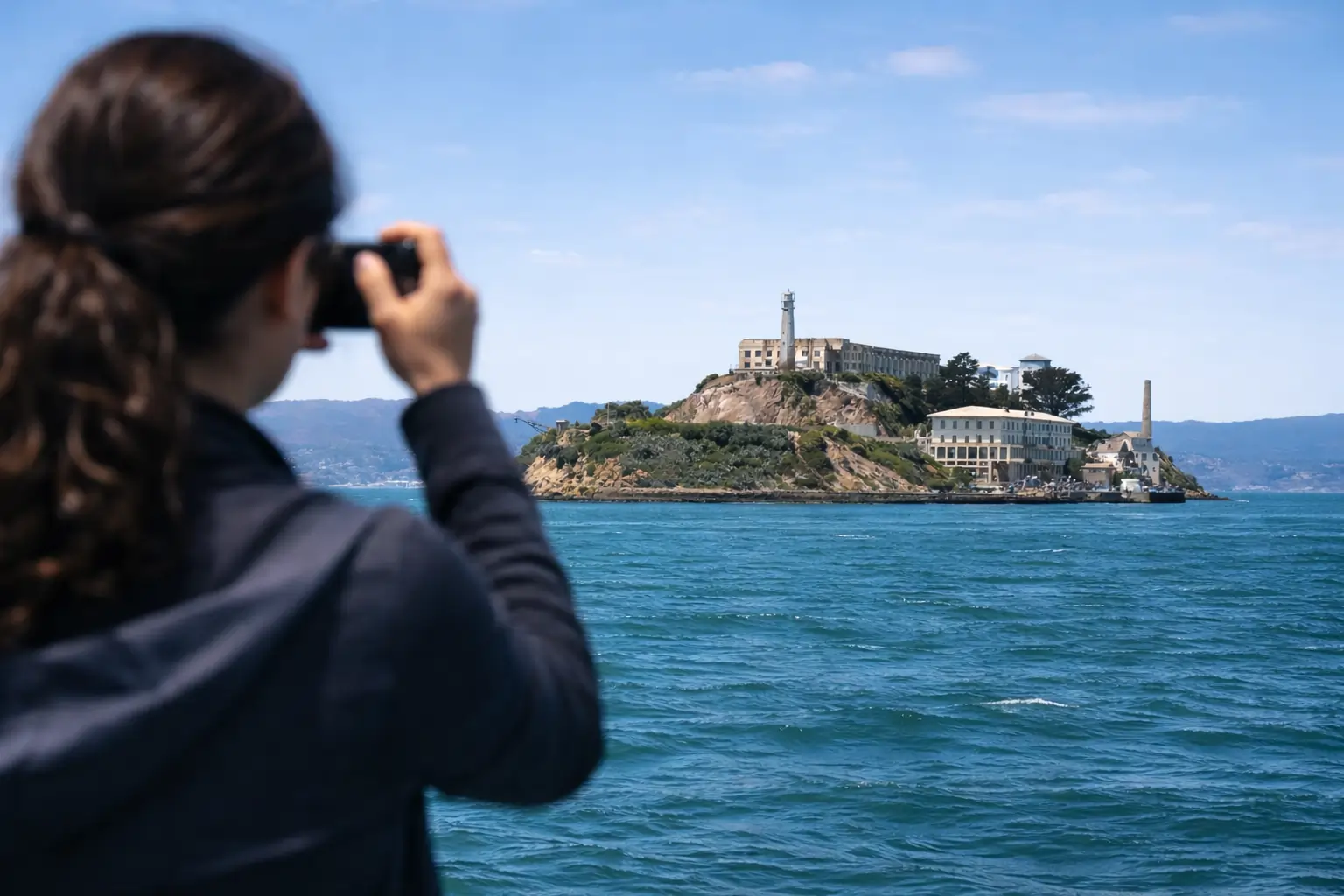
Photography Tips For Alcatraz Island: Exploring the Popular Spots
Why Alcatraz Is a Photographer's Dream
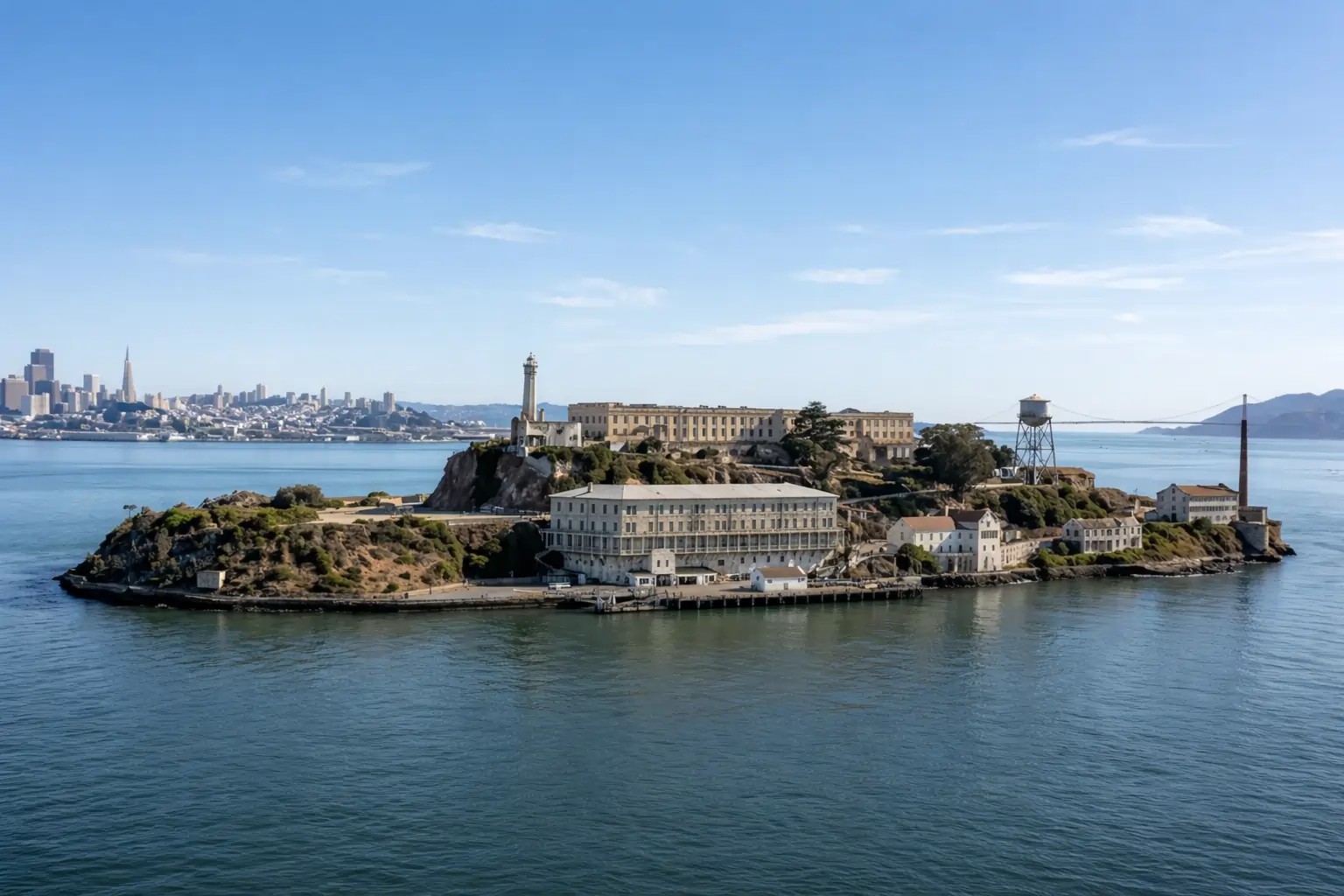
Alcatraz delivers something that very few locations anywhere in the world can offer in a single visit. Historic architecture, dramatic interiors, coastal landscape, active wildlife, and one of the most recognizable urban skylines on the planet, all within a compact island that takes less than 20 minutes to reach by ferry.
Every corner of Alcatraz tells a visual story. The peeling paint in the cellhouse corridors, the rusted bars catching afternoon light, the Golden Gate Bridge framed between prison walls, the agave plants rising against the bay. Whether you are shooting on a professional camera or a smartphone, the island rewards thoughtful composition in ways that most tourist destinations simply do not.
This guide covers everything you need to know to photograph Alcatraz well, from the best time to visit for light, to the spots most visitors walk past without ever raising their camera.
Best Time for Photography on Alcatraz
Timing is the single most controllable variable in photography, and on Alcatraz it makes a significant difference to what you come home with.
Morning is the strongest general choice for photographers. Early ferries bring fewer visitors, which means quieter compositions with less foot traffic cutting through your frames. The light in the morning is softer and more directional, which works particularly well in the cellhouse where the contrast between shadowed corridors and light coming through windows creates natural drama. Many photographers prefer early access during an Alcatraz Day Tour precisely for these conditions, arriving on the first or second ferry to get an hour on the island before the crowds build.
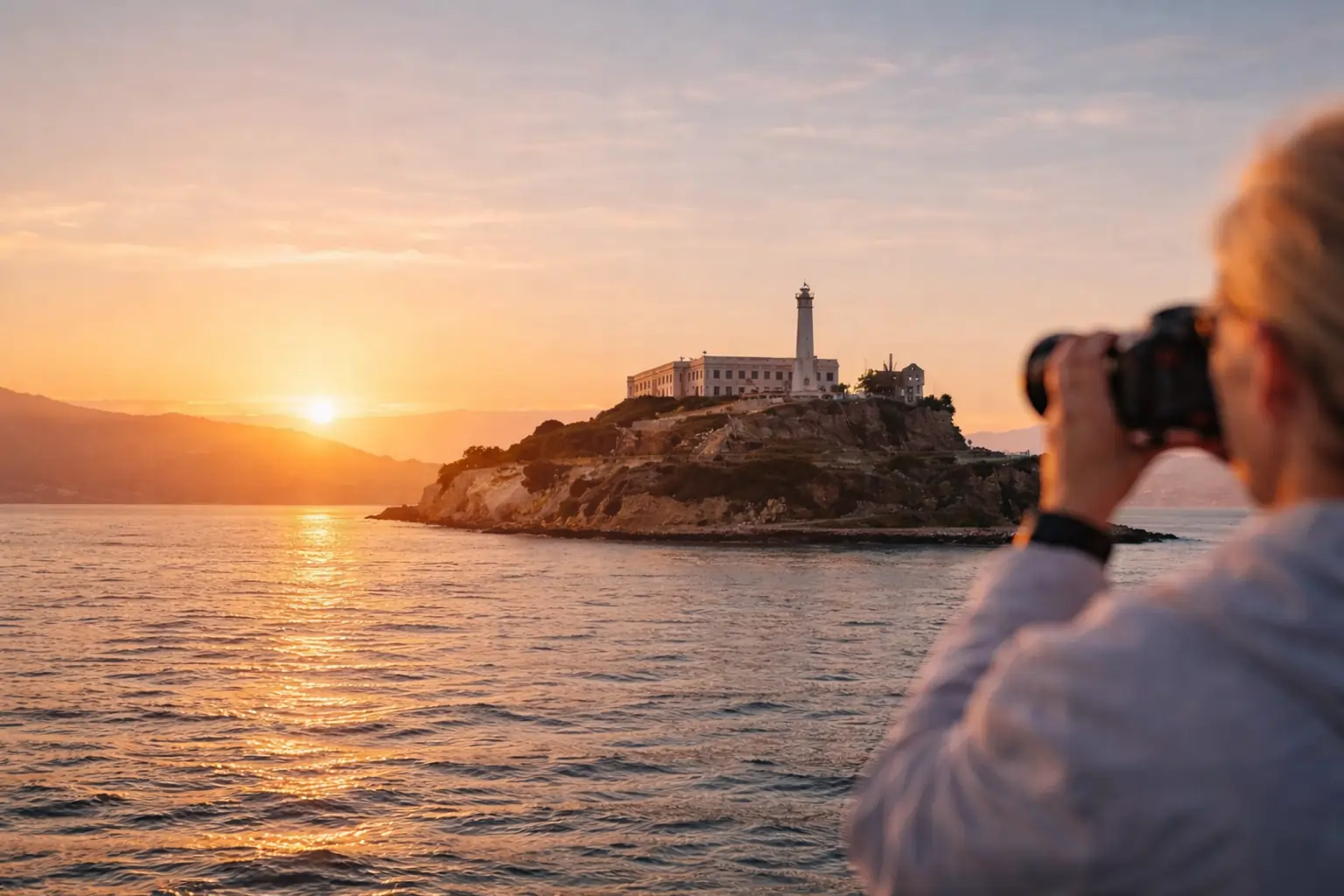
Golden hour before sunset produces the warmest light of the day and the most photogenic version of the San Francisco skyline from the island's eastern viewpoints. The city takes on a golden quality that pairs well with the weathered textures of the prison buildings, and the low angle of the light creates longer shadows that add depth to exterior shots.
Fog is a San Francisco constant and a photographic asset when you know how to use it. A partially fogged bay creates a layered, atmospheric quality that clear-sky shots cannot replicate. The Golden Gate Bridge emerging from morning fog with the cellhouse in the foreground is one of the most striking compositions the island offers, and it is only available when the weather cooperates.
Late afternoon on overcast days produces soft, even light that eliminates harsh shadows inside the cellhouse and works well for detail shots of architectural elements, textures, and close-up compositions.
Top Photography Spots on Alcatraz Island
These are the locations that consistently produce the strongest images, covering both the iconic and the less obvious.
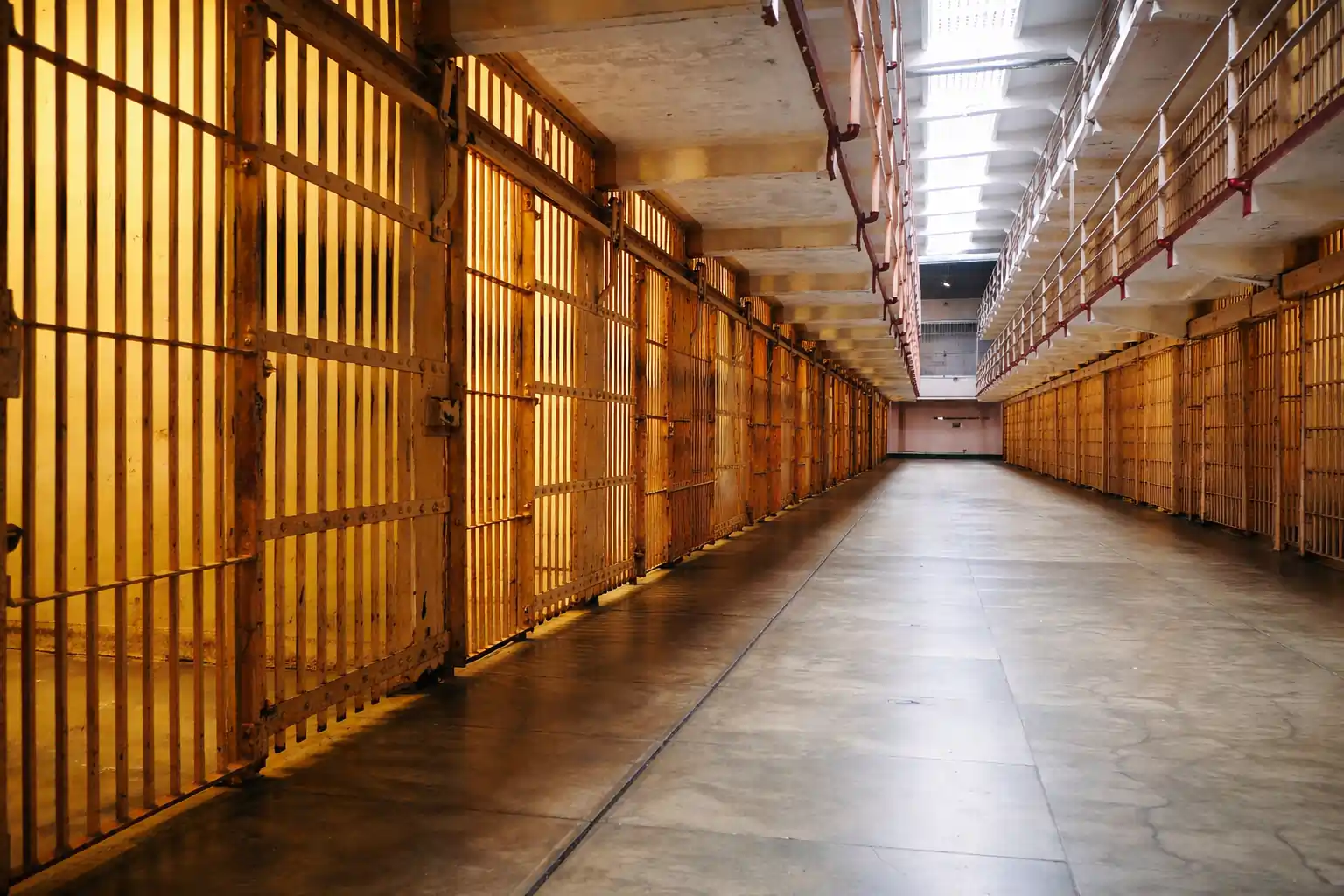
The cellhouse interior is the most photographically complex environment on the island. The long cell block corridors create natural leading lines that draw the eye through the frame. Light enters from windows at the end of each block, creating a backlit effect that silhouettes the bars and fencing in the foreground. B and C Block corridors, the main Broadway corridor, and the upper tiers of the cell blocks all offer variations on this composition. Shoot from low angles looking down the corridor length for maximum depth, and shoot from elevated positions on the upper tiers to capture the full scale of the cell blocks below.
The ferry dock and arrival area is where most visitors put their cameras away, but it is one of the best spots on the island for exterior architecture shots. The historic dock buildings, the boat ramp, and the lower island structures all photograph well from the dock area, and the perspective of the island rising above you as you arrive is one that you cannot replicate from any other position.
The eastern viewpoints above the cellhouse deliver the most direct, unobstructed view of the San Francisco skyline. The city sits directly across the water, close enough to fill a telephoto frame or sit as a backdrop behind foreground elements in a wide shot. Morning and late afternoon are the best times for this position, and the inclusion of foreground elements, fencing, signage, or the lighthouse, adds depth that a straight skyline shot lacks.
The prison corridors and utility areas reward detail-focused shooting. The peeling paint, rusted metal, cracked concrete, and layered textures throughout the cellhouse create macro and close-up compositions that tell the story of the island's age and abandonment in a way that wide shots cannot.
Hidden Photography Spots Most Visitors Miss
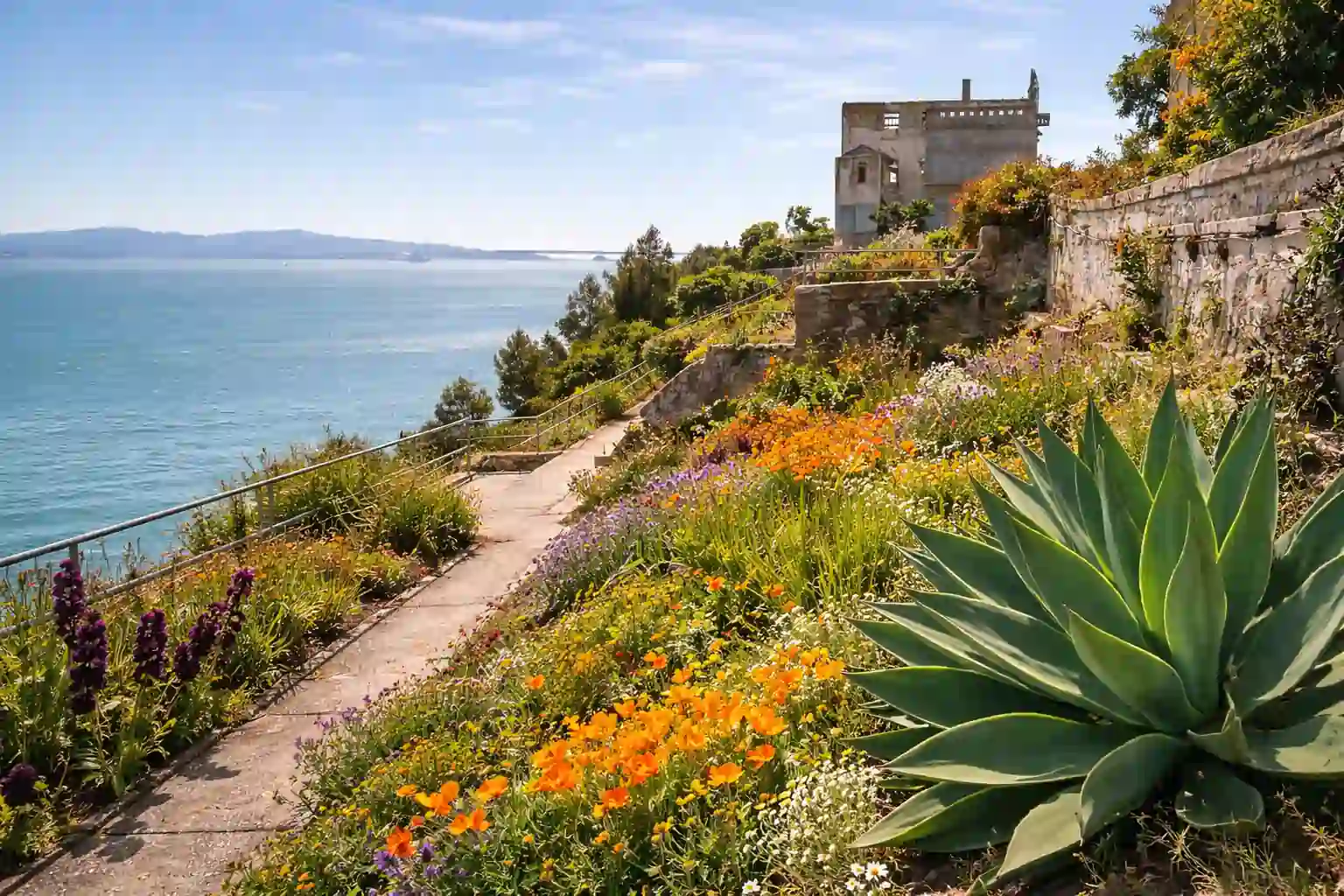
The locations below are consistently overlooked by visitors who stay on the main route, which is precisely what makes them valuable for photographers looking for less crowded, less expected images.
The Agave Trail is the most underused photography location on the island. Running along the southern edge of Alcatraz, the trail puts you at water level with the bay stretching out in front of you and the agave plants framing the foreground.
The composition possibilities here are genuinely different from anything available near the cellhouse, and the trail is quiet enough that you can take your time with a tripod or wait for the right light without other visitors walking into your frame. Note that the trail is seasonal, open from late September through February.
The historic gardens provide color and organic texture that contrast sharply with the industrial character of the prison. Restored flowering plants, climbing vines, and ornamental plantings against stone walls and weathered structures create compositions that surprise visitors who arrive expecting nothing but concrete and steel. The gardens photograph best in morning light when the colors are saturated and the shadows are long.
The outer paths along the island's western and northern edges offer angles on the cellhouse exterior, the lighthouse, and the bay that are completely absent from the standard visitor route.
The cellhouse photographed from below, with the cliff face and rock formations in the foreground, looks entirely different from the version most visitors see from the upper level. These paths also deliver views toward the Marin Headlands and the western bay that are not available from the main visitor areas.
The ruins of the former residential buildings on the lower island are another overlooked location. The partially demolished walls, overgrown foundations, and structural remnants create a layered, decay-aesthetic composition that is distinct from both the maintained cellhouse interior and the natural coastal landscape.
Composition Tips for Better Photos at Alcatraz
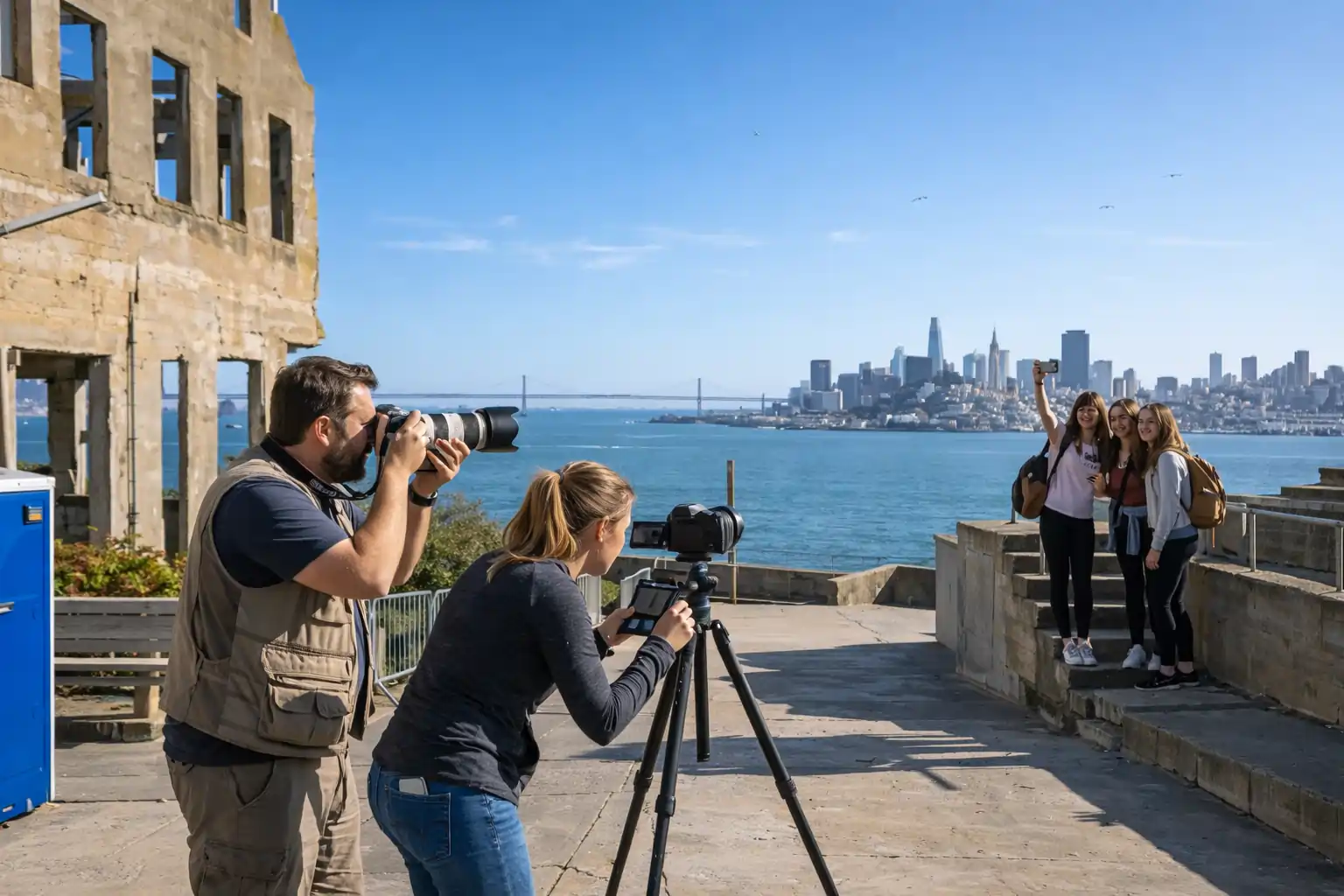
Strong composition is what separates a memorable Alcatraz photograph from a standard tourist snapshot, and the island provides the raw material for both. The difference is in how you use what is in front of you.
Use leading lines aggressively. The cellhouse is full of them. Corridor floors, rows of cell doors, staircase railings, and fence lines all create natural lines that pull the viewer through the image. Position yourself at the end of a corridor and shoot straight down its length for the most immediate version of this effect.
Frame with foreground elements. The Golden Gate Bridge photographed through prison bars is a composition that communicates the contrast of the island more effectively than either subject photographed alone. Prison windows, chain-link fencing, doorways, and the agave plants all work as framing devices that add context and depth to background subjects.
Shoot the contrast. The most compelling visual story at Alcatraz is the coexistence of confinement and beauty, of cold industrial history and open natural landscape. Compositions that include both elements in a single frame, a flower growing through cracked concrete, the bay visible through a barred window, the skyline seen from inside a cell, communicate something that purely architectural or purely landscape shots do not.
Vary your angles deliberately. Most visitors photograph Alcatraz from standing height, which produces the most predictable compositions. Shooting from low to the ground, from elevated positions on the upper tiers, or through narrow gaps in architecture creates images that look different from the majority of Alcatraz photographs in existence.
Include human scale selectively. The cellhouse is large, and photographs of it without any human reference can flatten its scale. A single figure at the end of a corridor, or a visitor standing at a cell door, communicates the dimensions of the space in a way that an empty frame cannot.
Camera and Mobile Photography Tips for Alcatraz
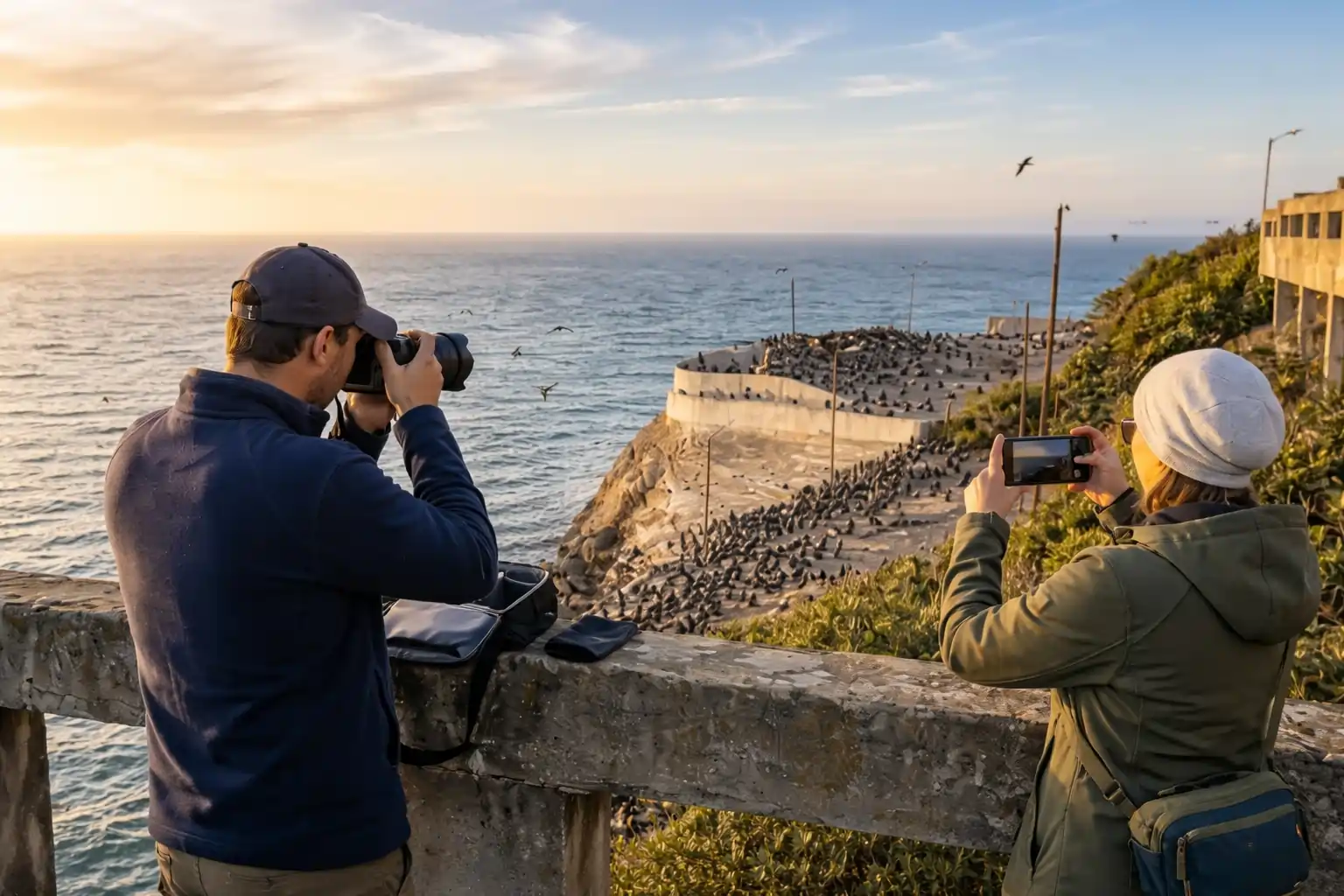
The island works for every level of photography equipment. What matters more than the camera is understanding how to use what you have in the specific conditions Alcatraz presents.
For DSLR and mirrorless cameras
A wide-angle lens in the 16 to 24mm range is the most versatile choice for the cellhouse interiors, corridor compositions, and landscape shots from the outer paths. A zoom lens in the 70 to 200mm range is useful for compressing the distance between the island and the San Francisco skyline, pulling the city close enough to sit as a meaningful backdrop rather than a distant smudge. A 50mm prime works well for detail and texture shots throughout the cellhouse.
Shoot in RAW format if your camera supports it. The high-contrast lighting inside the cellhouse, where bright windows sit against dark corridors, creates exposure challenges that RAW files handle significantly better than JPEGs. You will have far more latitude to recover shadow and highlight detail in post-processing.
Use a tripod for low-light interior shots, particularly in the deeper sections of the cellhouse where available light drops significantly. A lightweight travel tripod fits easily into a day bag and makes a meaningful difference to image sharpness in these conditions.
For smartphone photography
Enable HDR mode for all exterior shots where the sky is visible. The dynamic range between a bright bay sky and the darker foreground elements of the island is wide enough that a standard smartphone exposure will either blow out the sky or underexpose the foreground. HDR balances this automatically.
Use your phone's manual or pro mode if available to dial down exposure slightly when shooting bright bay scenes. Slightly underexposing preserves sky detail and color that auto exposure tends to lose.
Portrait mode works well for detail shots of architectural elements, plants in the gardens, and close-up textures throughout the cellhouse. The shallow depth of field effect separates the subject from the background and gives smartphone images a quality that flat, fully-focused frames lack.
Burst mode is useful on the ferry crossing when you want clean shots of the island or the skyline from a moving deck. Shooting in burst gives you multiple frames to choose from and increases the chance of capturing one that is sharp despite the motion of the boat.
Photography During Different Tours
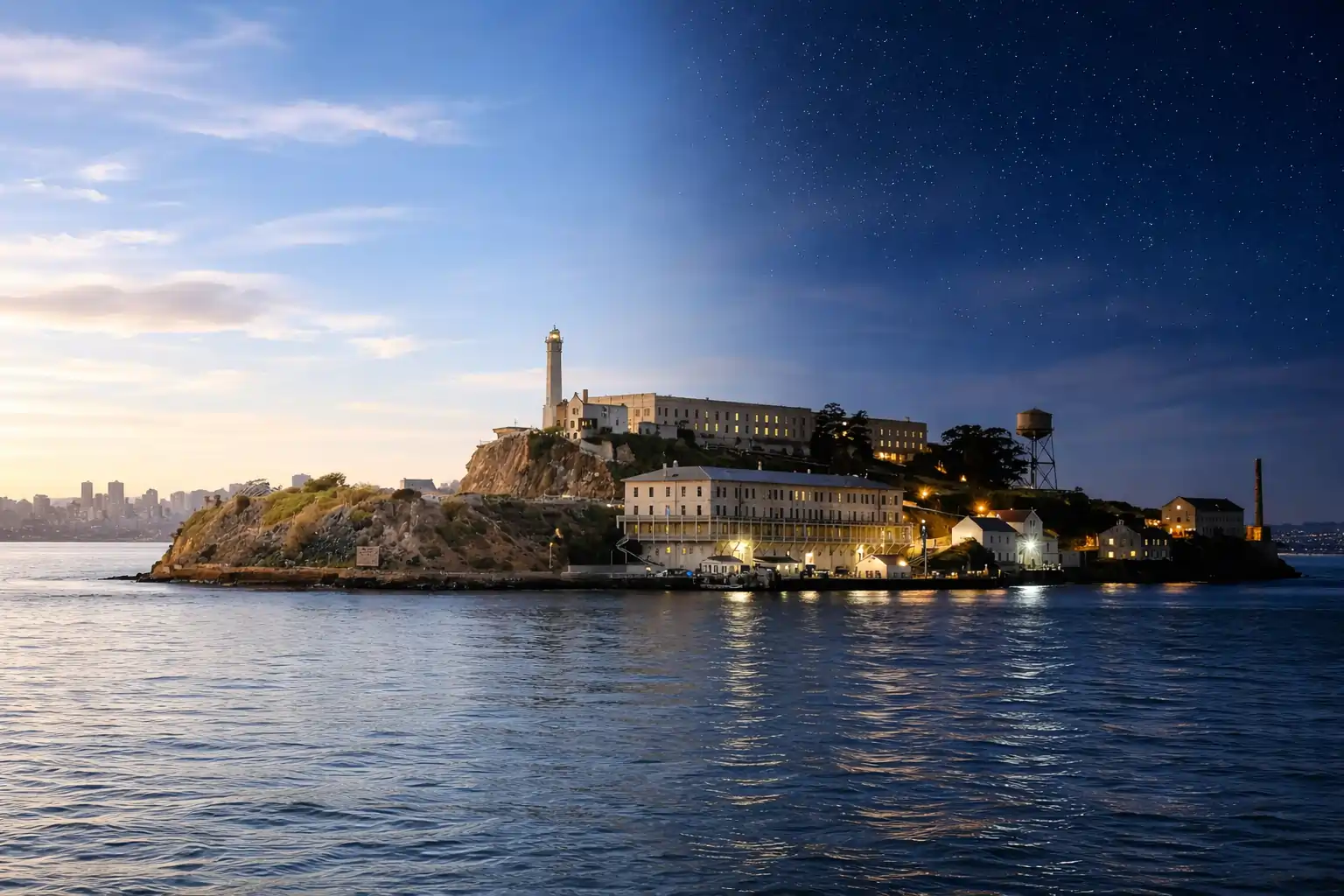
The tour you choose shapes the photographic opportunities available to you, and understanding the difference helps you plan accordingly.
Day visit
The day visit gives you the widest range of conditions and the most time to work different locations across the island. Full daylight access means you can photograph the cellhouse interiors, the exterior viewpoints, the gardens, and the outer paths within a single visit. Morning arrival on an early ferry delivers the best combination of soft light and thin crowds. If photography is a primary goal, the day visit is the most flexible and productive option.
Night visit
The Alcatraz Night Tour is ideal for dramatic, atmospheric photography that the daytime visit simply cannot produce. The cellhouse after dark, lit by artificial light with deep shadows filling the corridors, creates a high-contrast, moody environment that suits both wide atmospheric shots and tight detail compositions.
Outside, the San Francisco skyline reflected on the dark bay and the glow of the city lights against the night sky offer compositions that are entirely unavailable during a day visit. Bring a tripod, shoot in RAW, and set your ISO between 800 and 3200 depending on your camera's low-light capability. The smaller group size on the night tour also means cleaner compositions with fewer people in frame.
For access to quieter and less-visited areas, the Behind the Scenes Tour opens up sections of the island outside the standard public route. These areas include parts of the cellhouse and island infrastructure that most visitors never reach, providing photographic perspectives that are genuinely exclusive to this tour option. If unique angles and less-photographed subjects matter to you, this is worth considering alongside or instead of the standard Alcatraz visit.
Common Photography Mistakes to Avoid at Alcatraz
Shooting only the prison and missing the landscape is the most common photographic oversight on the island. The cellhouse is the obvious subject, but the coastal views, the gardens, the agave trail, and the bay panoramas offer compositions that are equally strong and far less represented in the majority of Alcatraz photography. Balance your time between interiors and exteriors.
Ignoring the light produces flat, uninspiring images regardless of subject. The cellhouse in flat midday light looks different from the cellhouse in morning sidelight or late afternoon warmth. Arriving at the right time for the conditions you want is more important than arriving at any particular time for convenience.
Staying on the main visitor route limits your photographic range to the most photographed locations on the island. The outer paths, the lower dock area, the garden sections, and the residential ruins all offer compositions that most visitors never attempt. Step off the main path whenever the opportunity presents itself.
Shooting with a cluttered composition is easy to do in a busy tourist environment. Wait for moments when foot traffic clears from your frame, position yourself away from the main crowd flow, or shoot early in the morning when the island is quietest. A clean composition with intentional framing consistently outperforms a rushed shot taken in the middle of a crowd.
Using flash inside the cellhouse produces flat, harsh light that eliminates the atmospheric shadow and contrast that makes the interior so compelling photographically. Turn off flash entirely and work with the available natural and artificial light inside the building. The results will be significantly stronger.
Best Instagram Captions for Alcatraz
Good captions add context and engagement to strong images. These work across tones and subject matter.
"Not every view comes with bars on it." — for skyline shots framed through prison windows.
"The Rock. The bay. The story that never really ended." — for wide exterior shots.
"Built to keep people in. Now draws millions in." — for cellhouse or dock arrival shots.
"Quiet enough to hear the history." — for empty corridor compositions.
"The most famous island in the bay, and still full of surprises." — for garden or trail shots.
"Cold water, colder walls, incredible views." — for coastal landscape images.
"Where isolation met the most beautiful bay in America." — for panoramic shots.
"Every cell has a story. Most of them we'll never fully know." — for close-up cell interior shots.
"San Francisco never looked so far away." — for shots of the skyline from the island's edge.
"The prison closed. The atmosphere never left." — for moody, low-light compositions.
Photo Checklist Before Your Visit
Use this before you leave for the ferry to make sure you arrive ready.
Battery fully charged on all devices. A full day on Alcatraz with active photography will drain a smartphone battery completely. Bring a portable charger as backup.
Memory cards cleared and formatted. Running out of storage mid-visit is avoidable with two minutes of preparation the night before.
RAW format enabled on your camera if shooting architecture or low-light interiors.
Lens selection confirmed. Wide-angle for interiors and landscapes, zoom for skyline compression, prime for detail shots.
Tripod packed if you are planning night tour or low-light interior photography. A lightweight travel tripod adds minimal weight and significant sharpness in dim conditions.
HDR enabled on your smartphone for exterior shots.
Lens cloth packed. Bay spray, fog, and condensation all affect lens clarity on the ferry crossing and on exposed outdoor areas of the island.
Weather checked. Knowing whether fog, sun, or overcast conditions are expected helps you plan which locations and compositions to prioritize.
Comfortable bag that keeps hands free. Alcatraz involves significant walking, and a shoulder bag or backpack is far more practical than carrying equipment by hand across uneven terrain.
Arrival time confirmed. Early ferry booked if soft morning light and thin crowds are priorities for your photography session.
Capturing the Story of Alcatraz
The best Alcatraz photographs are not simply records of a famous place. They are visual arguments about what the island actually is. The tension between confinement and beauty. The coexistence of decay and life. The way history sits in physical space and asks you to reckon with it.
That story is available to every photographer who visits, regardless of what camera they carry. What it requires is intention. Slow down, look past the obvious subjects, move to positions that most visitors walk past, and photograph what the island actually shows you rather than what you expected to see before you arrived.
Plan your visit Alcatraz with photography in mind. Book an early ferry for the best morning light, consider the night tour if atmosphere and low-light work appeal to you, and explore beyond the main cellhouse route to find the compositions that make your images look different from everyone else's.
Alcatraz has been photographed millions of times. The version only you can capture is still out there waiting.
Frequently Asked Questions
What is the best time of day to photograph Alcatraz? ▾
Can I bring a tripod to Alcatraz? ▾
Is the Alcatraz Night Tour good for photography? ▾
What are the best photography spots on Alcatraz that most visitors miss? ▾
Can I photograph the wildlife on Alcatraz?▾
Is smartphone photography sufficient for Alcatraz? ▾
Are there photography restrictions on Alcatraz? ▾
What should I photograph on the ferry to Alcatraz? ▾
Can I access unique photography locations on the Behind the Scenes Tour? ▾
What is the most photographed spot on Alcatraz? ▾
Amelia Carter
Published on Alcatraz Tickets