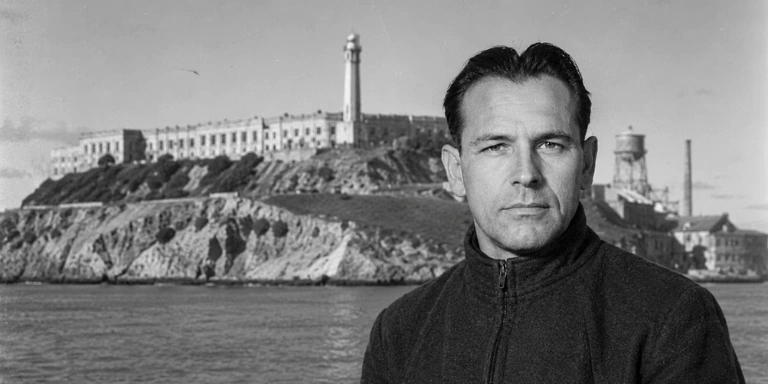
Forrest B. Henry: The Story of Inmate 5-AZ at Alcatraz Prison
The Lesser-Known Stories of Alcatraz
Most people associate Alcatraz with names like Al Capone, Frank Morris, or the Anglin brothers. These are the stories that made headlines and inspired films. But Alcatraz held 1,576 inmates across its history, and the vast majority of them are names the world never heard.
Not all stories from Alcatraz are famous. But some are just as fascinating for what they reveal about the institution and the people it held.
Forrest B. Henry is one of those names. Listed as inmate number 5 on the official Alcatraz register, he represents an entire chapter of the prison's history that most visitors never encounter.
Who Was Forrest B. Henry?

Forrest B. Henry was inmate number 5 on the official Alcatraz prisoner register, listed as an Army prisoner convicted of robbery and assault.
He was among the earliest group of prisoners held at Alcatraz, arriving before the facility transitioned fully into the federal penitentiary that would hold figures like Al Capone.
Detailed personal records beyond his register listing are scarce. His story represents the broader population of lesser-known inmates whose time on the island is documented only in administrative records and inmate rosters.
What Does "Inmate 5-AZ" Mean?
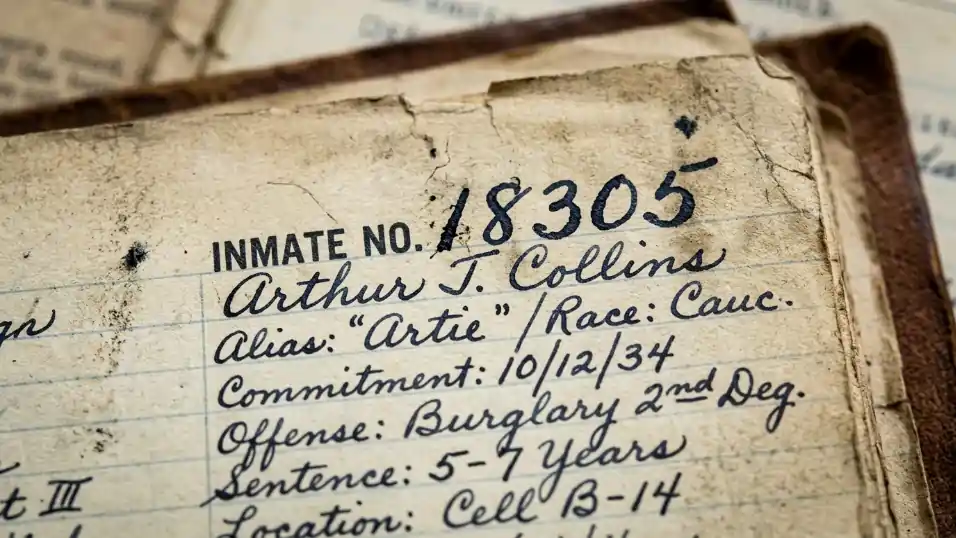
The designation 5-AZ refers to Forrest B. Henry's position on the official Alcatraz inmate register and the facility's identification suffix.
The number 5 indicates he was the fifth prisoner recorded in the island's register during the transition period when the Army still controlled the facility. The "AZ" suffix was the standard designation for Alcatraz, used across the federal prison system to identify which institution an inmate record belonged to.
The earliest inmates on the Alcatraz register, numbers 1 through approximately 32, were Army prisoners transferred to the island before it became a full federal penitentiary in 1934. Henry's low register number places him firmly in this earliest group, making him one of the first prisoners to be formally recorded at what would become the most feared prison in the United States.
The numbering system was straightforward and administrative. It assigned each inmate a sequential number upon arrival, creating a permanent record that could be cross-referenced with individual case files, medical records, and warden's notebooks held today by the National Archives at San Francisco.
Why Was Forrest B. Henry Sent to Alcatraz?
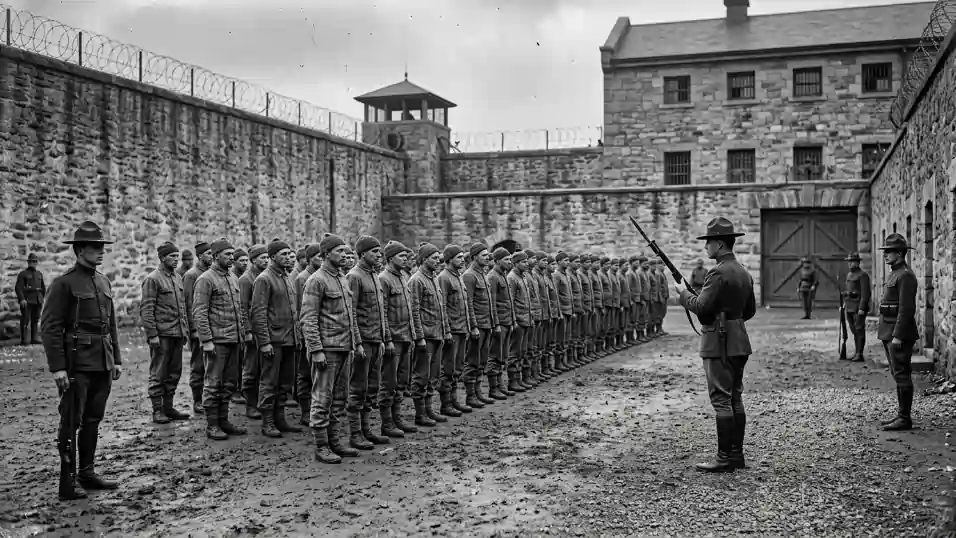
The official register lists Forrest B. Henry's offenses as robbery and assault, and identifies him as an Army prisoner.
This designation is significant. Before the Federal Bureau of Prisons took control of Alcatraz in 1934, the island operated under Army jurisdiction as a military detention facility. Henry's presence as an Army prisoner means he was held at Alcatraz during its military prison phase rather than its more famous federal penitentiary period.
Military prisoners sent to Alcatraz during this era were typically those whose offenses, disciplinary records, or escape risk profiles made standard military detention seem insufficient. Robbery and assault were serious charges that would have placed Henry in a category requiring more secure and isolated confinement than most military facilities could provide.
The specific circumstances of Henry's crimes, trial, and transfer are not part of the publicly available record. Historical documentation for inmates from this pre-federal period is significantly thinner than for those who arrived after 1934, when the Bureau of Prisons implemented more systematic record-keeping.
Life on Alcatraz as Inmate 5-AZ

Forrest B. Henry arrived at Alcatraz during one of the most transitional periods in the island's history. The facility was shifting from its role as a military prison toward the tightly controlled federal penitentiary it would become.
The conditions for Army prisoners during this period were governed by military regulations rather than the strict federal penitentiary rules that Warden Johnston would later implement. That said, the fundamental realities of island confinement remained constant. Isolation from the mainland, limited contact with family, and the psychological weight of incarceration on a rock in the middle of San Francisco Bay applied to every prisoner regardless of which jurisdiction held them.
The prison cells typically measured 9 feet by 5 feet and 7 feet high, furnished with a bed, desk, washbasin, a toilet, and few items other than a blanket. For Army prisoners in the pre-federal period, conditions were similar in their physical austerity.
The daily routine centered on work, meals, and confinement with minimal variation. There were no audio tours, no recreation privileges, and no programs of the kind that later inmates would earn through demonstrated compliance. The early years of Alcatraz were defined by a spareness that the more documented federal penitentiary period would later formalize into policy.
Why His Story Matters

Forrest B. Henry was not a headline-making criminal. He was not a mob boss, a bank robber with a national profile, or the subject of a famous escape attempt.
He was one of thousands of men whose time on Alcatraz was recorded in a register entry and little else. That ordinariness is precisely what makes his story worth telling.
The famous inmates of Alcatraz represent a fraction of the total population the island held across its history. The overwhelming majority were men like Henry, whose crimes, circumstances, and time on the island exist only in administrative records that most people never look at.
Understanding Alcatraz fully means looking beyond the famous names. It means acknowledging that the system of total control the prison operated was not applied only to Al Capone and Frank Morris. It was applied to every man in every cell, famous or forgotten.
Henry's position as inmate number 5 gives him a specific historical significance. He was among the very first people formally recorded at a facility that would go on to become one of the most recognized institutions in the world. That proximity to the beginning of the Alcatraz story is a form of historical significance that has nothing to do with the nature of his crimes.
The Early Alcatraz Most Visitors Never Learn About
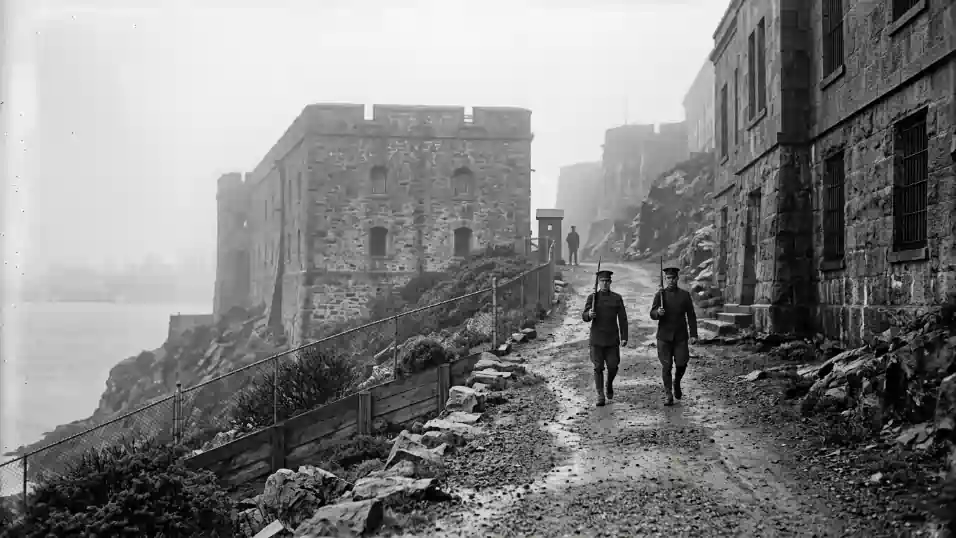
The period during which Forrest B. Henry was held at Alcatraz is one of the least discussed chapters in the island's history.
Most accounts of Alcatraz begin in 1934, when the Federal Bureau of Prisons took control and Al Capone arrived. The military prison period that preceded it, during which Henry and the earliest register inmates were held, is treated as prologue rather than history in its own right.
The earliest inmates on the Alcatraz register were Army prisoners, with the first civilian inmate not arriving until July 6, 1934. Henry and the men around him on the register were held under military jurisdiction in a facility that was still becoming what it would eventually be.
The offenses listed for the earliest inmates reflect the military context. Robbery, assault, sodomy, and AWOL charges dominate the first 50 entries on the register. These were not the organized crime figures and career criminals the federal penitentiary would later attract. They were soldiers and military detainees whose offenses had placed them outside the bounds of standard military discipline.
That distinction matters for understanding what Alcatraz actually was before it became famous. The island's identity as a place of extreme confinement predates the federal penitentiary by decades, and the men who experienced it during the military prison period are the least documented part of that history.
The Alcatraz Inmate Register: A Window Into Forgotten History
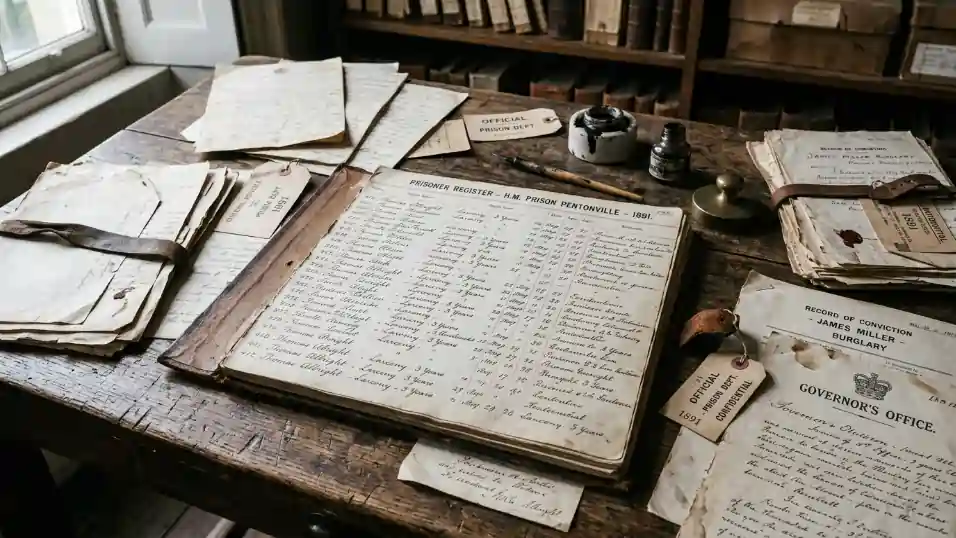
The official Alcatraz inmate register is one of the most detailed primary sources available for understanding who the prison actually held.
It lists each inmate sequentially, with their name, race, offense, and any notable administrative notes. For the earliest entries, including Henry at number 5, those notes are minimal. For later inmates, the register becomes more detailed, reflecting the more systematic record-keeping of the federal penitentiary period.
The register is available through historical archives and has been partially digitized by researchers and historians interested in the full population of Alcatraz rather than just its famous names.
Accessing it reveals a picture of the prison that the standard narrative obscures, one populated overwhelmingly by men whose stories were never told publicly.
Henry's entry, robbery and assault, Army prisoner, sits between inmate 4, Harrison Joseph, discharged 1935, and inmate 6, Hicks Clyde, also an Army prisoner. The administrative brevity of those entries reflects the reality of how most inmates were processed and recorded. They were numbers in a system, and the system was not designed to preserve their individual stories.
Timeline: Alcatraz From Military Prison to Federal Penitentiary
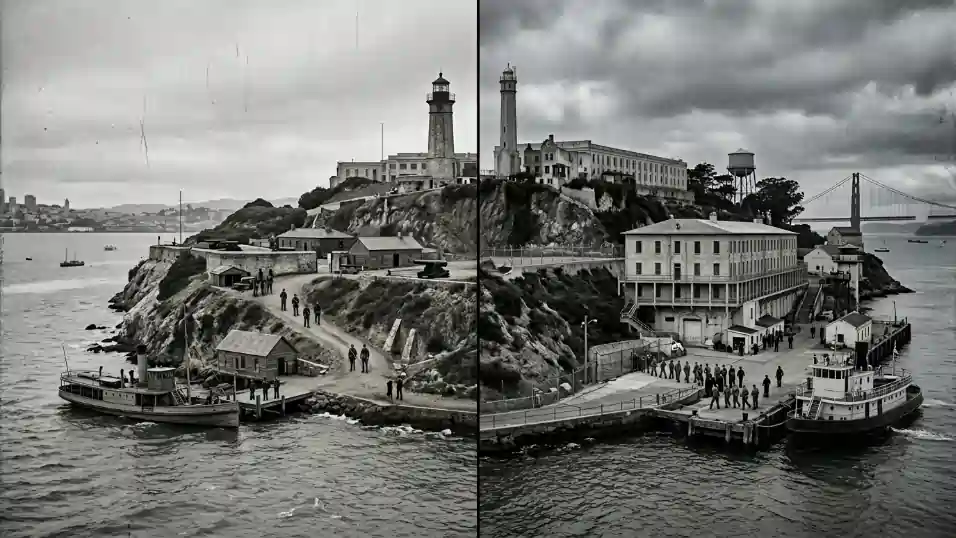
1850s — Alcatraz established as a U.S. Army fortification. Military prisoners first held on the island during the Civil War era.
Early 1900s — Alcatraz formally designated as a military prison. Population grows steadily with military detainees from various conflicts.
1912 — Main cellhouse constructed. The building that would later house the federal penitentiary's most famous inmates is completed under Army supervision.
1934 — Early — Army begins transferring control of Alcatraz to the Federal Bureau of Prisons. Early register inmates including Forrest B. Henry are held during this transition period.
1934 — July 6 — First civilian inmate arrives at Alcatraz, marking the formal beginning of the federal penitentiary period.
1934 — August — Al Capone arrives as one of the first high-profile federal inmates. The prison's famous era begins.
1963 — Federal penitentiary closes. The military prison period and the federal period together represent nearly a century of continuous use as a detention facility.
Today — The National Park Service preserves the island as a historic site. The full inmate register, including the earliest Army prisoner entries, is accessible through historical archives.
Did You Know? Facts About the Early Alcatraz Island Inmate Register
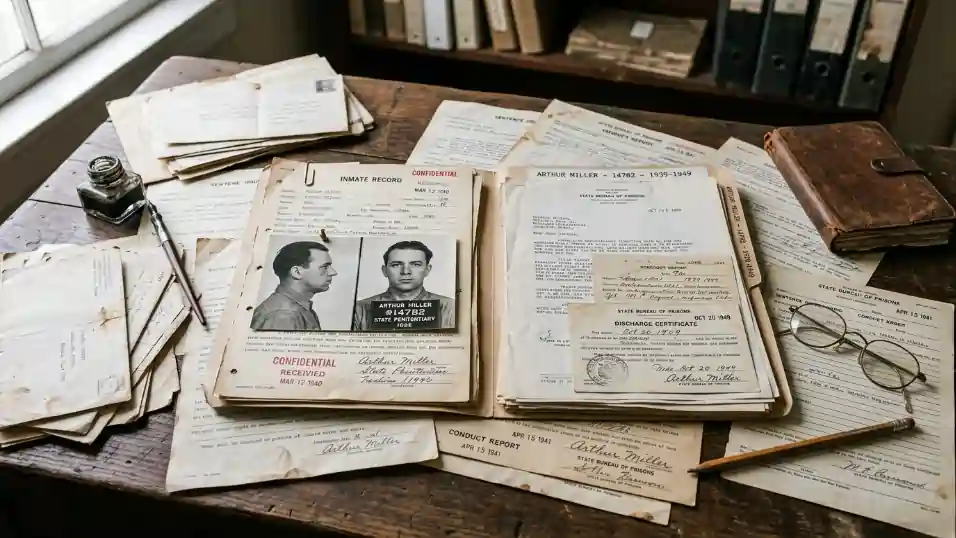
Shortest stay recorded:
Inmate #33, Frederick White, arrived on July 6, 1934, and was discharged just 10 days later on July 16, after being taken into custody by the Los Angeles Sheriff.Documented early death:
Inmate #47, Edward Wutke, who was wanted by Immigration authorities, died by suicide on November 13, 1937.Minimal Army records:
Many early Army prisoner entries simply state “Dead” with no additional details, reflecting limited record-keeping compared to later federal inmates.Mixed inmate population:
Inmate #35, Elmer Cole, listed as an escape risk and discharged in 1938, highlights how civilian and Army prisoners were housed together during the transition period.Army prisoners dominated early records:
Among the first 50 inmates, most were Army prisoners, showing that the shift to a federal penitentiary happened gradually.Unique inmate ID system:
The “AZ” suffix in inmate numbers was specific to Alcatraz, distinguishing its records from other federal prisons and still used by historians today.
What Visitors Can Learn Today
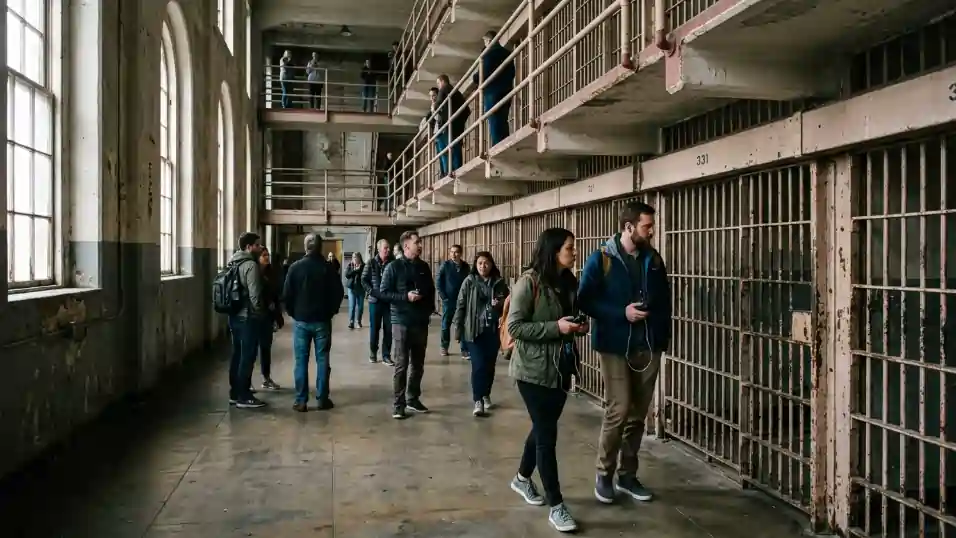
Visiting Alcatraz today offers more than a tour of famous cells and escape routes. It offers a chance to engage with the full complexity of what the island was and who it held.
The standard visitor experience focuses naturally on the most famous and well-documented aspects of the prison's history. That focus is understandable, and it delivers a genuinely compelling experience for the vast majority of visitors.
But the island holds more than the famous narrative. Visitors can explore these deeper stories during an Alcatraz Day Tour, which provides access to the cellhouse, exhibits, and ranger programs that touch on the broader inmate population beyond the headline names.
For a deeper perspective on the parts of the island's history that the standard route does not fully cover, the Behind the Scenes Tour opens up sections of the cellhouse and island infrastructure that connect to the less-documented chapters of the prison's past. It is the right option for visitors who want to understand Alcatraz as a complete historical institution rather than a collection of famous incidents.
The physical spaces that Henry and the earliest Army prisoners occupied are the same spaces that later held the federal penitentiary's most notorious inmates. Walking those spaces with the knowledge of who came before the famous names adds a layer of historical depth that enriches the entire experience.
Final Thought
Forrest B. Henry is remembered only by a brief record, five words in a register. Yet that small detail reflects a larger truth about Alcatraz Island.
Its history isn’t just about famous inmates but the many others whose lives were reduced to simple entries like discharged, released, or dead. Walking the cellhouse with this perspective changes everything, the cells become reminders of real, often forgotten lives.
Look beyond the well-known names. The true story of Alcatraz belongs to everyone who was held there.
Frequently Asked Questions
Who was Forrest B. Henry?▾
What does 5-AZ mean? ▾
Was Forrest B. Henry a federal inmate or a military prisoner? ▾
How many inmates were held at Alcatraz in total? ▾
Are Alcatraz inmate records publicly available? ▾
What offenses did the earliest Alcatraz inmates commit? ▾
Why are early Alcatraz inmates less documented than later ones? ▾
Who was the first civilian inmate at Alcatraz? ▾
What happened to most Army prisoners after Alcatraz? ▾
Why is it worth learning about lesser-known Alcatraz inmates? ▾
Sierra
Published on Alcatraz Tickets