
The Battle of Alcatraz: Prison Riot of 1946
One of Alcatraz's Most Violent Moments
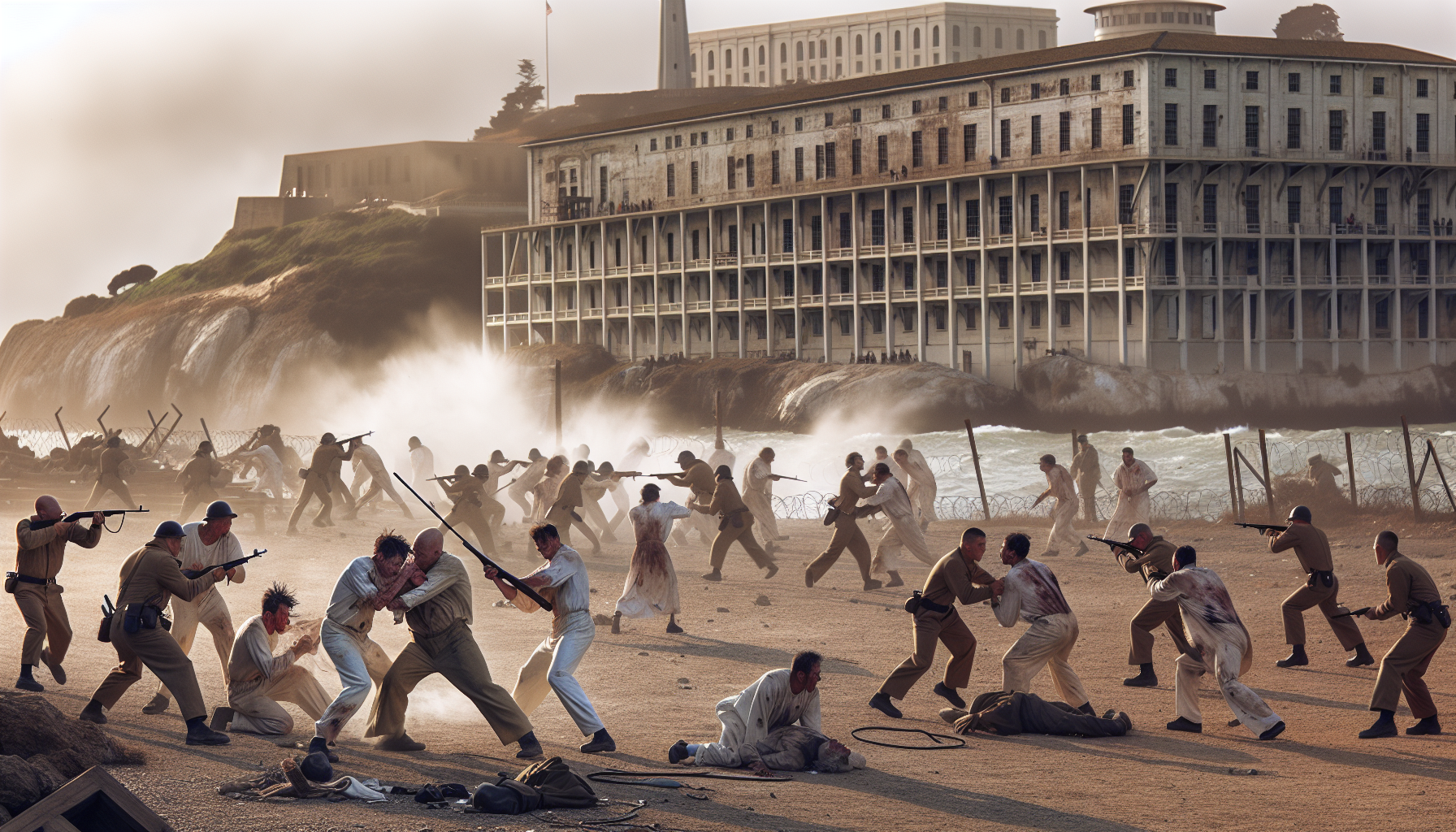
One of Alcatraz's Most Violent Moments
Alcatraz was built on the premise of total control. The rules were strict, the security was thorough, and the surrounding bay made physical escape seem impossible. For more than a decade after the federal penitentiary opened in 1934, that premise held.
Then, in May 1946, six inmates decided to test it.
What followed was not a brief disturbance quickly suppressed by prison staff. It became a two-day armed confrontation that left guards dead, inmates killed, and the U.S. Marines deployed to a federal prison on an island in San Francisco Bay. For two days, Alcatraz turned into a battlefield, and the idea of it being completely untouchable was broken in the most violent way possible.
What Was the Battle of Alcatraz?

What Was the Battle of Alcatraz?
The Battle of Alcatraz was a failed prison escape attempt that escalated into a full armed confrontation between inmates and federal authorities over two days in May 1946.
Six inmates, led by Bernard Coy, seized weapons, took prison staff hostage, and attempted to break out of the cellhouse. When the escape failed, the situation quickly turned into a siege. Guards were shot. Inmates barricaded themselves inside the prison. The U.S. Marines were brought in, and the situation was only brought under control after sustained gunfire and the use of hand grenades inside the cellhouse.
When it ended, two correctional officers and three of the six inmates were dead. The surviving ringleaders were later tried for murder and executed. It remains one of the most violent and defining incidents in American prison history.
The Inmates Behind the Escape Attempt

The Inmates Behind the Escape Attempt
Bernard Coy's Role and Planning
The plan was conceived and led by Bernard Coy, a bank robber from Kentucky serving a 25-year sentence. Coy was known among prison staff as disciplined and patient, someone capable of thinking several steps ahead.
He spent months studying guard routines, observing the layout of the cellhouse, and identifying small weaknesses in the system that others overlooked. This level of preparation is what made the escape attempt possible in the first place.
The Group He Assembled
Coy brought together five other inmates who each had a history of violence or escape attempts.
Joseph Cretzer was a career criminal who had already tried to escape Alcatraz before and had a record of attacking law enforcement. Marvin Hubbard was serving time for kidnapping and was considered physically strong and dangerous.
The remaining participants were Sam Shockley, Miran Thompson, and Clarence Carnes. Carnes stood out immediately. At just 18 years old, he was the youngest inmate ever held at Alcatraz, already serving a life sentence. His age would later play a major role in how the courts treated him after the riot.
Together, the six men formed a group that combined planning ability, experience, and willingness to take extreme risks. This was not an impulsive act. It was calculated and deliberate.
How the Riot Began

How the Riot Began
The escape attempt began on the afternoon of May 2, 1946, during a moment Coy had been waiting for, a brief gap in guard supervision caused by routine rotation.
The Gun Gallery Break-In
Coy targeted the gun gallery, an elevated corridor that allowed armed guards to oversee the entire cell block. Access to it was tightly controlled, but Coy had identified a flaw in the spacing of the bars.
By stripping down and carefully maneuvering his body, he managed to squeeze through the gap and enter the gallery. Once inside, he overpowered Officer Burch and took control of the weapons. This was the critical step that allowed everything else to happen.
Taking Control of the Cellhouse
With weapons in hand, Coy opened cell doors and released the other inmates. Together, they moved quickly, overpowering guards, taking hostages, and locking them inside cells.
For a short period, the plan worked almost exactly as intended. They had weapons, control over part of the cellhouse, and multiple hostages. It was the closest anyone had come to breaking Alcatraz from the inside.
The Missing Key That Changed Everything
The plan depended on one final step. They needed the key to the yard door.
That key was not where it was supposed to be.
It had been left inside a locked cell with the captured guards. When the inmates searched for it, they could not find it. The door to the yard remained locked, and their only route out was gone.
In a matter of minutes, the situation shifted. What had been a controlled escape attempt turned into a trapped standoff. Every second increased the chance of discovery.
When the alarm was raised, the escape was effectively over. The inmates now had to decide whether to surrender or fight. They chose to fight.
The Two-Day Battle Inside Alcatraz
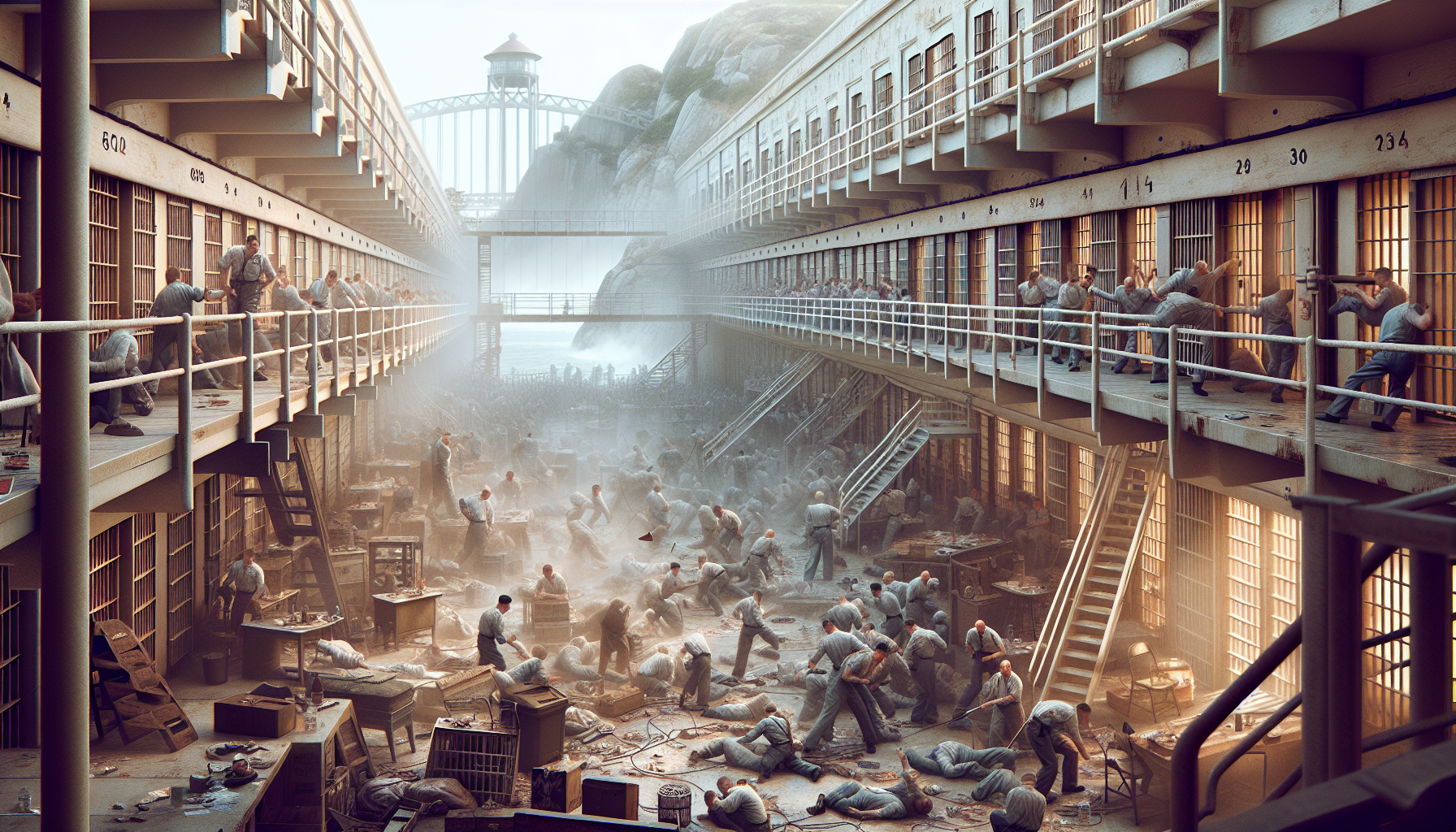
The Two-Day Battle Inside Alcatraz
Once prison authorities realized what was happening, the situation escalated quickly and violently.
The Turning Point: Violence Against Hostages
Joseph Cretzer recognized that the escape had failed. Facing the consequences, he made a decision that changed everything.
He opened fire on the hostage guards through the cell bars. His intent was to eliminate witnesses. Officers Miller and Corwin were shot, and several others were wounded.
This moment transformed the incident from a failed escape into a deadly confrontation.
Military Response and Full-Scale Assault
Outside the cellhouse, officials had limited visibility but understood the seriousness of the situation. Communication was disrupted, and the inmates were armed.
Warden Johnston called for military assistance. U.S. Marines from nearby Treasure Island were deployed, and Navy demolition teams were brought in. What began as a prison incident became a coordinated military response.
Over the next two days, the effort to regain control involved continuous gunfire, controlled assaults through the cell blocks, and grenades dropped through openings in the roof to reach the inmates hiding below.
Visitors today can walk through these same areas during an Alcatraz Day Tour, standing in the corridors where the confrontation unfolded. Seeing the physical layout makes it much easier to understand how intense and confined the situation really was.
How It Ended Inside the Cellhouse
Coy, Cretzer, and Hubbard were eventually found dead in a utility corridor behind C Block, killed during the assault.
Shockley, Thompson, and Carnes were later found alive in their cells. They had not continued active resistance during the final phase and were taken into custody without further violence.
How the Riot Ended
How the Riot Ended
By the morning of May 4, 1946, control of the cellhouse had been fully restored.
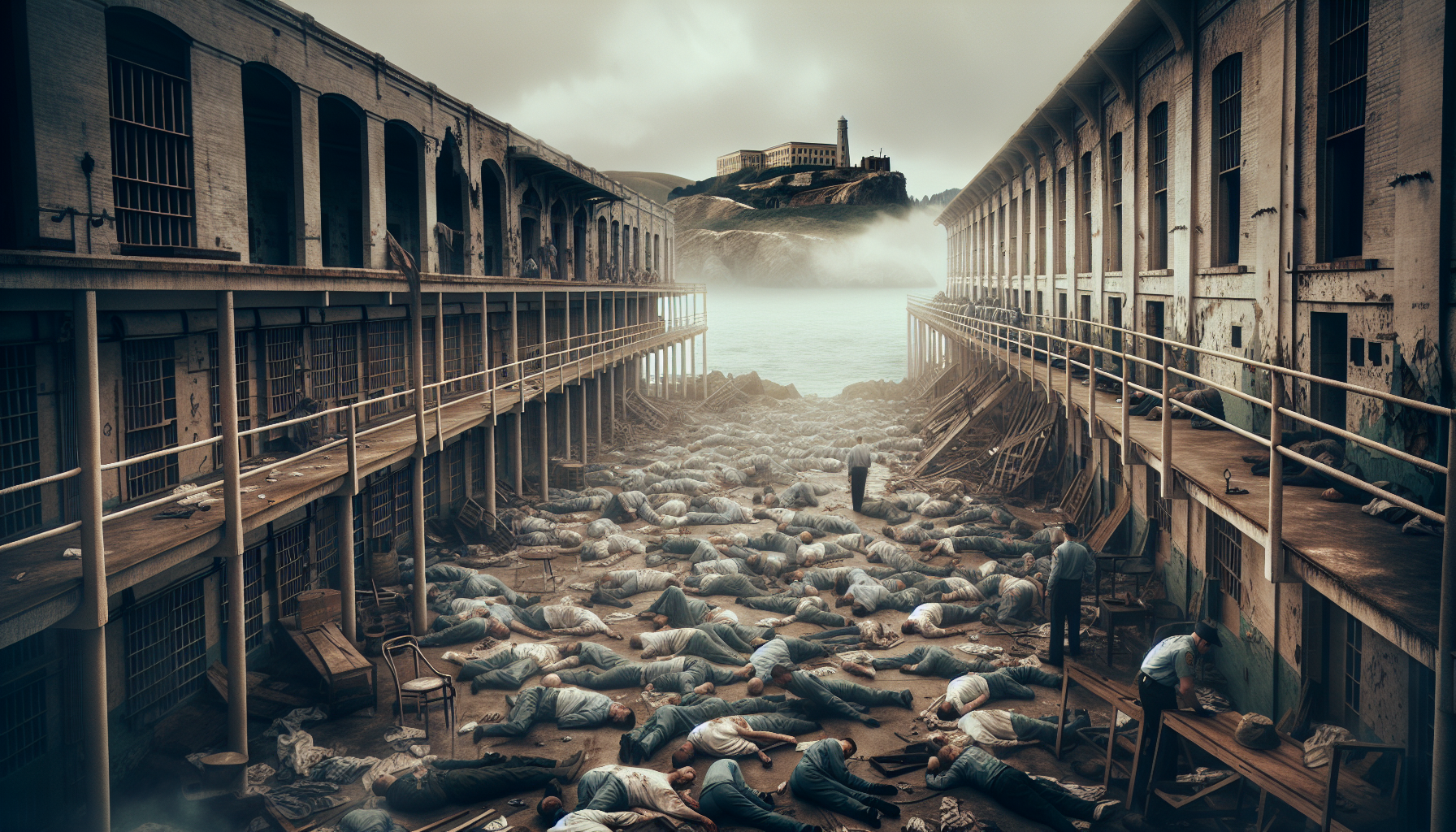
Two correctional officers, William Miller and Harold Stites, had been killed. Eighteen others were injured. Three of the six inmates involved in the escape attempt were dead.
The aftermath inside the prison was severe. The utility corridor where the final confrontation took place showed clear signs of heavy gunfire and explosive damage. Repairs were extensive and took time before normal operations could resume.
Shockley, Thompson, and Carnes were taken into custody and transferred to face trial. While the immediate crisis had ended, the impact of what happened inside the prison remained.
The psychological toll on the surviving guards, especially those held hostage, was long-lasting. They had been locked in cells, injured, and forced to listen to the violence unfolding around them with no way to escape.
Aftermath and Consequences
Aftermath and Consequences
The three surviving inmates were tried for the murders of the correctional officers. The trials attracted national attention, largely because they challenged the idea that Alcatraz was completely secure.
Sam Shockley and Miran Thompson were convicted and executed in 1948 at San Quentin State Prison.
Clarence Carnes received a different outcome. Because of his age and the fact that he had not directly taken part in the killings, he was spared the death penalty. His sentence was extended, and he remained in prison for decades before being released in 1973.
Security Changes After the Riot
The Bureau of Prisons carried out a full review of security procedures after the incident. Several key changes were made:
Bar spacing in the gun gallery was modified
Guard rotation schedules were adjusted
Key control procedures were tightened across the facility
These changes directly addressed the weaknesses Coy had identified and used.
Rather than damaging Alcatraz's reputation, the response strengthened it. The scale of force used, the legal consequences, and the speed of the response reinforced the idea that any challenge to authority inside Alcatraz would be met with overwhelming control.
Why the Battle of Alcatraz Still Matters Today
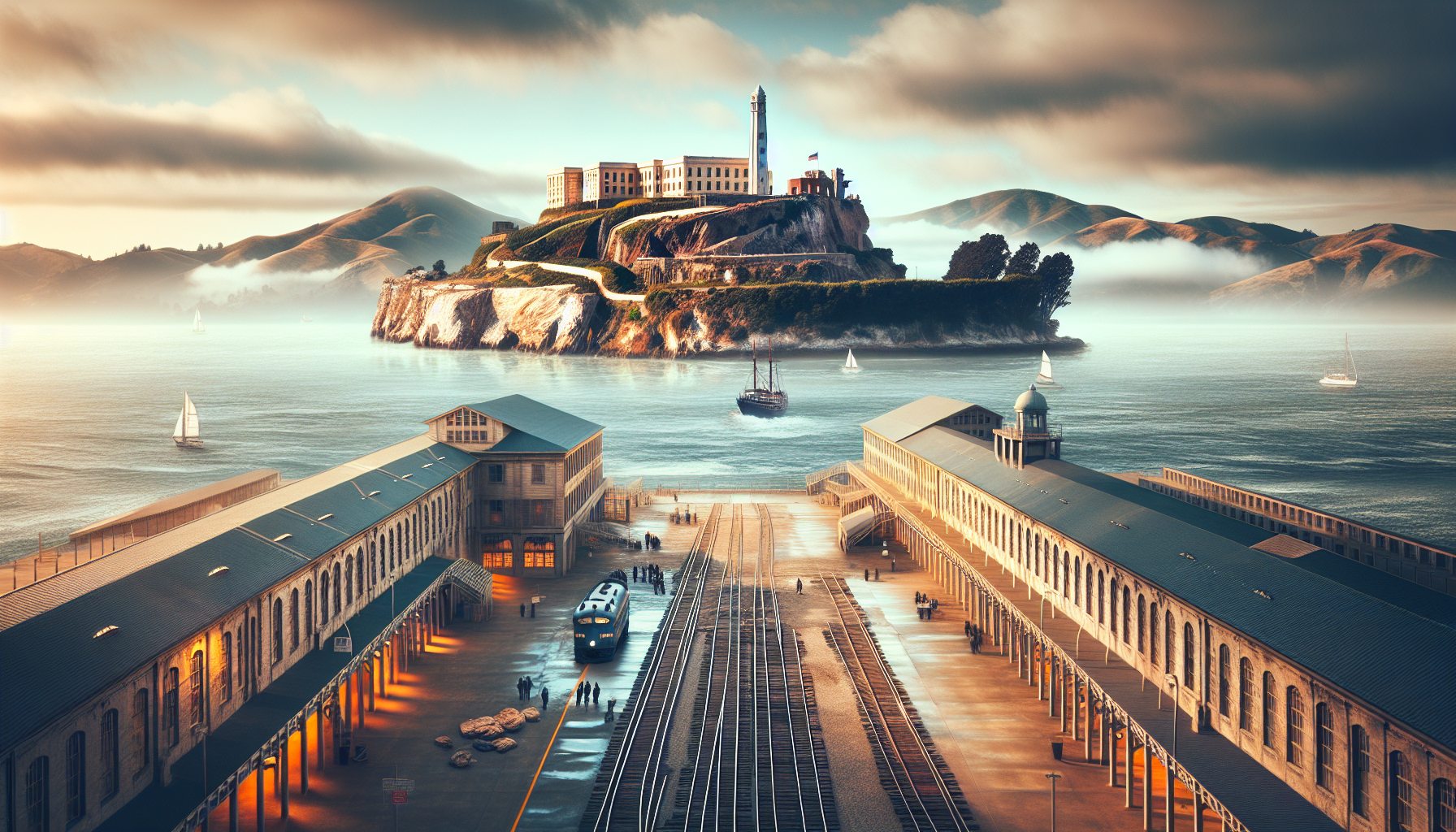
Why the Battle of Alcatraz Still Matters Today
The Battle of Alcatraz was more than a violent incident. It exposed the limits of even the most controlled system.
Coy's plan showed that careful observation and patience could uncover flaws that routine systems missed. That realization influenced how prison security was approached in the years that followed.
It also raised difficult questions about the environment inside Alcatraz. The men involved were not acting impulsively. They were willing to risk everything for a chance at escape. That level of desperation led to ongoing debates about how extreme prison conditions affect behavior.
Today, this story is a central part of the experience for anyone visiting Alcatraz. It is built into exhibits, the audio tour, and the layout of the cellhouse itself.
Experiencing the island during an Alcatraz Night Tour adds another layer to it. The quieter setting, reduced crowds, and darker atmosphere make the story feel more immediate. The same corridors take on a different tone when you walk through them at night.
Timeline of Events: May 1946
May 2, 1946 — 2:00 PM — Bernard Coy strips down and squeezes through the bar spacing of the gun gallery, overpowers Officer Burch, and seizes weapons.
May 2 — Early afternoon — Coy releases Cretzer, Hubbard, Shockley, Thompson, and Carnes from their cells. Guards on the cell block floor are overpowered and taken hostage.
May 2 — Mid-afternoon — Inmates discover that the key to the yard door is missing, locked inside a cell with the hostage guards. The planned escape route is blocked.
May 2 — Late afternoon — Prison staff realizes something is wrong. Alarm raised. Warden Johnston begins coordinating the response from outside the cellhouse.
May 2 — Evening — Joseph Cretzer shoots the hostage guards through the cell bars. Officers Miller and Corwin are shot. Multiple guards were wounded.
May 2 — Night — U.S. Marines deployed from Treasure Island. Navy demolition experts arrive. Island placed under a combined military and prison authority response.
May 3, 1946 — Full-scale effort to retake the cellhouse begins. Sustained gunfire and grenades were dropped through holes drilled in the roof above inmate positions. Fighting continues through the day and into the night.
May 4, 1946 — Early morning — Coy, Cretzer, and Hubbard found dead in the utility corridor behind C Block. Shockley, Thompson, and Carnes were found alive in their cells and taken into custody.
May 4 — Morning — Cellhouse declared secure. Marines stand down. Warden Johnston confirms two correctional officers are dead and 18 are injured.
1948 — Shockley and Thompson were executed at San Quentin State Prison on December 3.
1973 — Clarence Carnes was released from federal custody, the youngest participant in the riot and the only one to eventually live as a free man.
Did You Know? Facts About the Battle of Alcatraz
The entire escape plan hinged on a single key that could not be found. If the yard door key had been accessible, the six inmates may have reached the prison yard and the water before the alarm was raised.
Bernard Coy had been quietly studying the gun gallery bar spacing for months before the escape attempt. He modified his diet to lose enough weight to fit through the gap, a level of premeditation that prison staff found genuinely alarming during the post-riot investigation.
The hand grenades used to end the standoff were dropped through holes that Marines and prison staff drilled through the roof of the cellhouse directly above the utility corridor where the inmates were sheltering. The physical damage to that area of the building was significant and visible for years afterward.
Clarence Carnes was serving a life sentence for crimes committed when he was 16 years old, making him the youngest inmate in Alcatraz history. His relative youth was the primary factor that saved him from the death sentence that his co-defendants received.
Officer William Miller, one of the two guards killed during the riot, was shot while locked in a cell as a hostage. He died from his wounds on May 3, the second day of the confrontation, having survived the initial shooting but succumbing before the cellhouse was retaken.
The Marine deployment to Alcatraz during the riot was one of the very few instances in American history of military forces being used to resolve a domestic prison incident. The decision to call in the Marines reflected both the severity of the situation and the limitations of the prison staff in conducting an armed assault on their own facility.
Warden James Johnston, who had run Alcatraz since its opening in 1934, was present throughout the two-day confrontation. The Battle of Alcatraz occurred in his final years as warden, and the incident shaped the security reforms implemented during the prison's remaining operational years.
Final Thought
The Battle of Alcatraz lasted 48 hours. In that time, it resulted in five deaths, multiple injuries, and a full military response inside a federal prison.
It did not break Alcatraz. If anything, it reinforced its reputation. But it did prove something important. The system was not perfect.
A single weakness, identified and exploited over time, led to the most violent incident in the prison's history.
That contrast is what makes this event stand out. It is a story about control, but also about its limits. It is about planning, risk, and the consequences that followed.
Walking through the cellhouse today with that context changes the experience. The structure remains the same, but the understanding of what happened inside it adds weight to every corridor and cell.
Give yourself time when you visit Alcatraz. The story is not just in the displays. It is in the space itself, and in how it still holds the memory of what happened there. The only way to experience it is with a day tour to Alcatraz or a night tour for a more immersive experience of the eerie atmosphere.
Frequently Asked Questions
When did the Battle of Alcatraz take place? ▾
Who led the Battle of Alcatraz? ▾
How did the escape attempt start? ▾
Why did the escape fail? ▾
How many people died in the Battle of Alcatraz? ▾
Were any inmates executed after the riot? ▾
What happened to Clarence Carnes? ▾
Were U.S. Marines really deployed to Alcatraz? ▾
How did the riot affect Alcatraz security? ▾
Can you see where the riot took place on a visit? ▾
Amelia Carter
Published on Alcatraz Tickets