
Arthur Doc Barker: Alcatraz Escape Attempt & Death (1939)
A Violent Legacy on The Rock
Not every prisoner accepted life on Alcatraz. Some risked everything to escape.Arthur "Doc" Barker was one of them. Born into one of the most notorious criminal families in American history, Barker spent his life moving from one violent crime to the next until the federal government ran out of patience and sent him to the one place designed to make escape impossible. He lasted less than four years before attempting to prove that reputation wrong. The attempt cost him his life.
His story is not the most famous in Alcatraz history. It does not carry the cultural weight of the 1962 escape or the celebrity of Al Capone's time on the island. But it captures something essential about what The Rock actually was: a place where desperate men made final, fatal decisions, and where the water surrounding the island enforced consequences that no prison wall alone ever could.
Who Was Arthur "Doc" Barker?
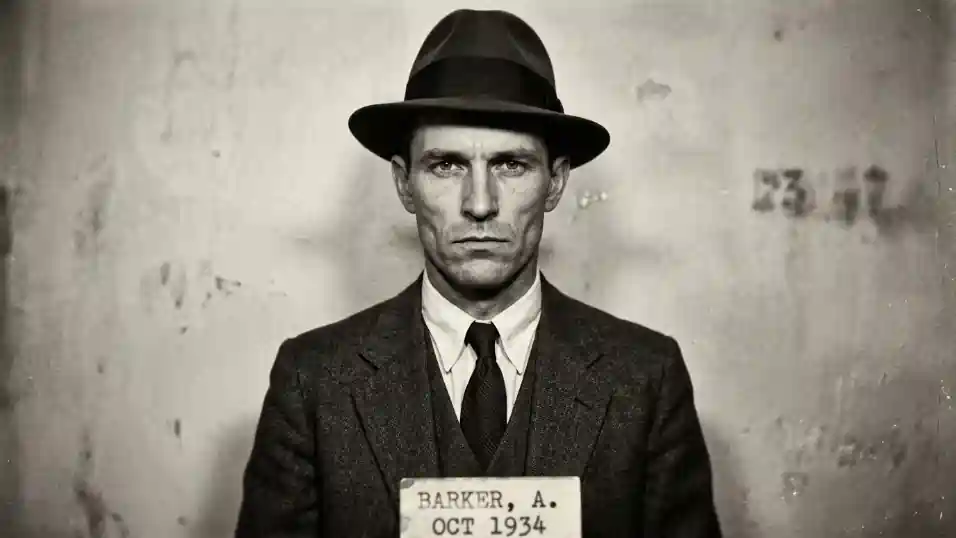
Arthur "Doc" Barker was the youngest son of the infamous Ma Barker and a senior member of the Barker-Karpis gang, one of the most feared criminal organizations of the Depression era. Convicted of kidnapping and sentenced to life imprisonment, he was transferred to Alcatraz Federal Penitentiary in 1935 due to his violent history and escape risk classification. On January 13, 1939, Barker was shot by guards during an escape attempt and died of his wounds later that morning. He was thirty-nine years old and had served less than four years on the island.
Early Life and Criminal Background
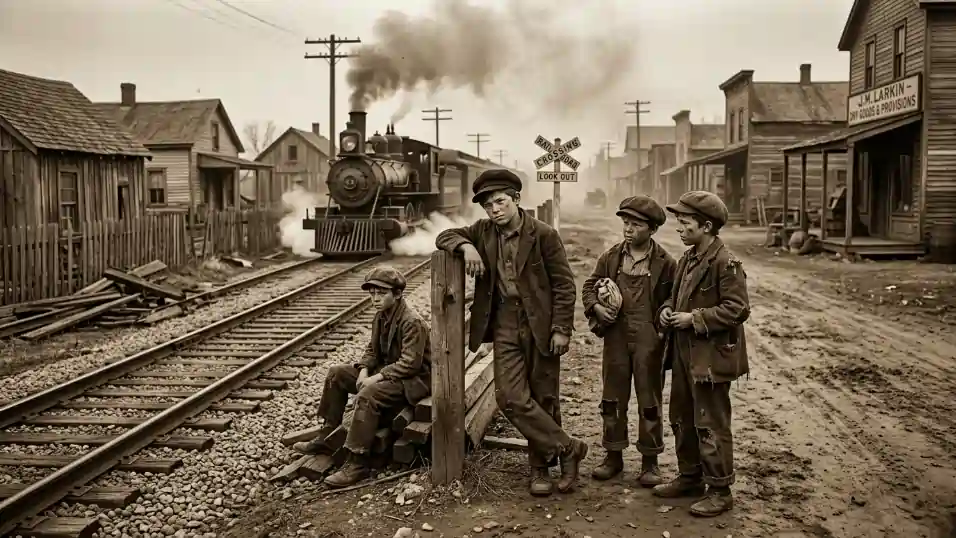
Arthur Barker was born on June 4, 1899, in Aurora, Missouri, the youngest of four brothers in the family of George and Arizona Donnie Clark Barker, known to history as Ma Barker. The family was poor and transient, moving frequently across the Midwest during Arthur's childhood and settling for periods in Webb City, Missouri, and later Tulsa, Oklahoma. Ma Barker was a dominating presence in the family, fiercely protective of her sons and, according to law enforcement accounts of the era, deeply involved in encouraging and facilitating their criminal activities from an early age.
Arthur and his brothers Herman, Lloyd, and Fred grew up surrounded by petty criminals and began their own criminal careers as teenagers. By his early twenties Arthur had accumulated arrests for theft and assault, falling deeper into organized crime as the Barker brothers connected with Alvin Karpis and formed what became the Barker-Karpis gang in the late 1920s.
The gang operated across multiple states, robbing banks and payroll vehicles with a level of planning and violence that attracted serious federal attention during the early 1930s.
The nickname Doc had nothing to do with medicine. It was informal street slang used within the gang and by law enforcement, likely reflecting a perception of Barker as the most calculating and methodical of the brothers, a man who approached criminal operations with a cold precision that set him apart from the more impulsive members of the gang. He had no medical training or background of any kind.
Why Was He Sent to Alcatraz?
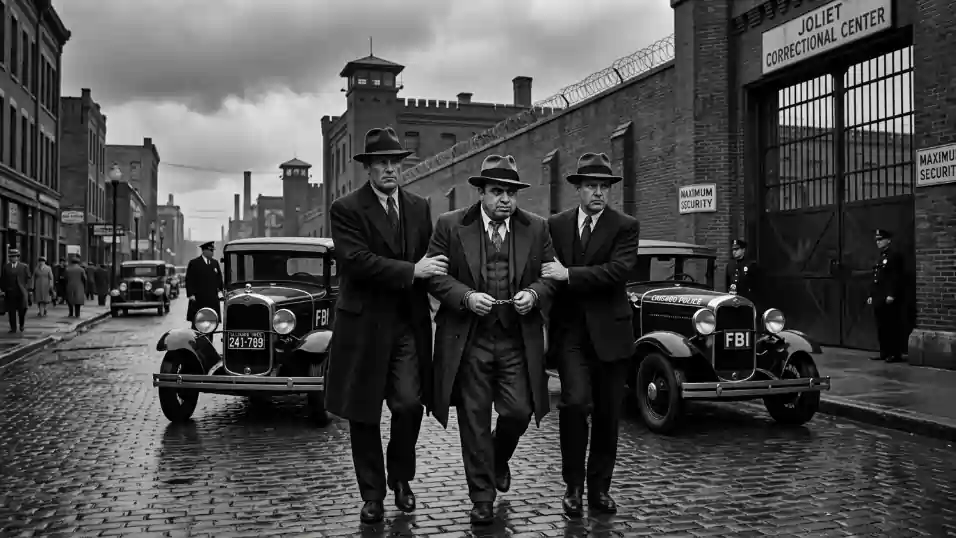
By the early 1930s the Barker-Karpis gang had escalated from bank robbery into kidnapping, one of the most federally prosecuted crimes of the era following the Lindbergh case. In 1933 the gang kidnapped St. Paul banker Edward Bremer and in 1934 kidnapped brewing heir William Hamm Jr., collecting substantial ransoms from both.
These crimes placed the gang at the top of J. Edgar Hoover's priority list and made their capture a matter of public and institutional urgency for the FBI.
Arthur Barker was arrested in Chicago in January 1935 and convicted of the Bremer kidnapping, receiving a life sentence. His violent history, his senior role in one of the country's most dangerous criminal organizations, and his classification as a serious escape risk made him exactly the kind of inmate the federal penitentiary system had built Alcatraz to contain.
He was transferred to the island later that year. The government's assessment was straightforward: Arthur Barker was too dangerous and too determined for any ordinary facility to hold securely.
Life Inside Alcatraz
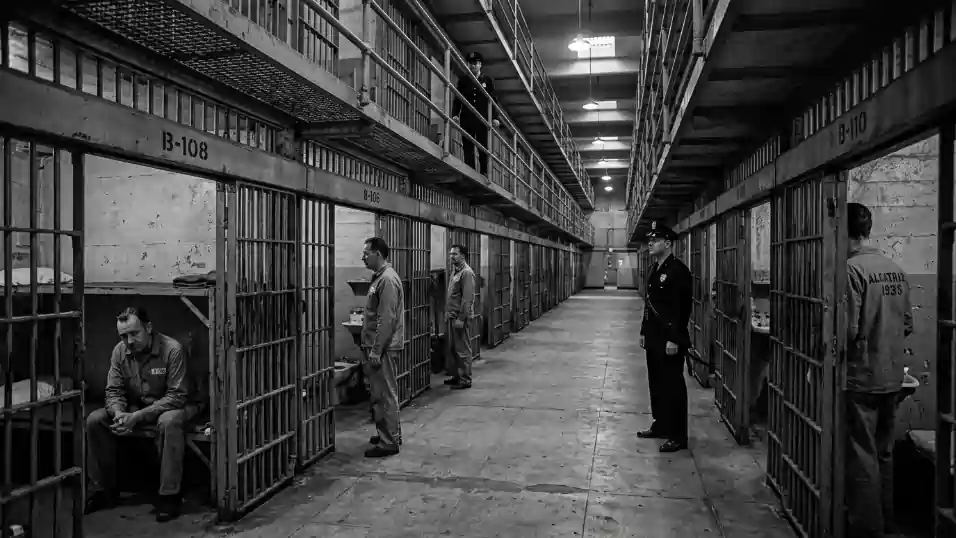
Life at Alcatraz in the late 1930s was defined by the strict regime that Warden James Johnston had established from the prison's opening in 1934. Inmates followed a rigid daily schedule from the morning count through meals, work assignments, and recreation periods, with rules governing almost every aspect of behavior including silence in certain areas of the prison during the institution's early years.
For a man like Barker, accustomed to operating with complete autonomy and accustomed to being feared, the loss of control that Alcatraz imposed was particularly acute. The privileges and influence that senior criminal figures could accumulate at other federal facilities did not exist on The Rock.
Every inmate was treated according to the same rules regardless of their reputation or criminal standing on the outside. That institutional equality, which was one of Alcatraz's defining features, was also one of its most psychologically grinding.Barker was not a cooperative inmate.
Prison records indicate disciplinary issues during his time at Alcatraz, consistent with a man who had spent his entire adult life operating outside any institutional framework and had little capacity for the patience and submission that long-term incarceration required.
The prospect of spending the rest of his life on a rocky island in the middle of San Francisco Bay, visible from the city but permanently separated from it, was one that Barker was unwilling to accept.
The Escape Attempt That Changed Everything
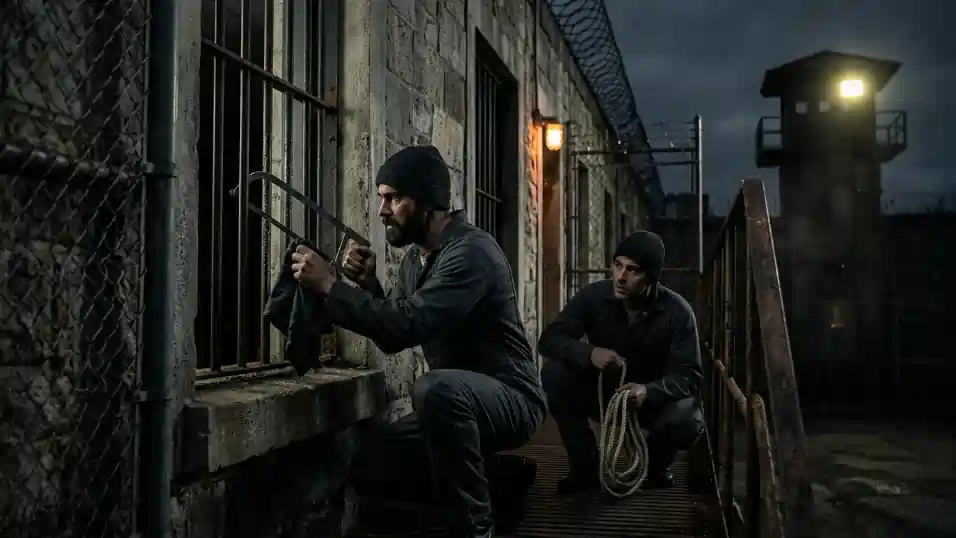
In the early hours of January 13, 1939, Arthur Barker and four other inmates, Henri Young, Rufus McCain, William Martin, and Dale Stamphill, made their move. The group had managed to saw through the bars of their cells in the isolation unit on the island's lower level, working over a period of time with makeshift tools in the manner that escape attempts at Alcatraz consistently required: slowly, quietly, and with patience that the eventual attempt itself would not reflect.
The men made their way down to the shoreline on the northwestern edge of the island, intending to enter the water and attempt the crossing to the mainland. It was January. The bay water temperature was close to fifty degrees Fahrenheit. The currents in the channel between Alcatraz and the shore were strong and unpredictable.
Whether the men had any realistic plan for surviving the crossing or had simply reached a point where the attempt itself mattered more than the odds is something the historical record does not make clear.
Guards discovered the escape in progress and opened fire. Three of the five inmates surrendered immediately. Stamphill was wounded. Arthur Barker was shot as he reached the rocky shoreline at the base of the cliffs, sustaining wounds that were immediately severe. He was found by guards and brought back to the prison hospital, conscious but critically injured.
His Death and Its Aftermath
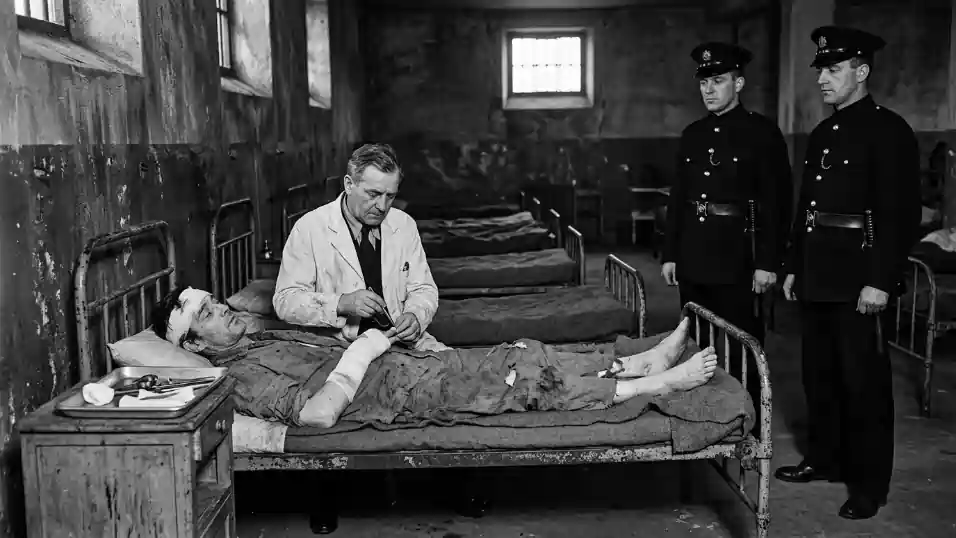
Barker died in the prison hospital later that morning from his wounds. He was thirty-nine years old and had served less than four years of a life sentence. His last recorded words, spoken to a prison officer who found him on the shoreline, were a simple admission: he said he was badly hurt and that he had been crazy to try it.
The escape attempt and Barker's death reinforced the institutional message that Alcatraz had been sending since its opening five years earlier.
The water surrounding the island was not merely a physical barrier. It was a final consequence, cold and definitive, for anyone who pushed past the point where guards could intervene. The island's reputation as a place from which escape was not merely difficult but genuinely life-threatening was built in moments exactly like this one.
The other participants in the attempt faced disciplinary consequences within the institution. Henri Young's subsequent history at Alcatraz, including his years in solitary confinement following the escape attempt and the trial that eventually put the prison's internal conditions under public scrutiny, became one of the more significant chapters in the institution's complicated legacy. Barker himself left no such complicated aftermath. His story ended on the shoreline in the cold January darkness, the youngest of the Barker brothers and the one whose bid for freedom came closest to the water.
Why Arthur Barker's Story Still Matters
Arthur Barker's escape attempt is not the most famous in Alcatraz history. The 1962 escape of Frank Morris and the Anglin brothers, with its ingenious preparation and permanently unresolved outcome, carries far more cultural weight and continues to generate genuine historical debate. Barker's attempt, by contrast, ended quickly and badly, with none of the ambiguity that makes the Morris case so enduring.
What Barker's story offers instead is clarity. It shows, without romantic complication, what Alcatraz actually was at its operational core. A place where the consequences of resistance were immediate and physical. A place where the water did what the walls were designed to do. A place that held men not only through institutional force but through the simple, brutal geography of an island in a cold bay, where the distance between confinement and freedom was measurable in yards and yet might as well have been infinite.
His story also illustrates the human cost of the prison's effectiveness. Barker was a violent criminal responsible for serious crimes including kidnapping.
He was exactly the kind of person Alcatraz was built to contain. And yet standing at the edge of the island's shoreline today, looking out at the bay and the city visible across it, it is not difficult to understand the desperation that drove him to that frozen January shoreline in 1939, knowing what the water was and going anyway.
A Desperate Attempt for Freedom

Arthur Barker lived by the criminal logic that the rules applied to everyone else, that with enough planning and enough nerve any barrier could be breached. Alcatraz was built specifically to test that logic, and the test was conclusive.
He died on the same island he had arrived on four years earlier, within sight of the city, within reach of the water, and nowhere near free. His story is a short one by the standards of Alcatraz history, but it carries the full weight of what the prison meant: not just as a place of confinement, but as a place where certain choices led to certain ends, quickly and without appeal.
Visitors today can walk the same outer areas of the island where the 1939 escape attempt unfolded, standing on the paths above the northwestern shoreline and looking down at the rocky edge where Barker was found. That ground is accessible during an Alcatraz Day Tour, and the physical reality of the distance between the island and the mainland, so close visually and so deadly practically, communicates something that no written account fully captures. For a more atmospheric sense of what that January night might have felt like, the Alcatraz Night Tour puts you on the island after dark, with the bay cold and the city lights visible across the water, in conditions not entirely unlike those in which Barker made his final decision.
Frequently Asked Questions
Who was Arthur "Doc" Barker? ▾
Why was Arthur Barker called "Doc"? ▾
When did Arthur Barker arrive at Alcatraz? ▾
How did Arthur Barker die? ▾
Who else was involved in the 1939 escape attempt? ▾
How old was Arthur Barker when he died? ▾
What crimes did Arthur Barker commit? ▾
Can you visit the area where the escape attempt took place? ▾
Admin
Published on Alcatraz Tickets